
BandWagon-5 Launched
Cape Canaveral Space Force Station ~
SPACEX BANDWAGON – 5
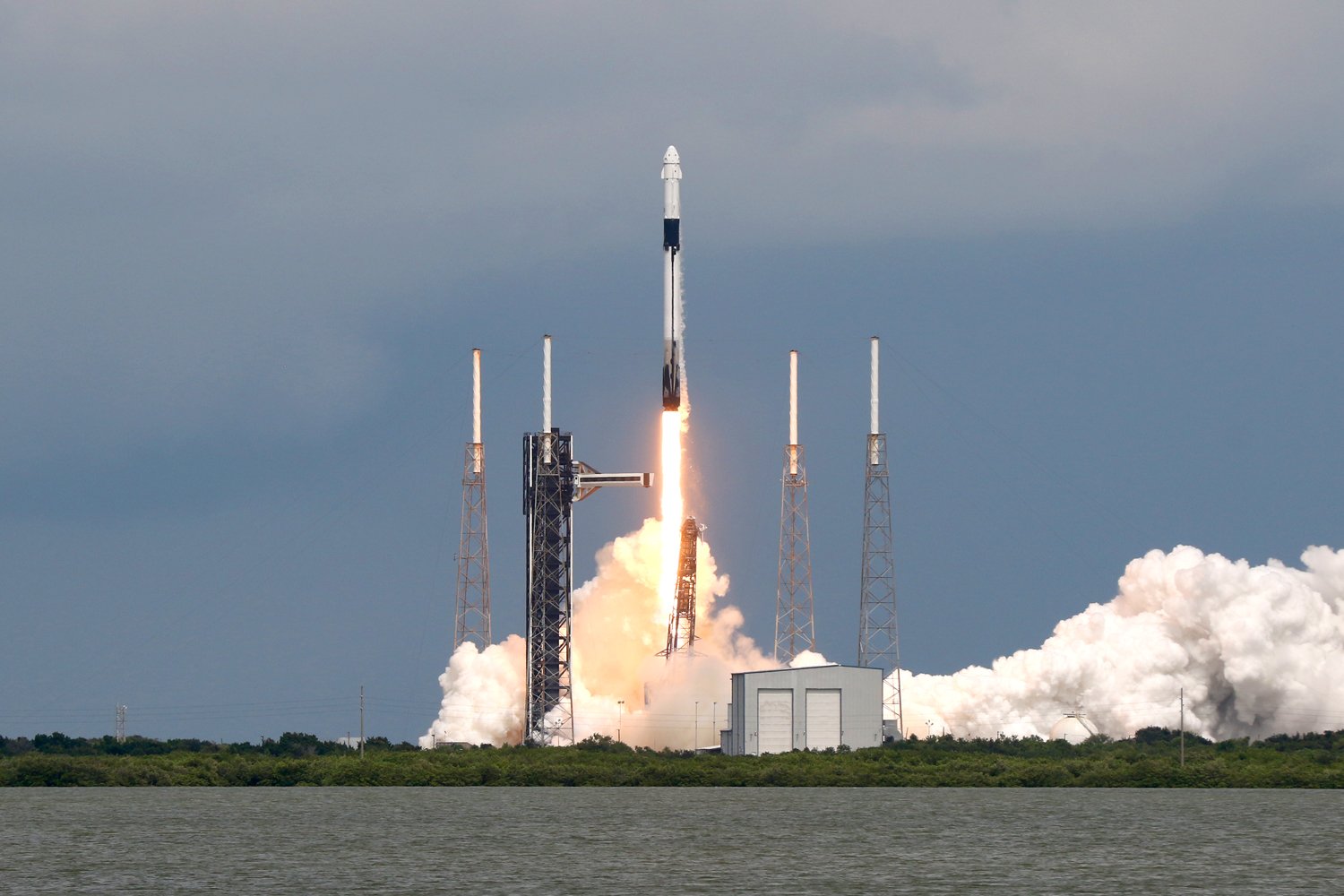
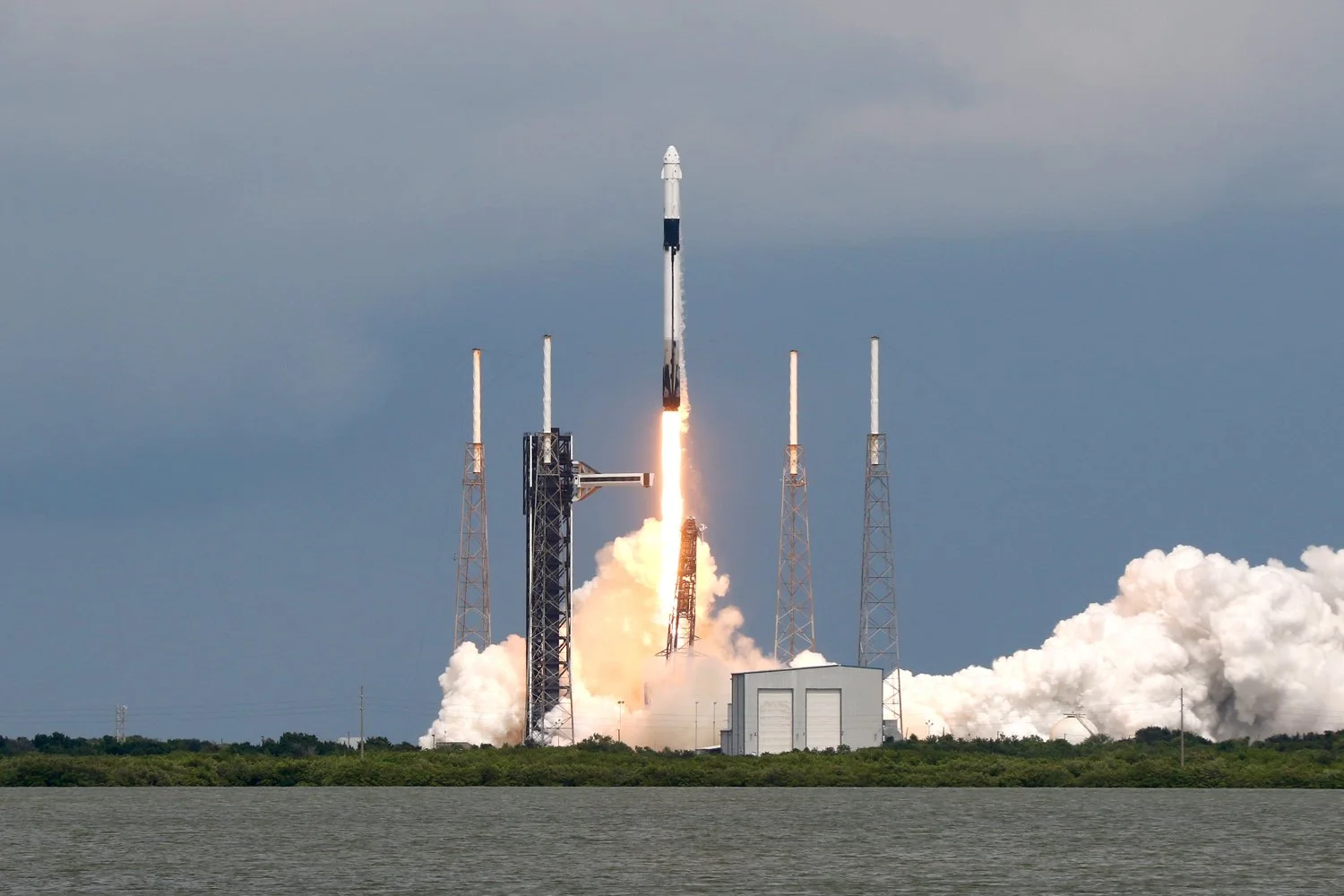
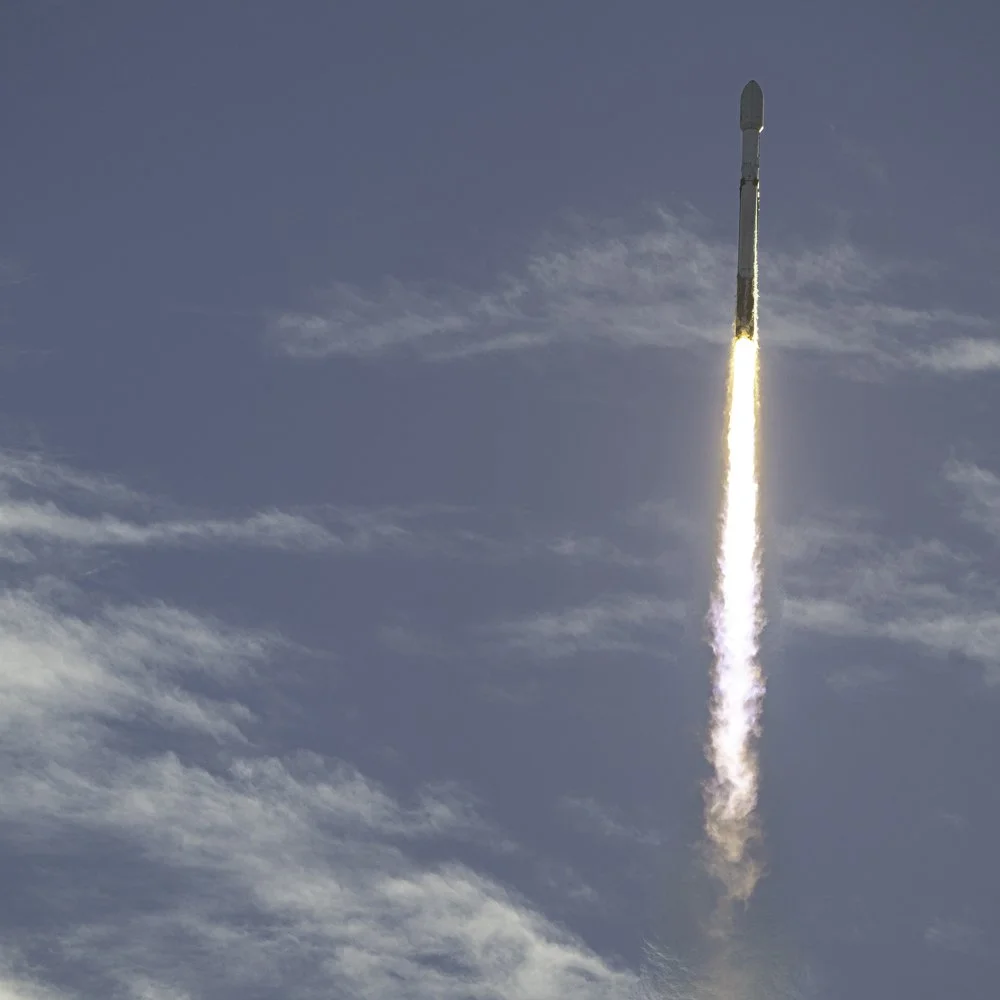
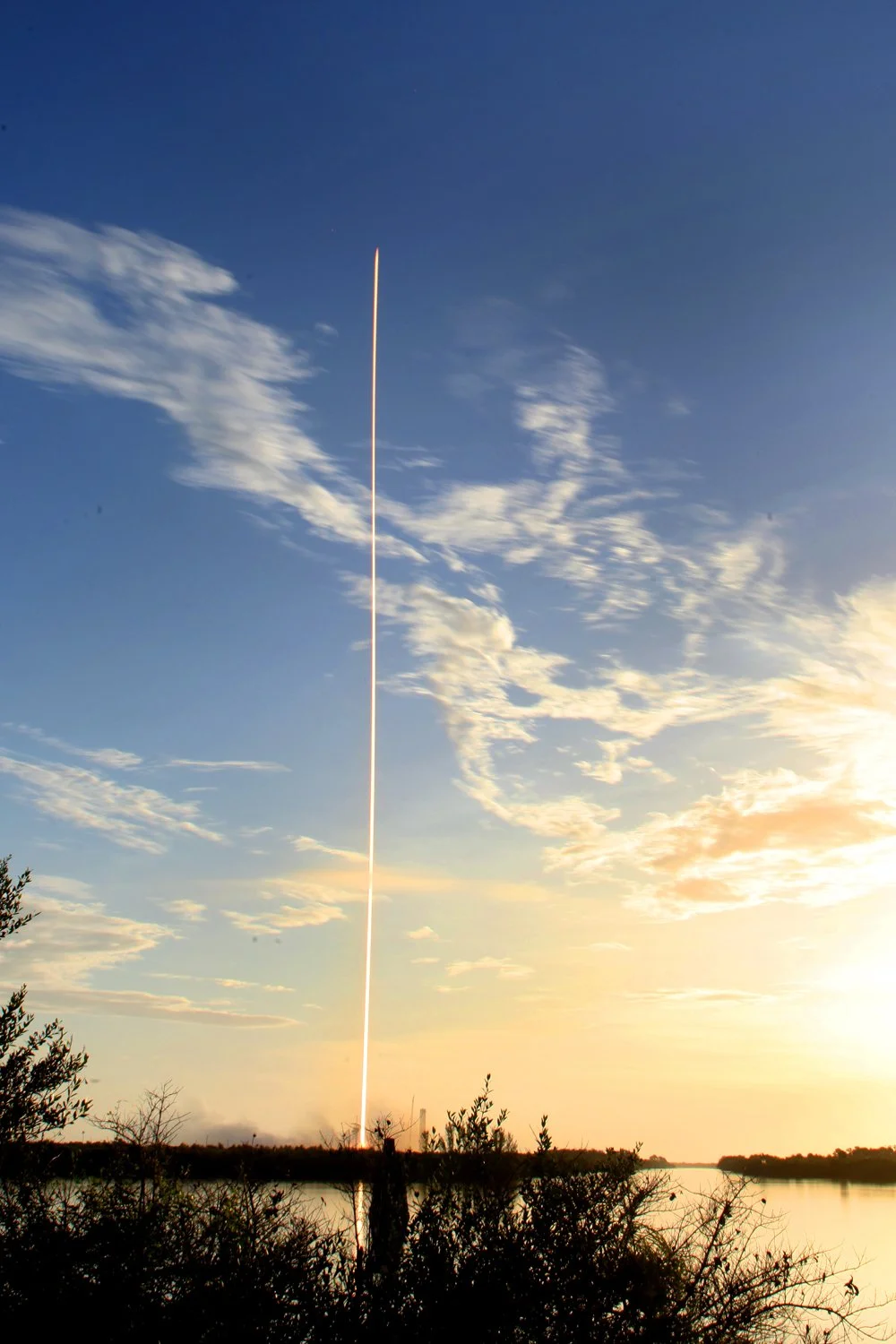
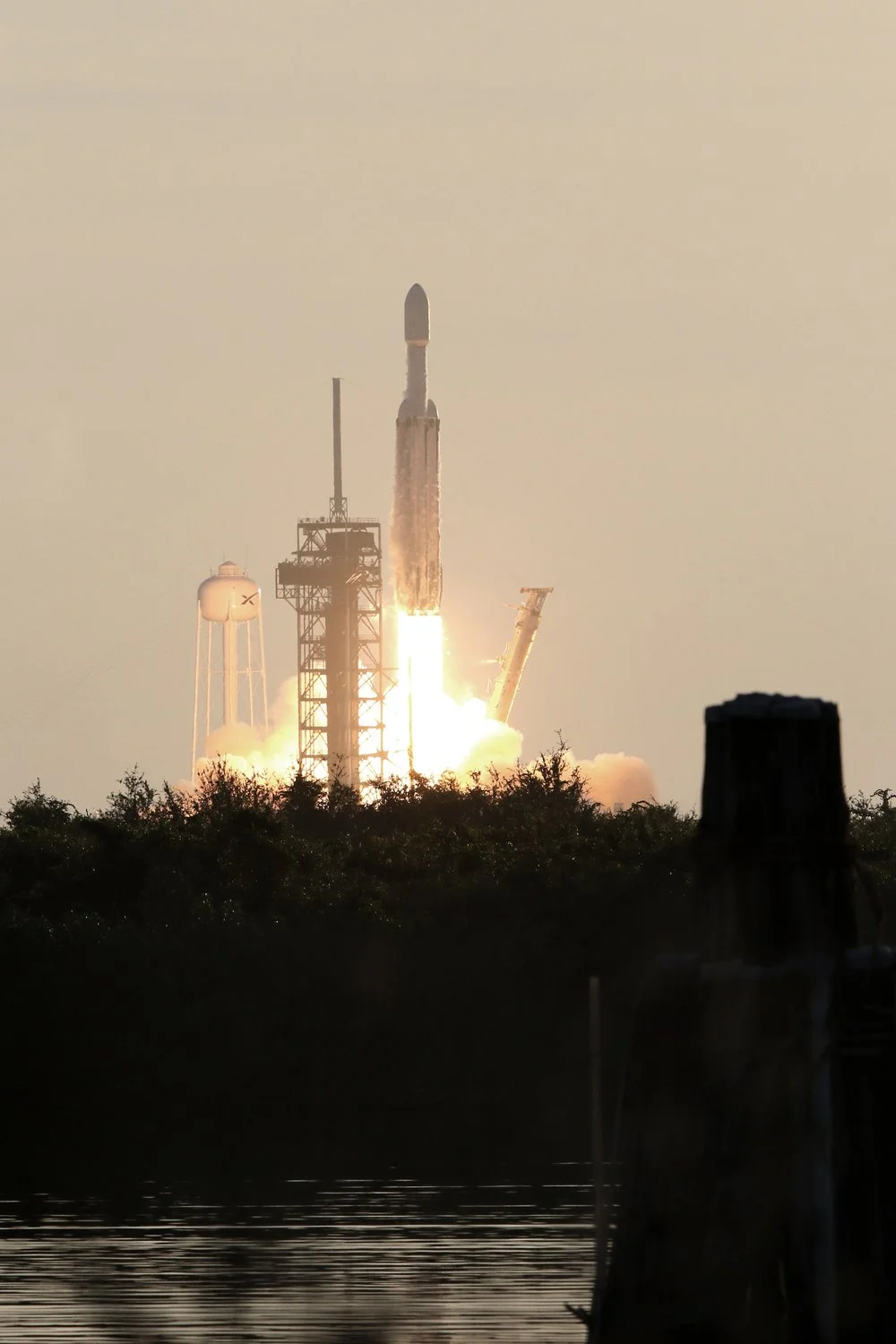
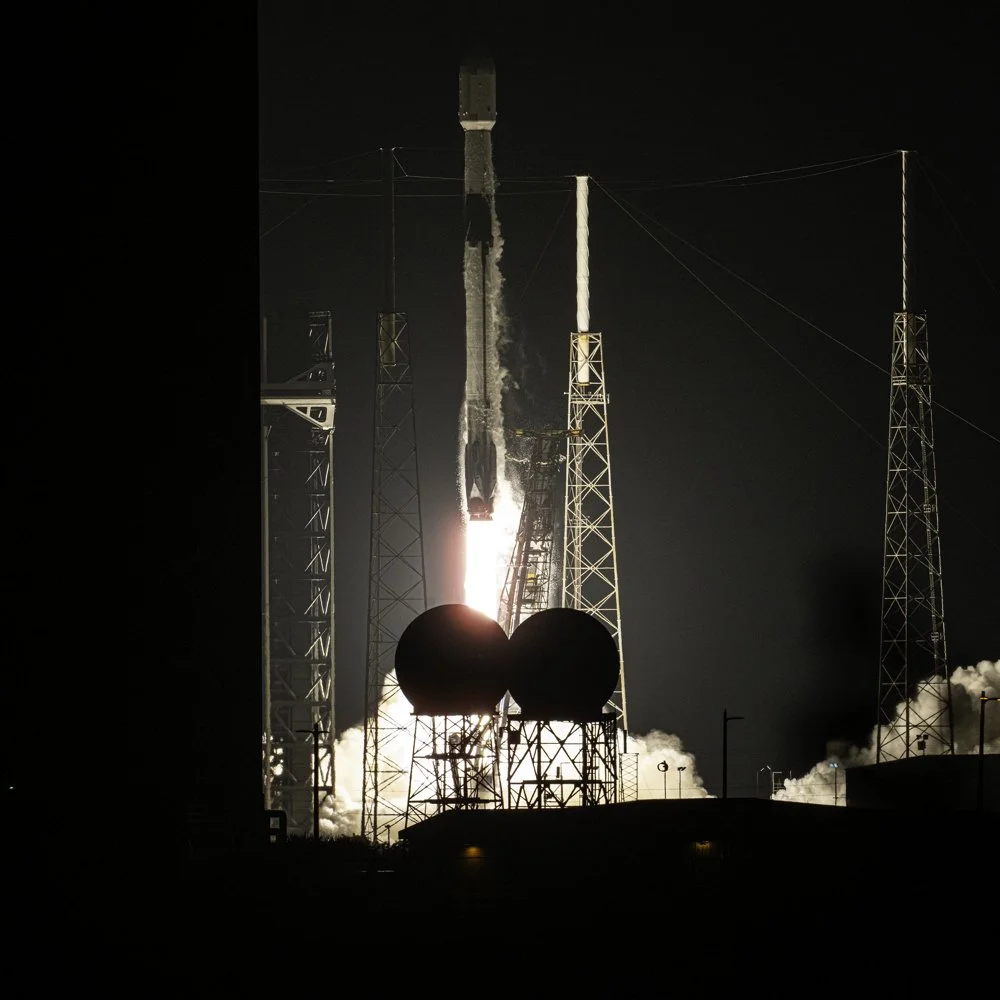
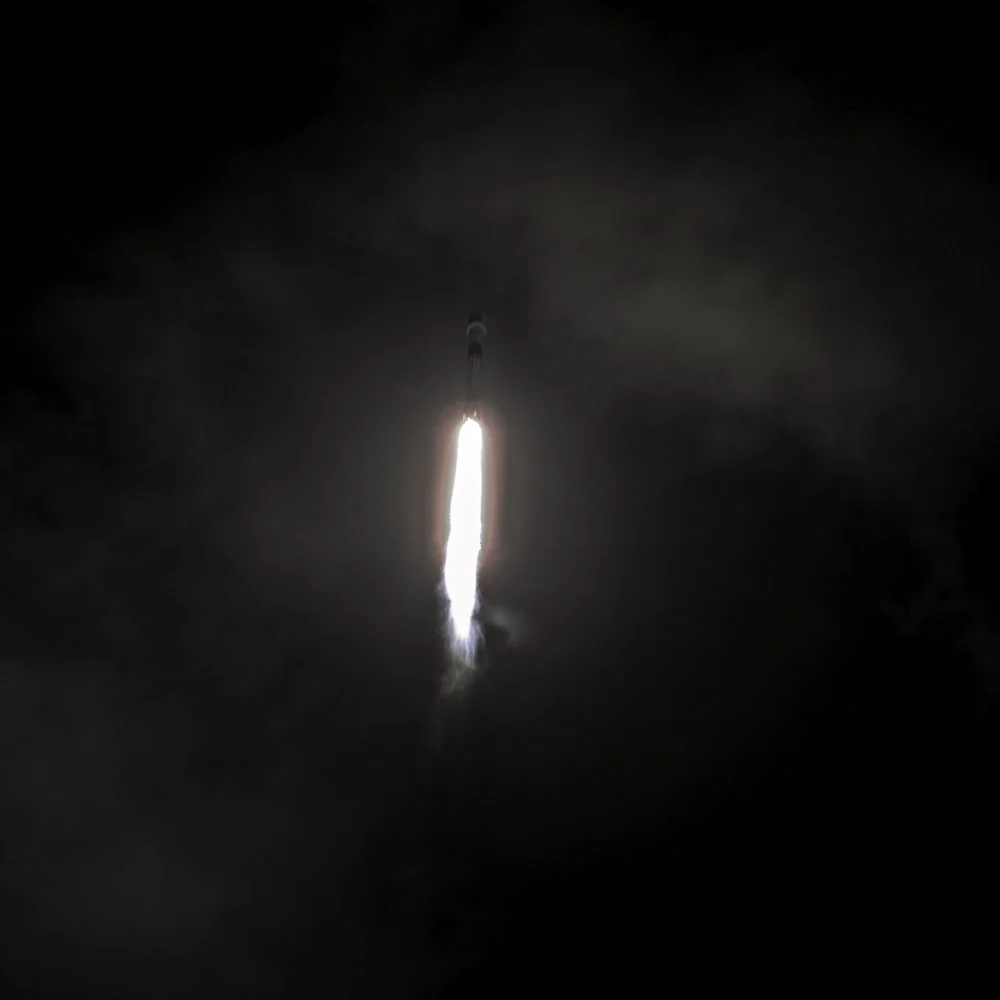
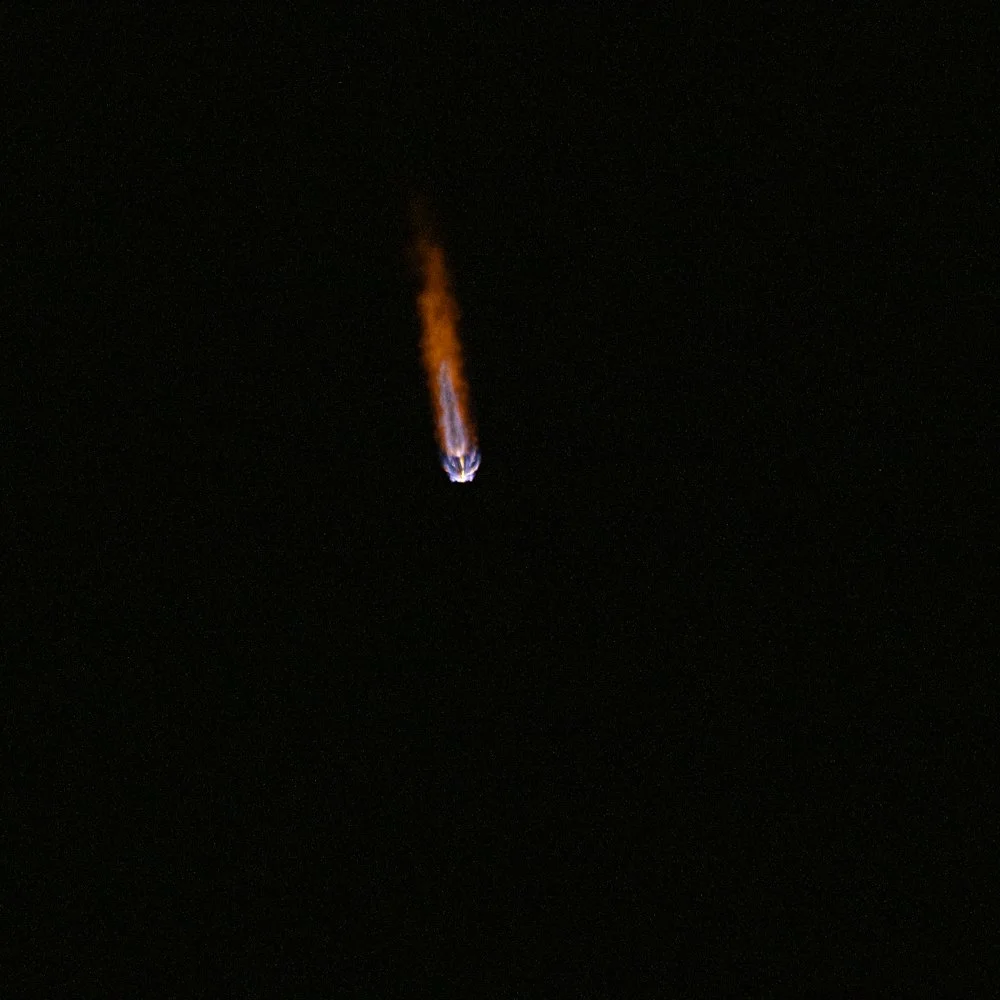
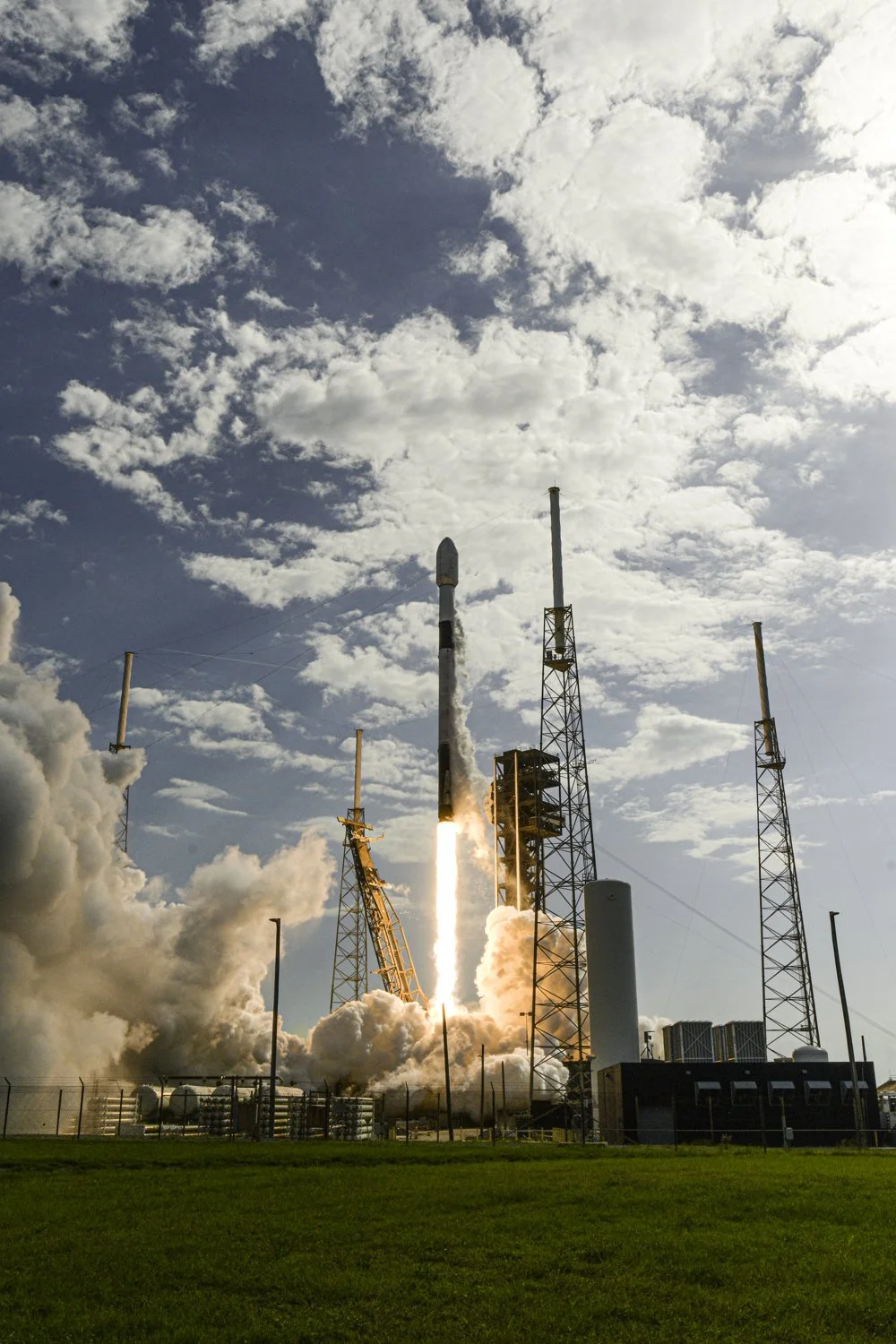
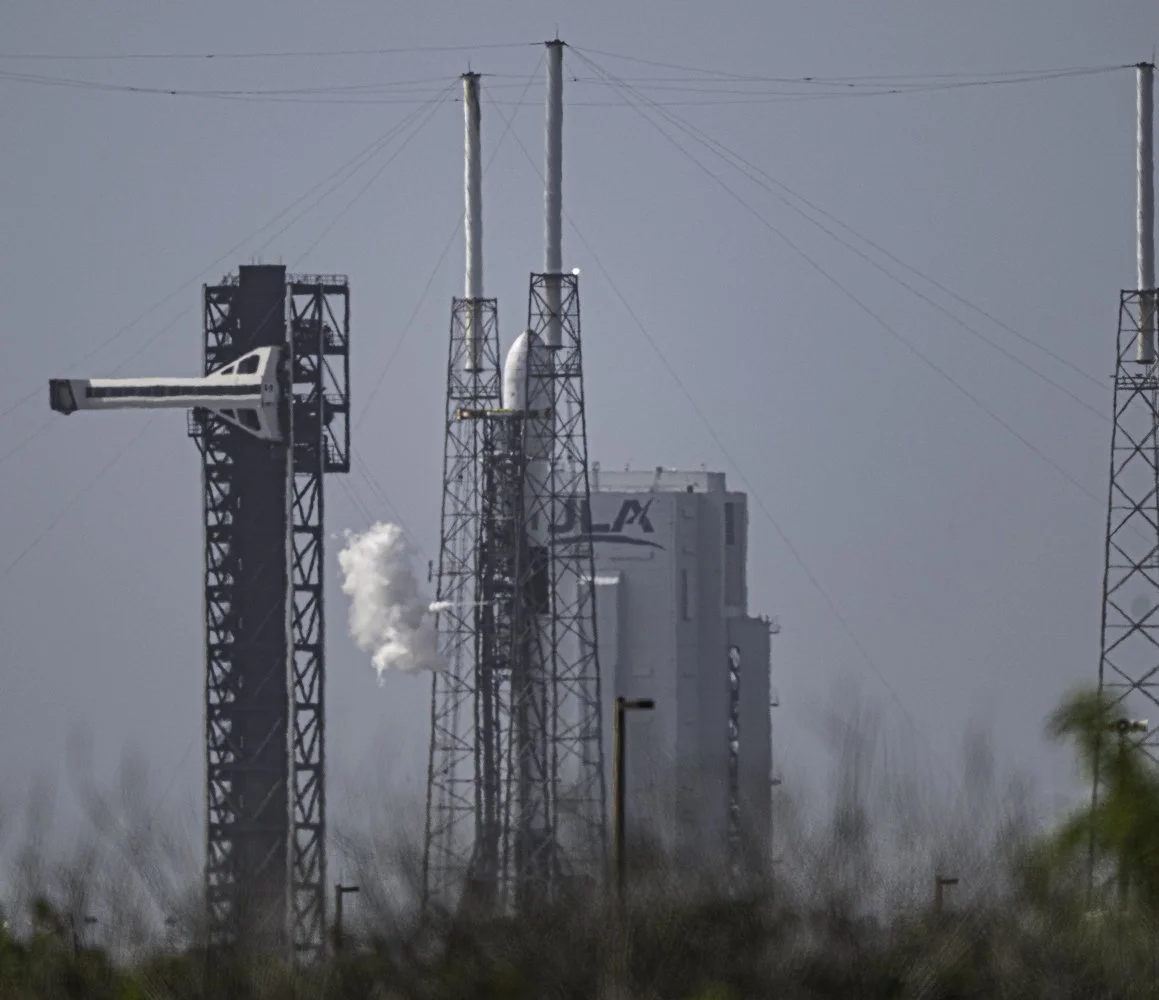
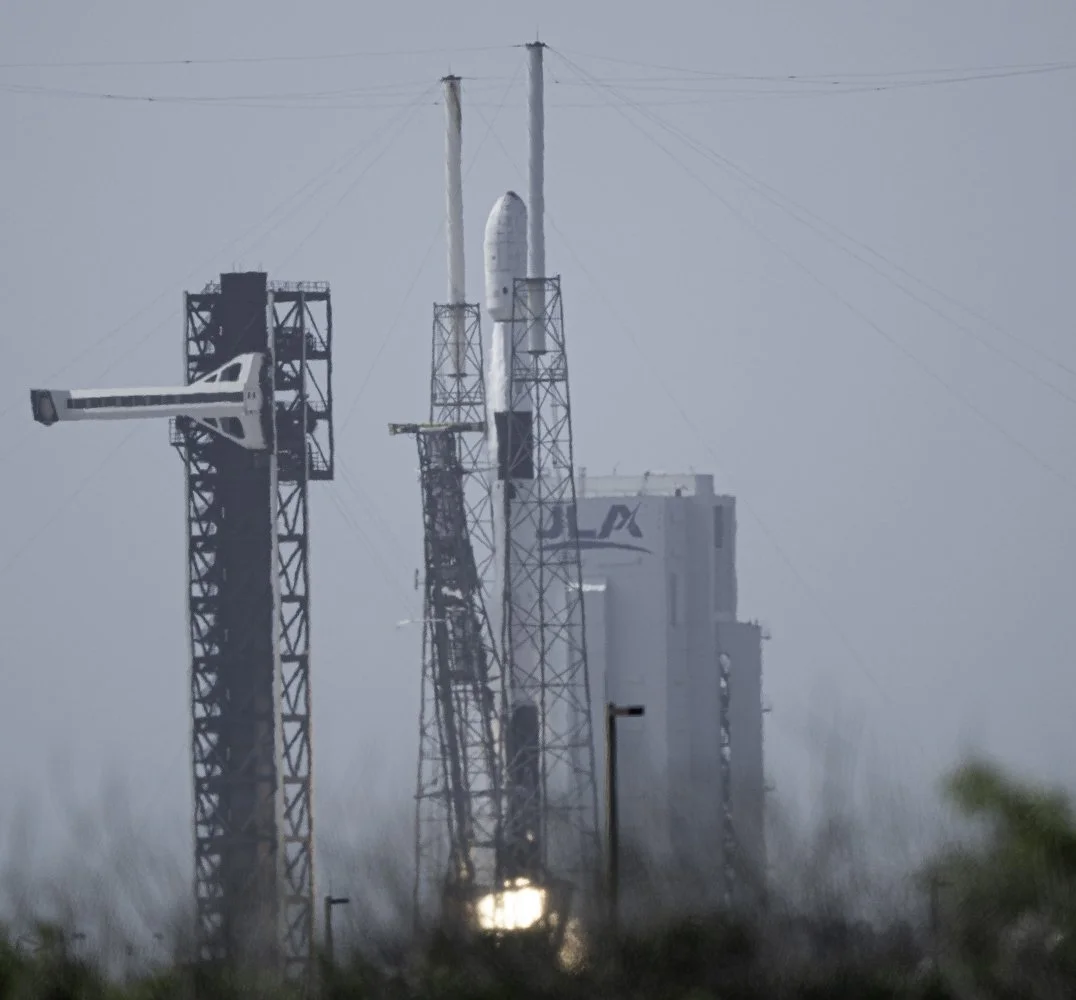
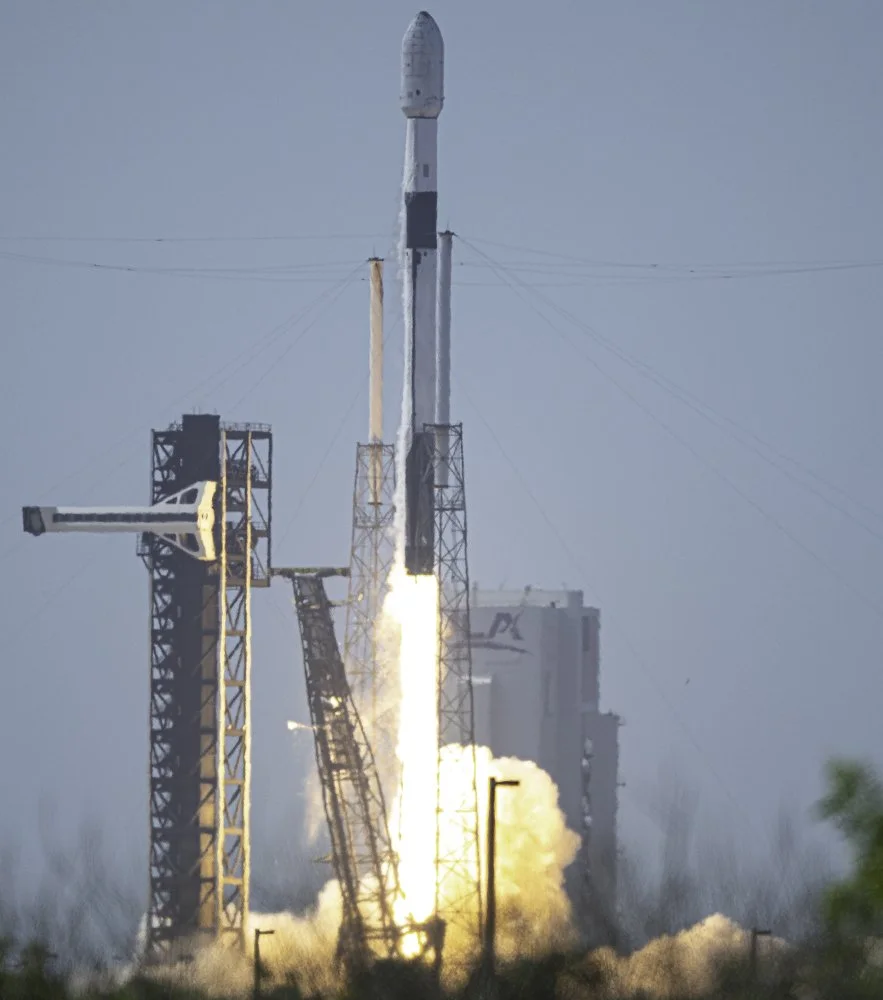
SpaceX stuffed over 30 satellites from various entities under the fairing of a Falcon 9 rocket which launched this morning from Cape Canaveral Space Force Station, Fl from SLC # 40 @ 7:04 AM. It had been delayed earlier this week due to weather that was outside safety margins for launch & landing.
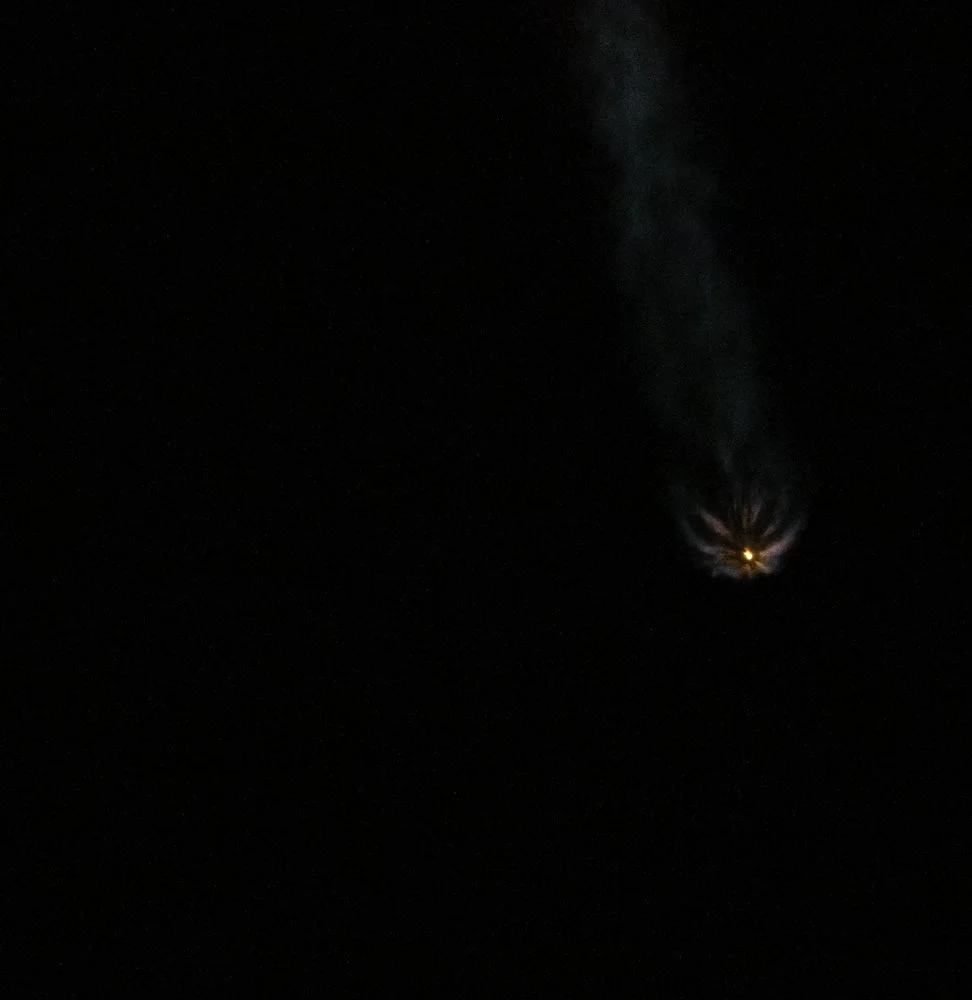
First stage Booster B1085 left for the 19th time landing on one of the SpaceX autonomous barges in the general area of the Bahamas to the south east.
For those unfamiliar with what a “BandWagon” is, various commercial vendors, possibly military agencies & or educational sites may have a small satellite needed to be placed in orbit. As the small satellite would not be cost effective to launch by itself, it is grouped with a number of other small satellites, with each organization splitting costs.
More financial savings can be recognized when the rocket is launched in an easterly trajectory working with the earth’s rotation. With the rocket going in the same direction as the rotation, less fuel is used, providing the agencies less cost.
There is a similar program known as Transporter, which launches to sun-synchronous orbits but at much different altitudes as well as costs.
Article: Graham Smith/WRS
Image: Michael Seeley/WRS
#SpaceX #falcon9 #capecanaveralspaceforcestation #sldelta45 #ussf_ssc #usspaceforce #launch #nasakennedy # nasaadmin #nasa #spacecoastdaily @emrekelly
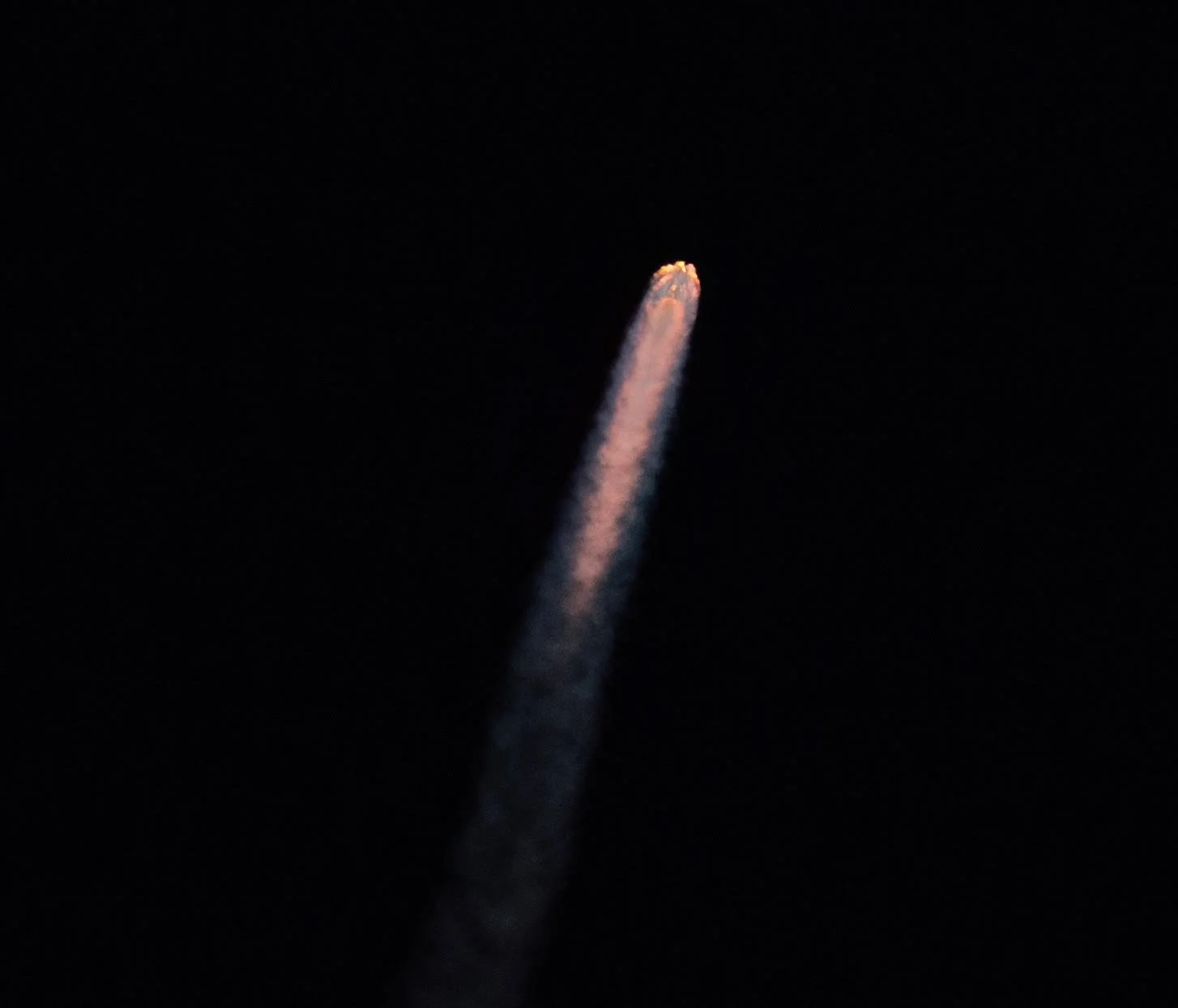
SpaceX CRS-35 Early Morning Launch
CRS SpX-35
While SpaceX launches have become the norm over the past few years with Falcon, Falcon Heavy Dragon CRS & SpaceX Crew missions, this launch of CRS-35 is a routine-but-vital delivery run. Cargo Dragon carries fresh science, crew supplies and station hardware up to the Expedition 75 crew, then comes home with samples and broken equipment that engineers want to examine on the ground. It is one of the few vehicles that can return a meaningful amount of cargo to Earth, which makes it the lifeline for time-sensitive biology experiments.
This flight uses a well-travelled capsule with CRS-35 making its fourth trip. The Falcon 9 first stage, B1096, is on its eighth flight, and completes the 113th mission for 2026 for SpaceX.
The most consequential item in the trunk is the fourth & final pair of ISS Roll-Out Solar Arrays (IROSA). These compact, roll-up solar panels are installed in front of the station's original arrays to boost power generation. NASA says this last pair completes the augmentation of the station's power system, which supports critical operations including its safe and controlled eventual deorbit. Because the arrays are large and unpressurized, they ride in Dragon's external trunk and are later removed robotically for installation during spacewalks.
The four remaining areas of experiments are:
Use of non traditional elements in space to manufacture glass with samples to be returned to earth for study of strength, better optics.
Manufacturing artificial retinas in microgravity which if successful will allow patients with incurable retinal diseases to achieve restored vision.
Neurodegenerative disease with inflammation research. Main goal is to provide new treatment for Multiple Sclerosis, Alzheimer’s & Parkinsons.
How microgravity affects 3D human cardiac tissue models function and growth,
New “beta” Collapsible Contingency Urinal to support the Artemis III mission.
The existing CanadaArm II aboard the ISS failed in late May, 2026 with a “wrist joint” problem and will be stored aboard CRS 35 when it is scheduled to return to earth later this year. A new joint has already been installed.
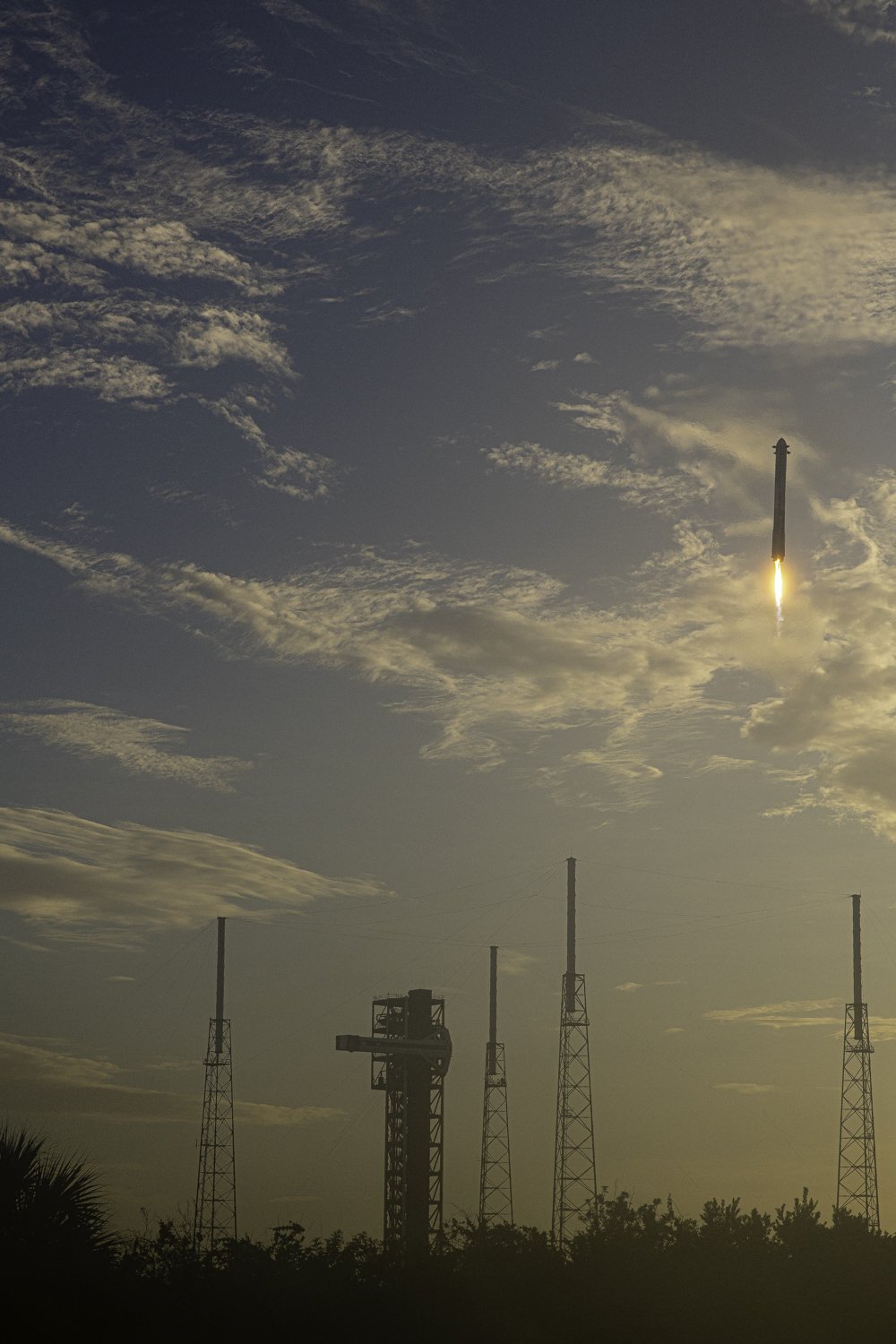
To round out this important but routine mission, the Falcon 9 first stage core landed back at SLC # 40
#nasa #nasakennedy #nasaadmin #capecanaveralspaceforcestation #sldelta45 ##usspaceforce #ussf_ssc #canadianspaceagency #spacex #falcon9 #launch @emrekelly
Article: Graham Smith/WRS
Images: Graham Smith/WRS, Michael Seeley/WRSCRS SpX-35
While SpaceX launches have become the norm over the past few years with Falcon, Falcon Heavy Dragon CRS & SpaceX Crew missions, this launch of CRS-35 is a routine-but-vital delivery run. Cargo Dragon carries fresh science, crew supplies and station hardware up to the Expedition 75 crew, then comes home with samples and broken equipment that engineers want to examine on the ground. It is one of the few vehicles that can return a meaningful amount of cargo to Earth, which makes it the lifeline for time-sensitive biology experiments.
This flight uses a well-travelled capsule with CRS-35 making its fourth trip. The Falcon 9 first stage, B1096, is on its eighth flight, and completes the 113th mission for 2026 for SpaceX.
The most consequential item in the trunk is the fourth & final pair of ISS Roll-Out Solar Arrays (IROSA). These compact, roll-up solar panels are installed in front of the station's original arrays to boost power generation. NASA says this last pair completes the augmentation of the station's power system, which supports critical operations including its safe and controlled eventual deorbit. Because the arrays are large and unpressurized, they ride in Dragon's external trunk and are later removed robotically for installation during spacewalks.
The four remaining areas of experiments are:
Use of non traditional elements in space to manufacture glass with samples to be returned to earth for study of strength, better optics.
Manufacturing artificial retinas in microgravity which if successful will allow patients with incurable retinal diseases to achieve restored vision.
Neurodegenerative disease with inflammation research. Main goal is to provide new treatment for Multiple Sclerosis, Alzheimer’s & Parkinsons.
How microgravity affects 3D human cardiac tissue models function and growth,
New “beta” Collapsible Contingency Urinal to support the Artemis III mission.
The existing CanadaArm II aboard the ISS failed in late May, 2026 with a “wrist joint” problem and will be stored aboard CRS 35 when it is scheduled to return to earth later this year. A new joint has already been installed.
To round out this important but routine mission, the Falcon 9 first stage core landed back at SLC # 40
#nasa #nasakennedy #nasaadmin #capecanaveralspaceforcestation #sldelta45 ##usspaceforce #ussf_ssc #canadianspaceagency #spacex #falcon9 #launch @emrekelly
Article: Graham Smith/WRS
Images: Graham Smith/WRS, Michael Seeley/WRS

NROL-97 Streaks into Secrecy
NROL-97 Streaks into Secrecy
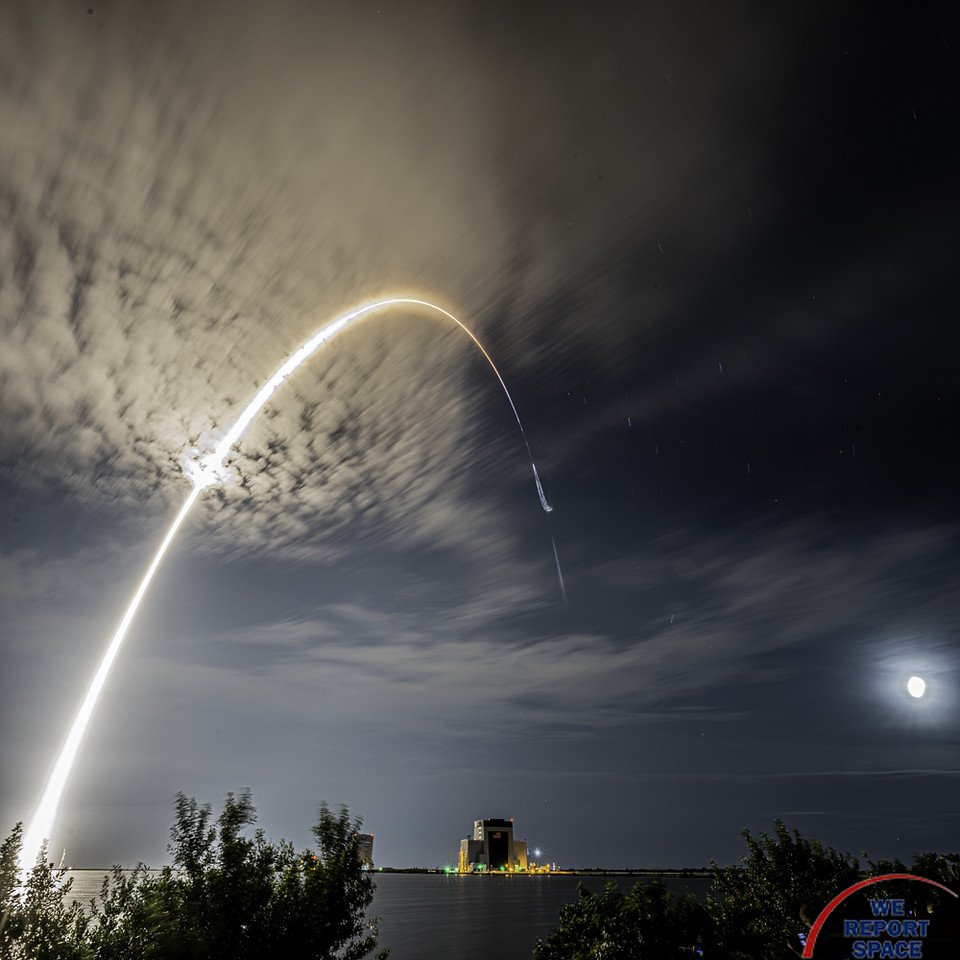
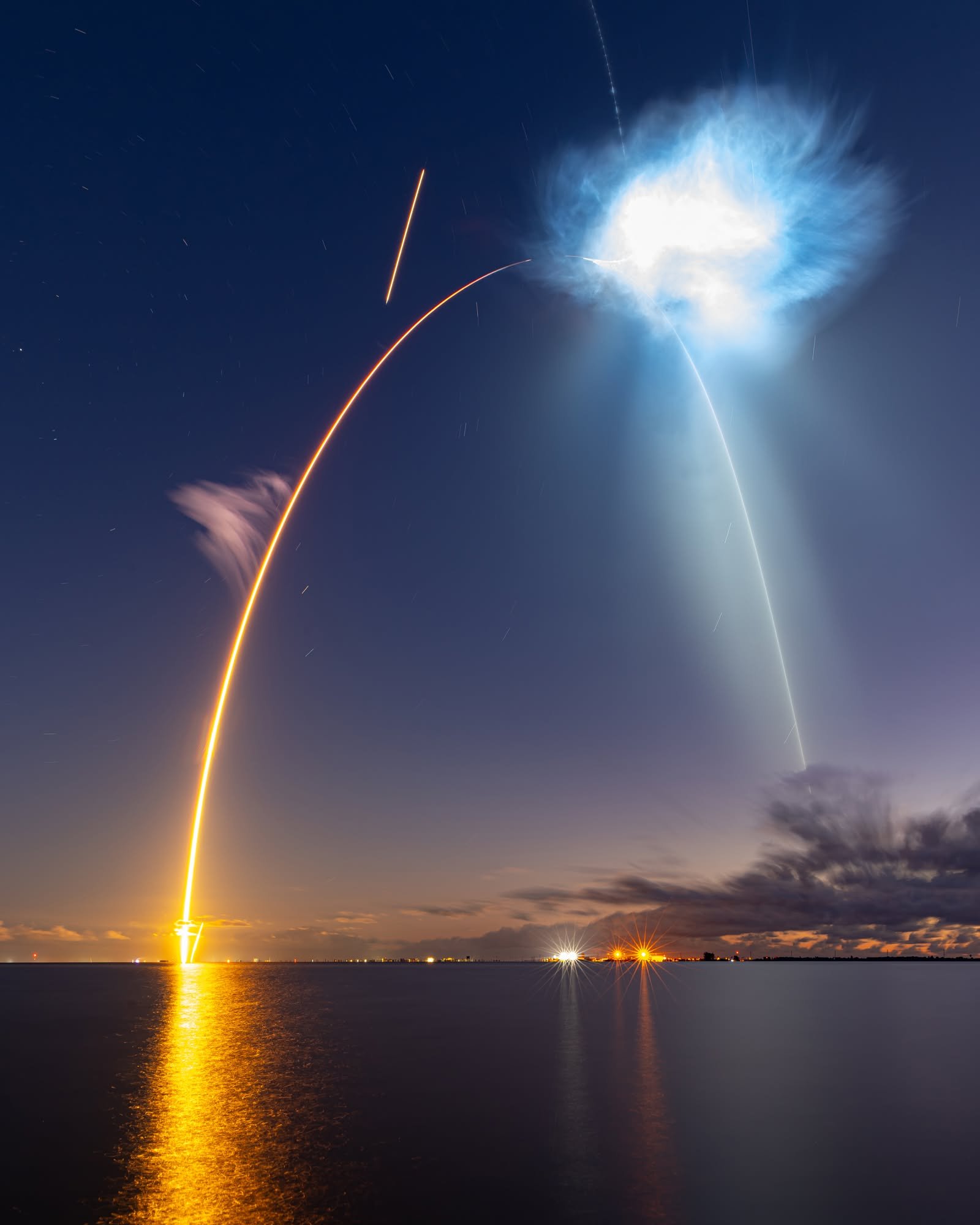
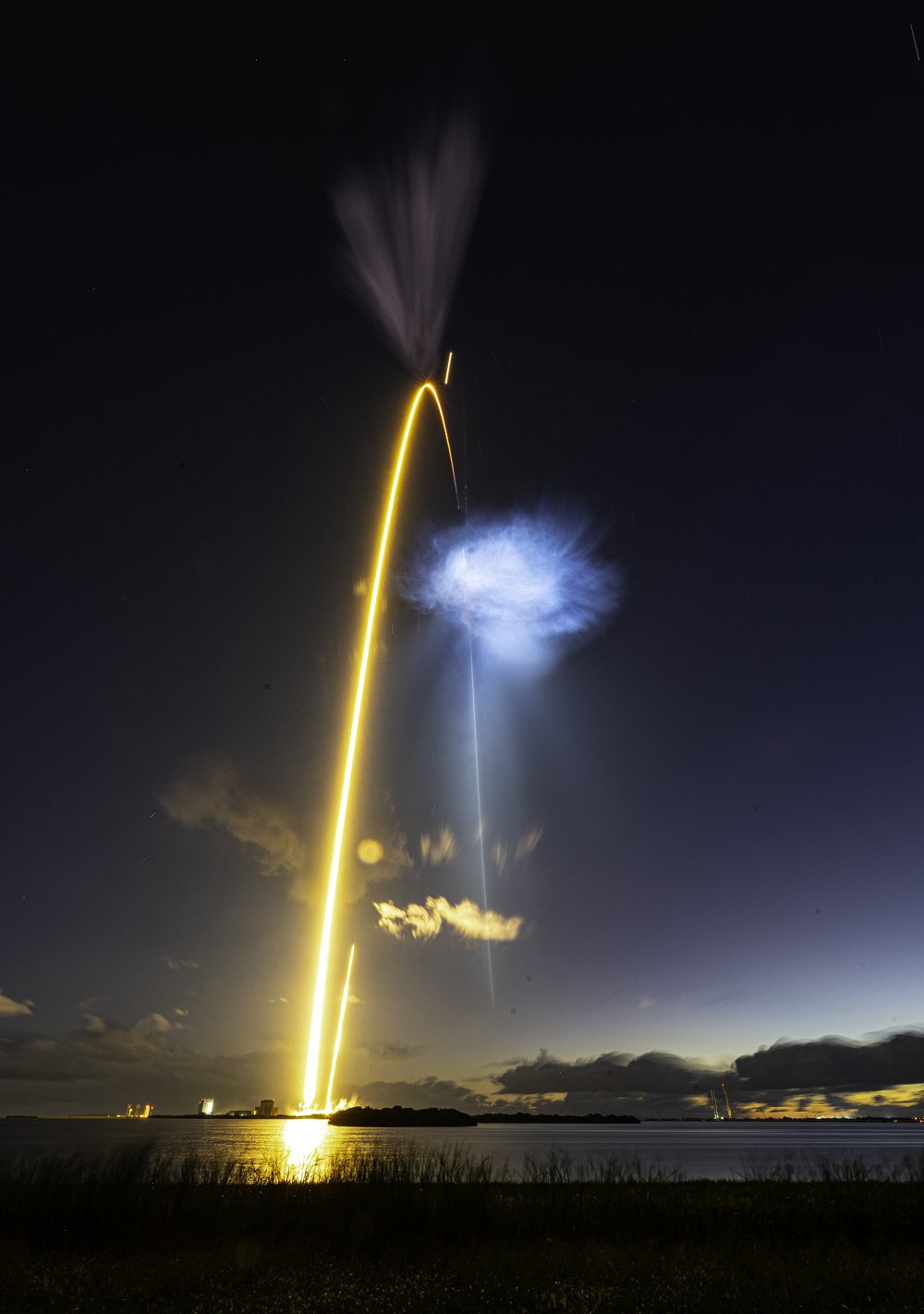
NROL-97 Streaks Into the Night - Image Credit: Graham Smith
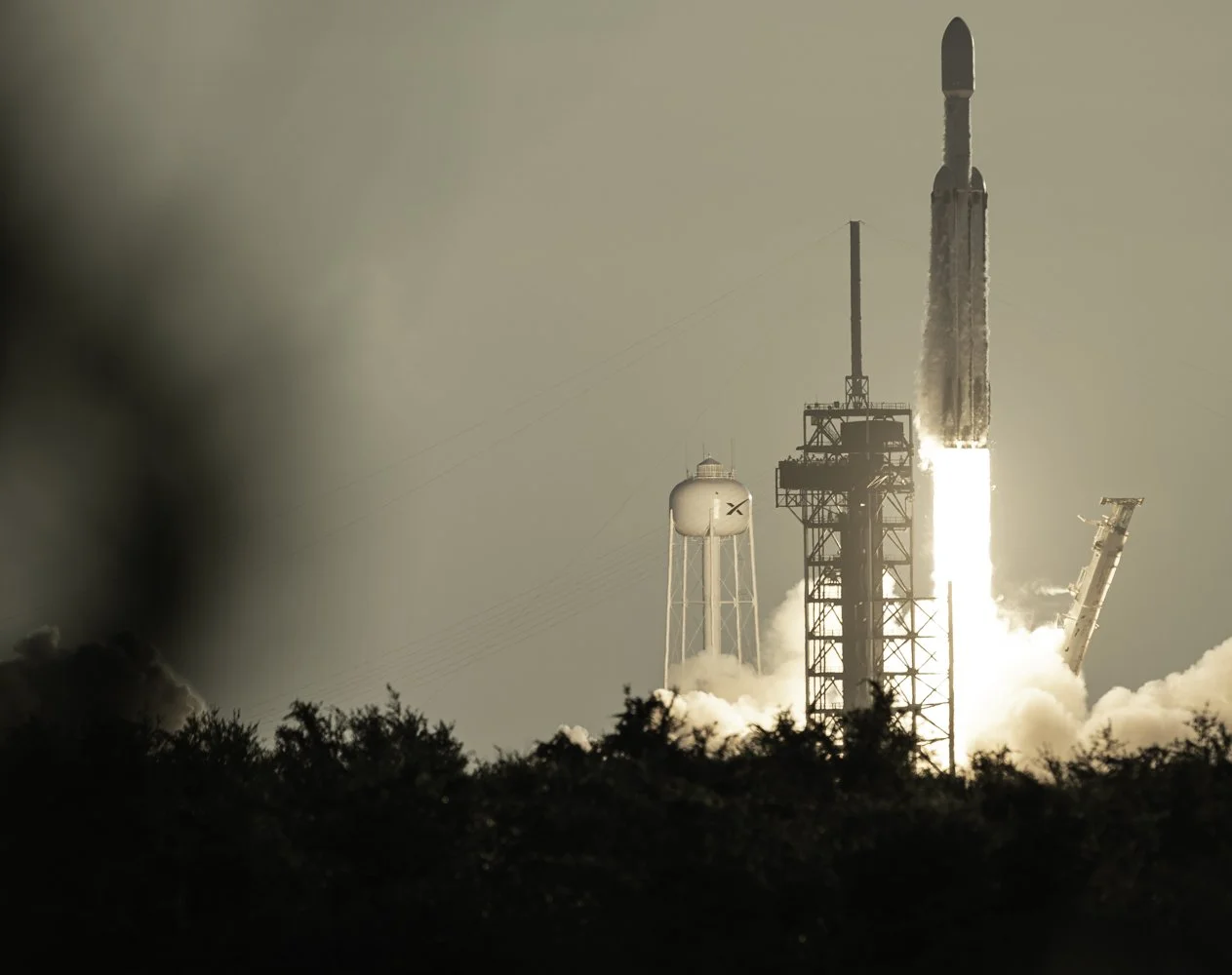
Kennedy Space Center, FL. – Just before midnight of October 1, 2026, SpaceX launched its Falcon Heavy rocket taking the top secret NROL-97 mission to space. This was the third launch in a single day for SpaceX. Earlier they launched the Crew-13 mission from Cape Canaveral S.F.S. and the Transporter 18 mission from Vandenberg S.F.S in California.
In a statement from the National Reconnaissance Office:
"While the NRO and SSC have partnered on countless critical missions, NROL-97 stands as a historic milestone in our shared history," said Col. Kathryn Cantu, director, NRO Office of Space Launch, and NROL-97 mission director. "Pioneering NRO’s first launch with SpaceX’s Falcon Heavy rocket under the National Security Space Launch (NSSL) Phase 3 Lane 2 framework proves that our partnership with SSC is successfully modernizing national security space operations. Additionally, reusing the side boosters from NASA’s successful Nancy Grace Roman Space Telescope launch enabled us to eliminate schedule delays and share mission assurance practices for a rapid turn-around of the Falcon Heavy capability. Leveraging these partnerships allows us to accelerate the deployment of emerging, next-generation technologies crucial to securing our nation’s intelligence advantage.”
Shortly after launch of the Falcon Heavy, the two side booster made successful landings at LZ-1 and LZ-2. The Crew 13 first stage booster had earlier landed at LZ-40.
What is also of note is that SpaceX also launched its Starship rocket from Texas on September 28, 2026 thus making the use of all of SpaceX’s launch facilities in just 4 days.
Story by: Michael Howard – We Report Space
Image Credit: Graham Smith – We Report Space
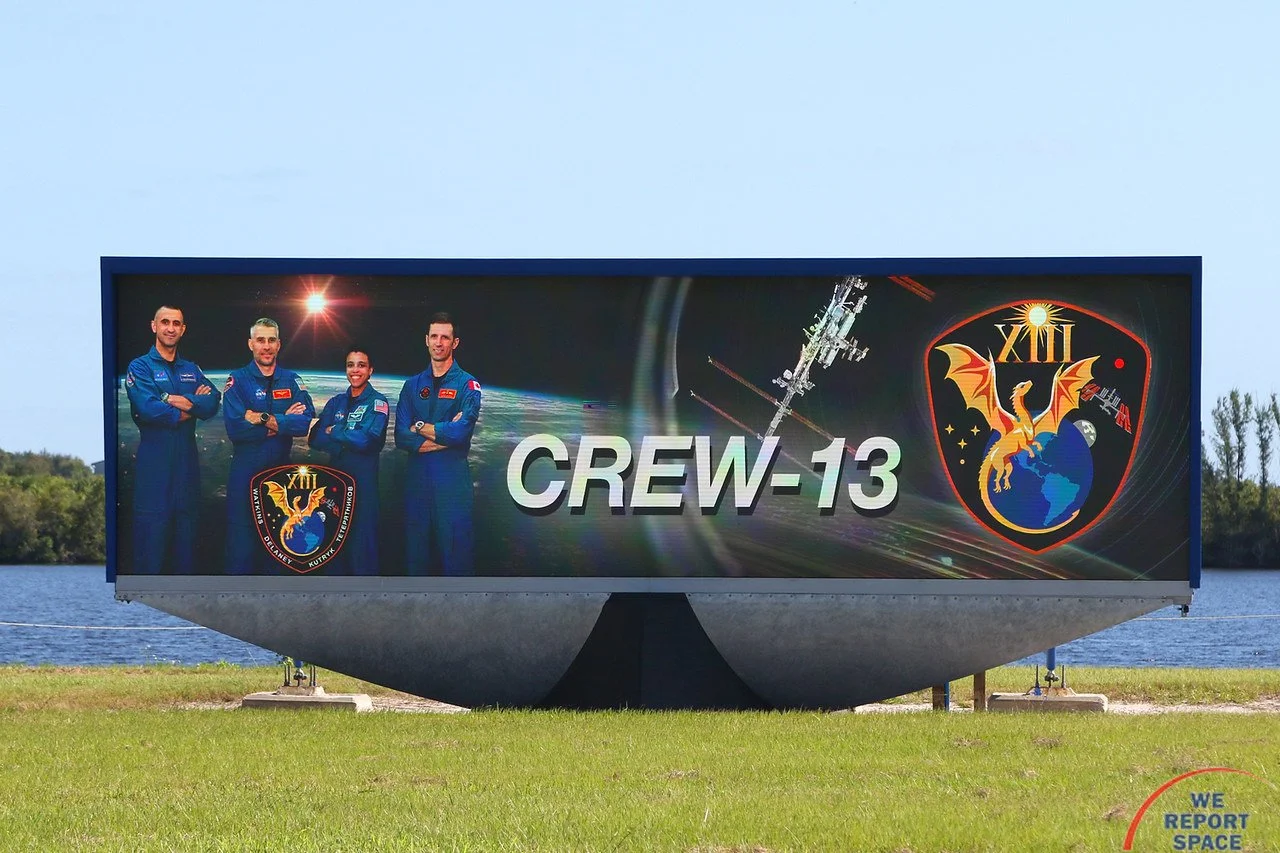
Crew 13 Launches to the I.S.S.
Crew 13 as seen on the press site countdown clock ahead of launch. Image Credit: Michael Howard - We Report Space
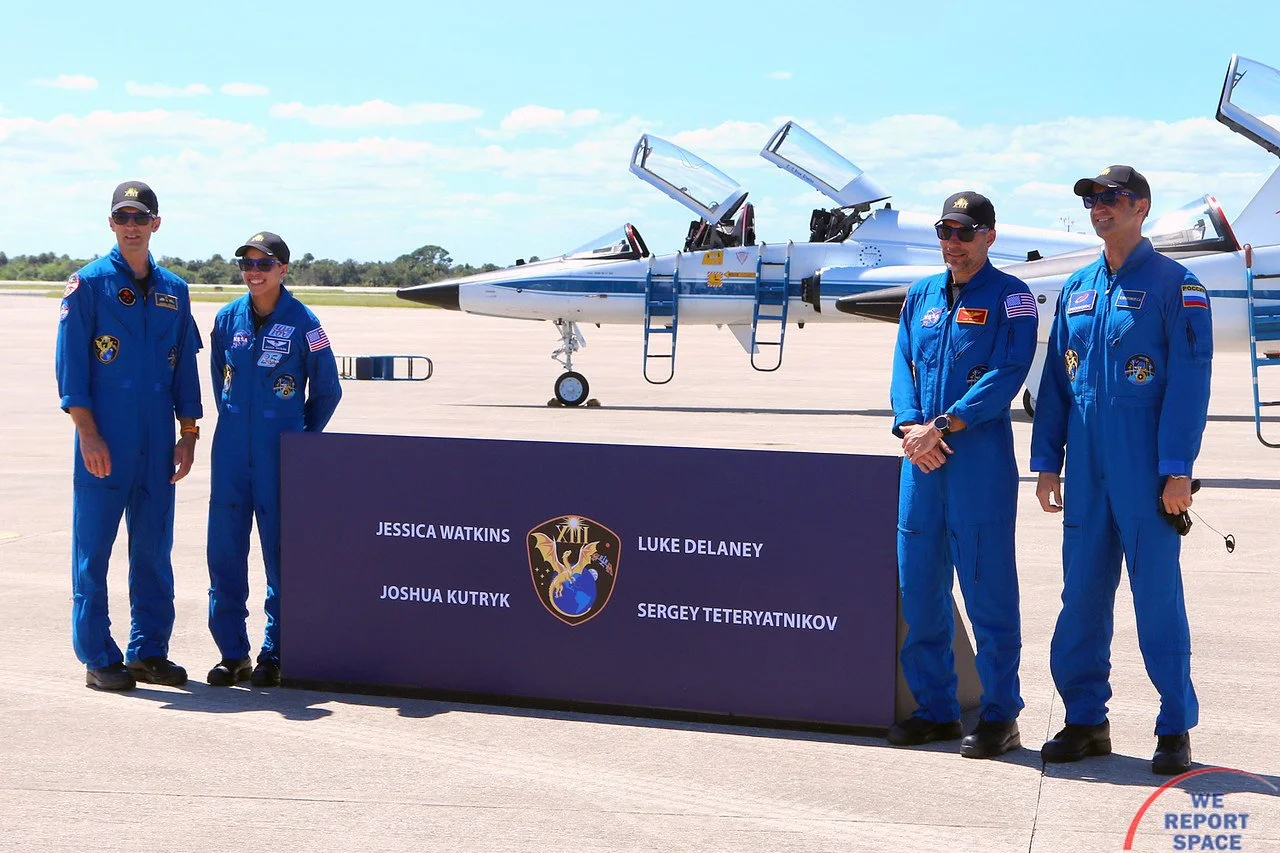
Crew 13 Arrival- Image Credit: Michael Howard - We Report Space
Cape Canaveral S.F.S. FL. – This morning, October 1, 2026, SpaceX launched the NASA Crew - 13 mission to the International Space Station (I.S.S.). The liftoff came at 11:10 AM EDT from Launch Complex 40.
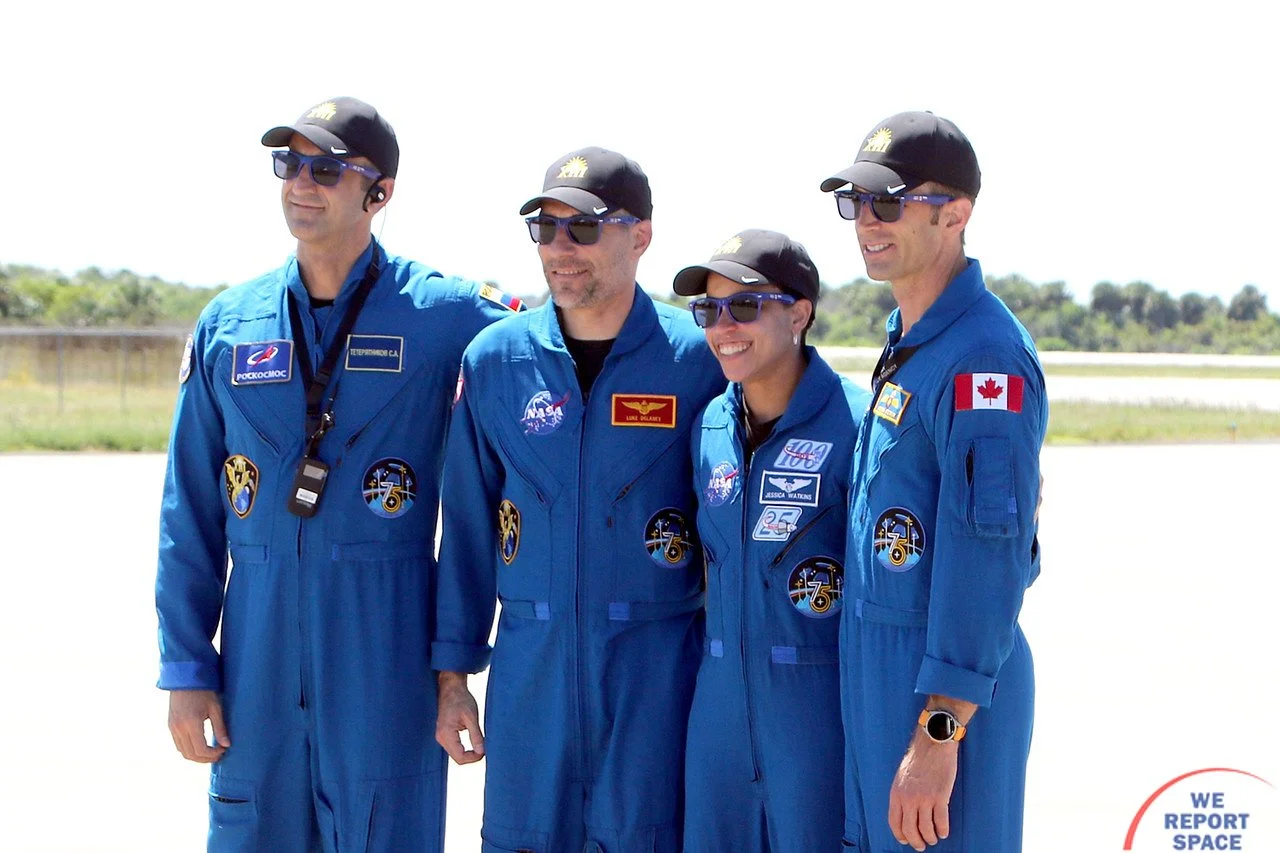
Crew 13 - Image Credit: Michael Howard - We Report Space
This mission, scheduled to last several months carried NASA Astronauts: Jessican Watkins, Commander, Luke Delaney, Pilot, Canadian Astronaut, Joshua Kutryk, Mission Specialist, and Roscosmos Cosmonaut, Sergey Teteryatnikov, Mission Specialist . The astronauts flew to the I.S.S. aboard the Crew Dragon capsule named “Grace”. Less than 10 minutes after launch, the Crew Dragon separated from the second stage booster and was on orbit and heading to the I.S.S. This flight is the fastest flight of a Crew Dragon to the station with a docking time about 8 hours after launch. Crew Dragon “Grace” and her crew will dock with the forward section of the Harmony module of the I.S.S.
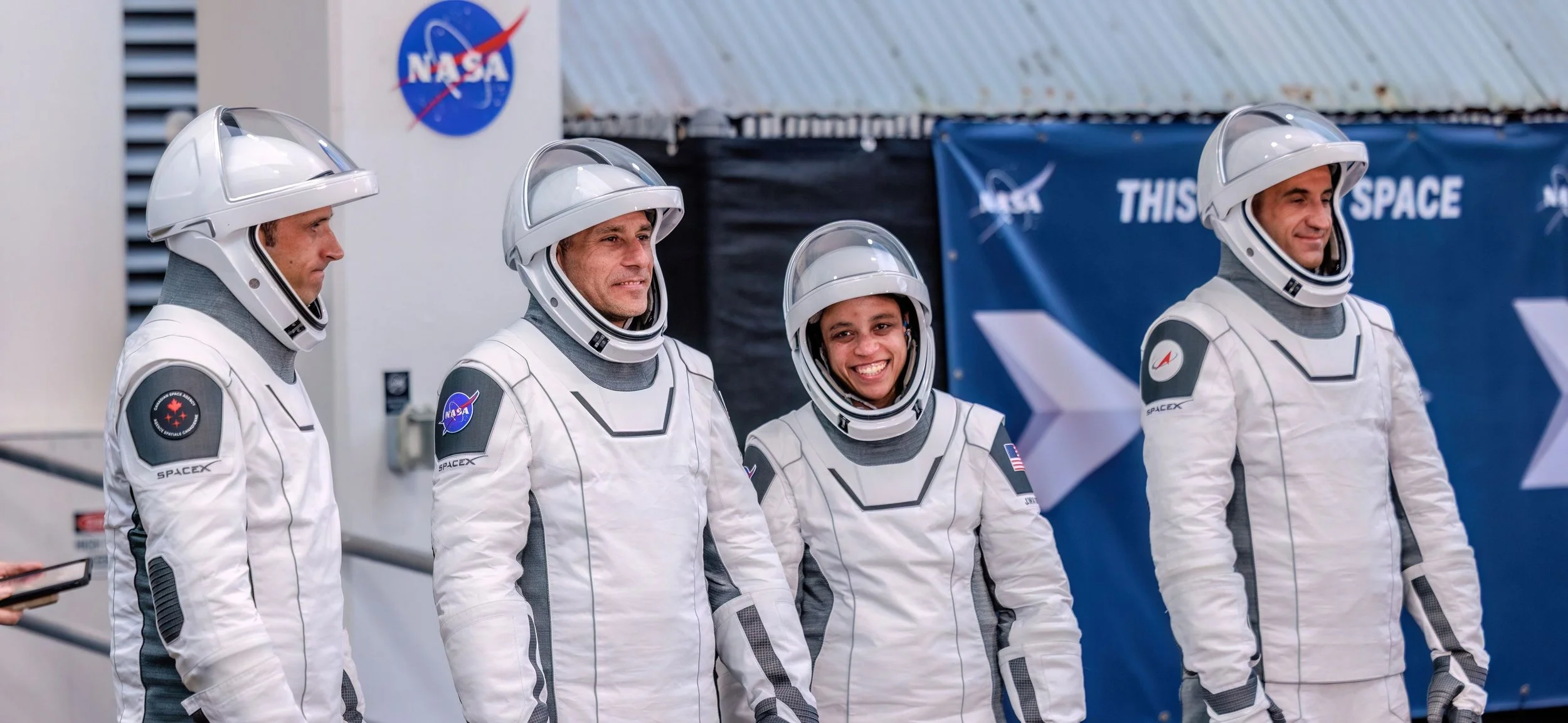
Crew Thirteen Prelaunch Walkout. Image Credit:
In recent days, it is being reported that the Crew Dragon capsule and the Flacon 9 will be retiring by 2030. There are contracts to the I.S.S. through the Crew-17 mission.

Liftoff of Crew 13 - Image Credit: Graham Smith - We Report Space
Crew Dragon “Grace” flew only one other mission and that was for the AX-4 flight back in June of 2025. The first stage booster is making its third flight having previously flying the Crew-12 mission and one Starlink mission. The first stage booster made a successful landing as LZ-40 shortly after launch.

First Stage Booster Return at LZ-40 - Image Credit: Graham Smith
The astronauts for Crew-13 arrived at the Kennedy Space Center back on September 26, 2026 to make final preparations for this several month long mission. While aboard the I.S.S., the astronauts will be conducting a number of medical experiments include a stem cell research experiment as well as experiments on the effects blood flow while in space.
In a statement from NASA: “Crew-13 is another demonstration of America’s unmatched capability in human spaceflight and the strength of our commercial partnerships,” said NASA Administrator Jared Isaacman. “Jessica, Luke, Joshua, and Sergey will carry forward important work aboard the International Space Station while helping us build the experience and capabilities needed for ambitious missions to the Moon and beyond. Congratulations to the crew and the NASA and SpaceX teams who made today’s launch possible.”

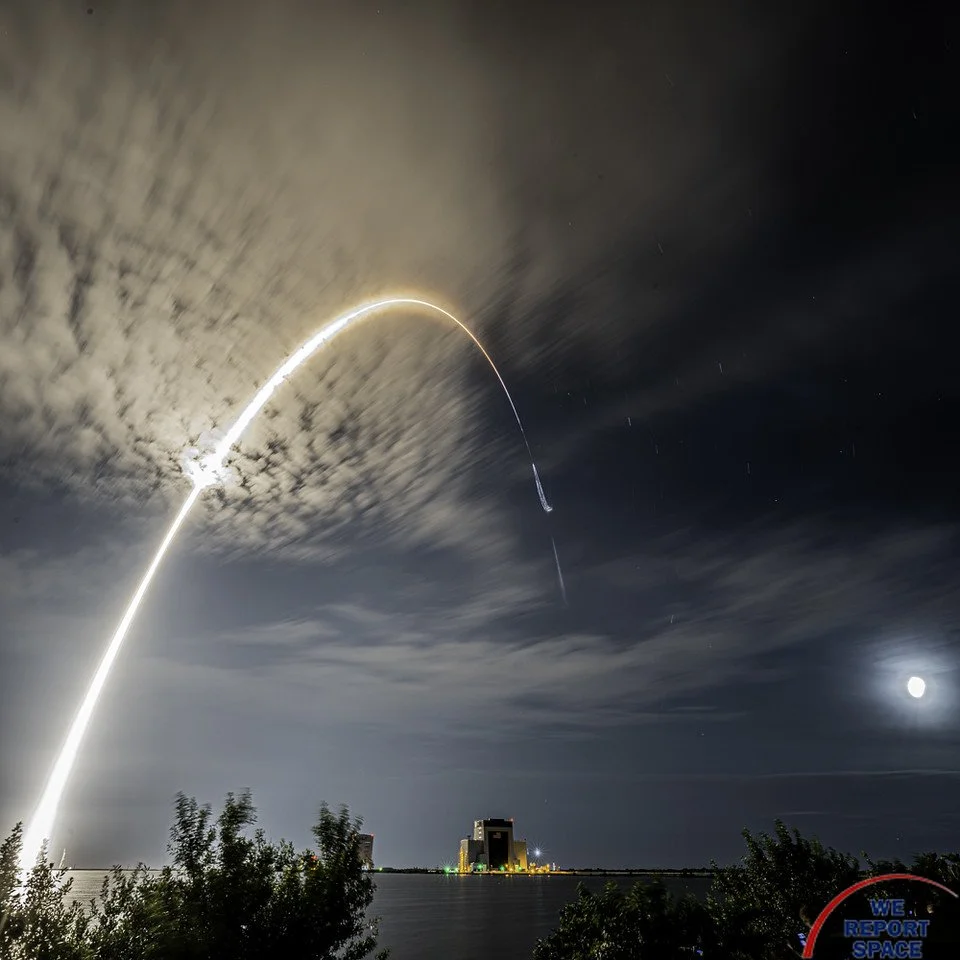
Inflight image along a cloudy Space Coast- Image Credit: Graham Smith - We Report Space
Once the Crew-13 mission concludes in the spring of 2027, Crew Dragon ”Grace” will splashdown off the coast of California.
Story By: Michael Howard – We Report Space
Images By: Michael Howard, Graham Smith – We Report Space
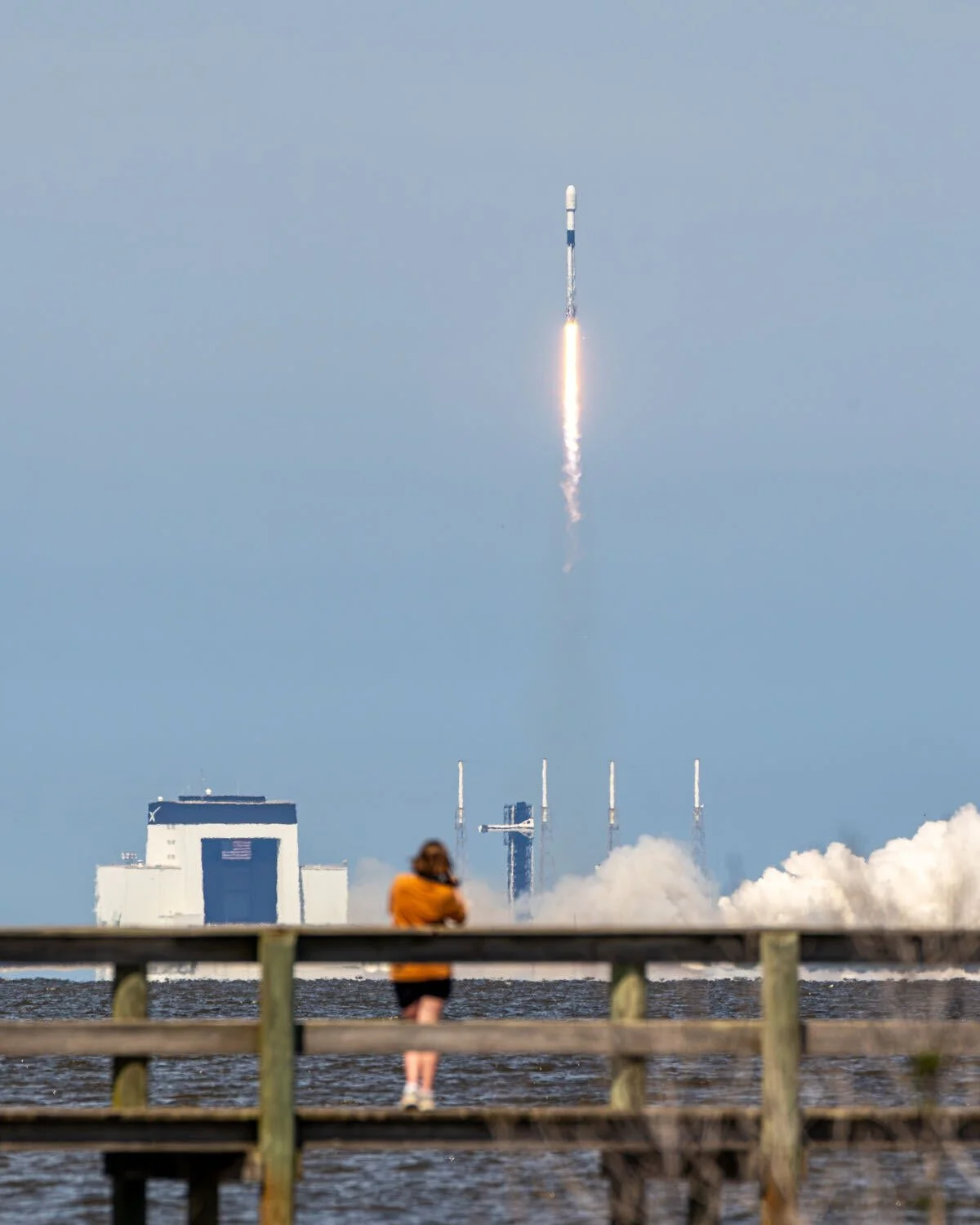
SpaceX launches SES O3b mPOWER 11, 12 & 13
Launch of 03b mPOWER 11, 12 and 13
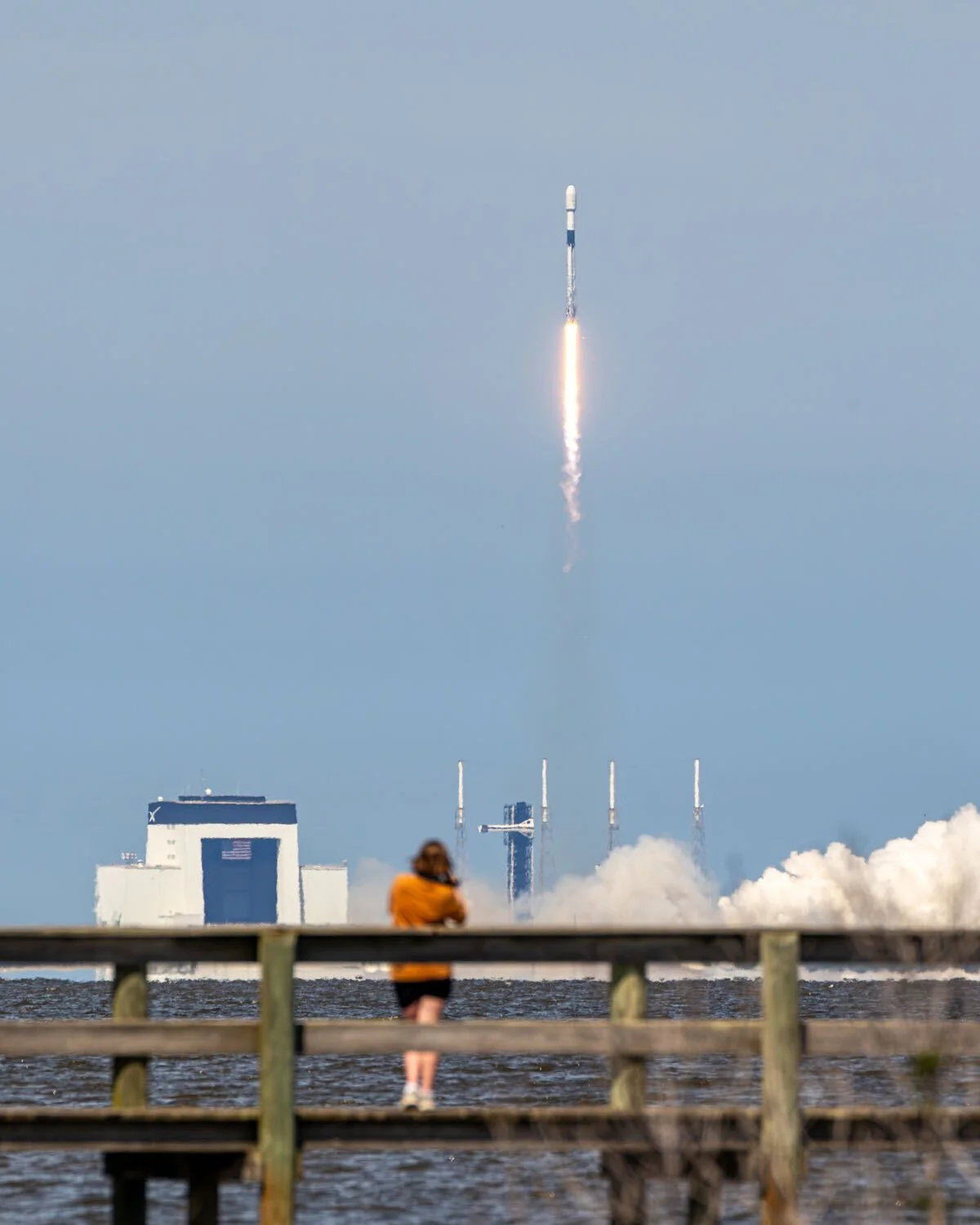
A front row view - Image Credit: Michael Seeley - We Report Space
Cape Canaveral S.F.S., FL – While many people were watching sports on a beautiful Sunday afternoon, SpaceX was launching another Falcon 9 rocket from Launch Complex 40. Liftoff came at 2:49 PM EDT sending to orbit the 03b mPOWER 11, 12 and 13 communications satellites for the company SES. Shortly after launch, the first stage booster landed down range on the recovery ship “A Shortfall of Gravitas”. This was the 29th flight for booster B1080.
Image Credits: Michael Seeley – We Report Space
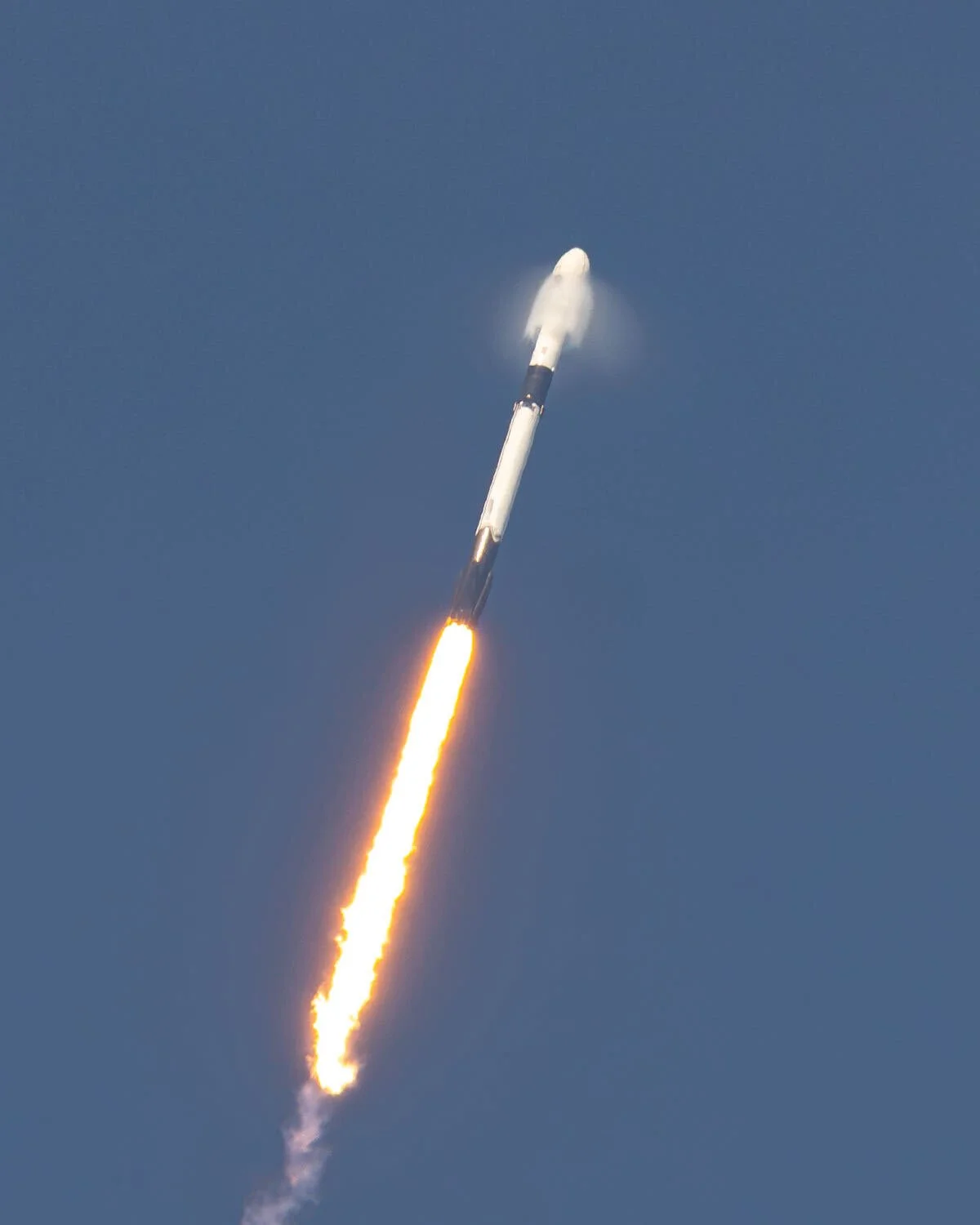
Image Credit: Michael Seeley - We Report Space
NASA Crew-13 Launch Delayed
Crew Launch from LC-40
Stock Image from Crew 9 Launch Credit: Michael Howard - We Report Space
Cape Canaveral S.F.S. FL. – It has been announced that the upcoming launch of the NASA Crew 13 mission has been delayed. The delay comes after the discovery of a leaky oxidizer valve on the Dragon spacecrafts propulsion system that will carry the crew to the International Space Station (I.S.S.). No new launch has been ascertained but a delay of two to four weeks is probable. Once the launch takes place, the crew will spend an expected six months at the I.S.S. conducting a variety of experiments before returning to Earth in the early months of 2027.
Story By: Michael Howard – We Report Space
Stock Image Credit: Michael Howard – Crew 9 Launch – We Report Space
Nancy Grace Roman Telescope via Falcon Heavy
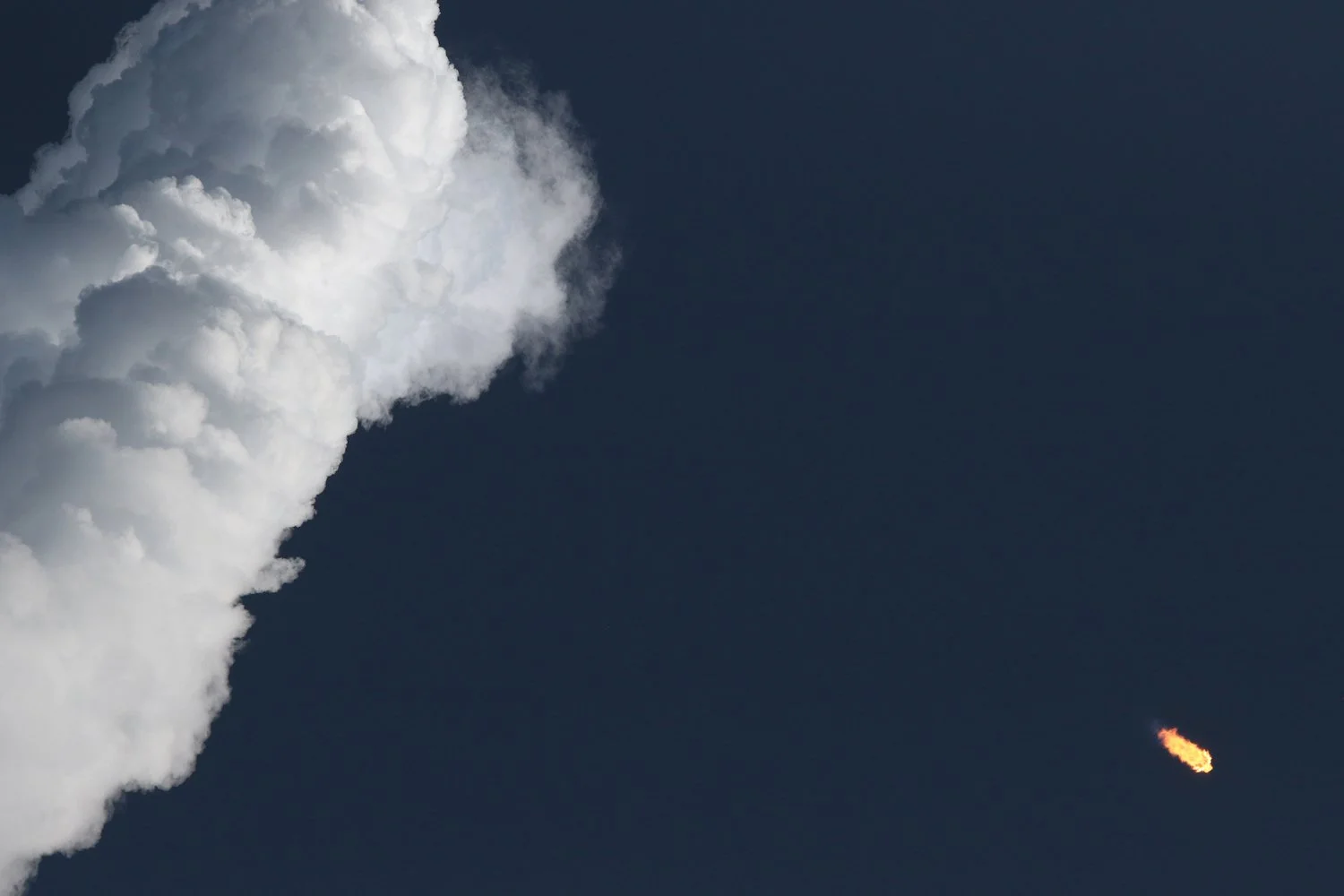
Falcon Heavy heads down range
Nancy Grace Roman
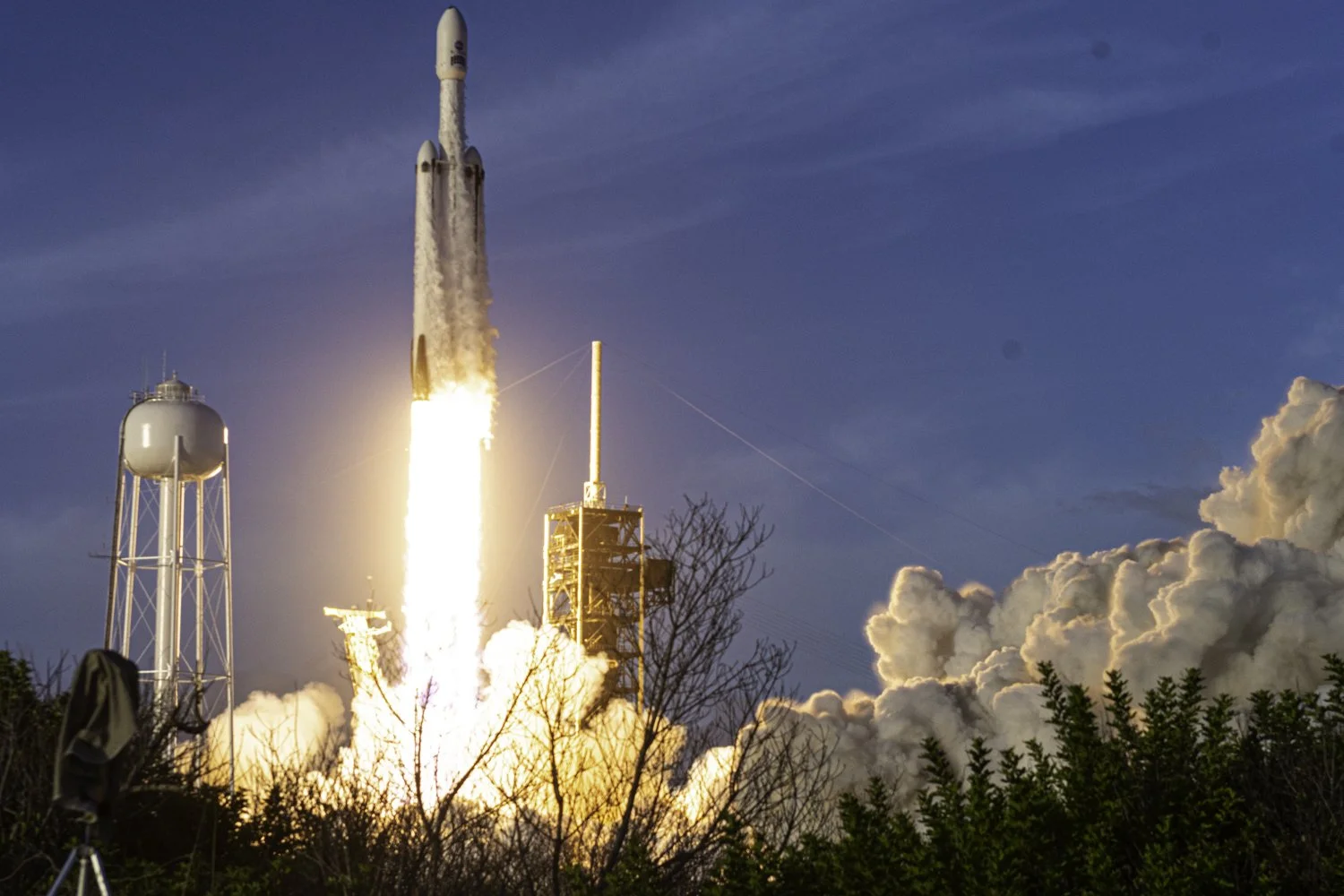
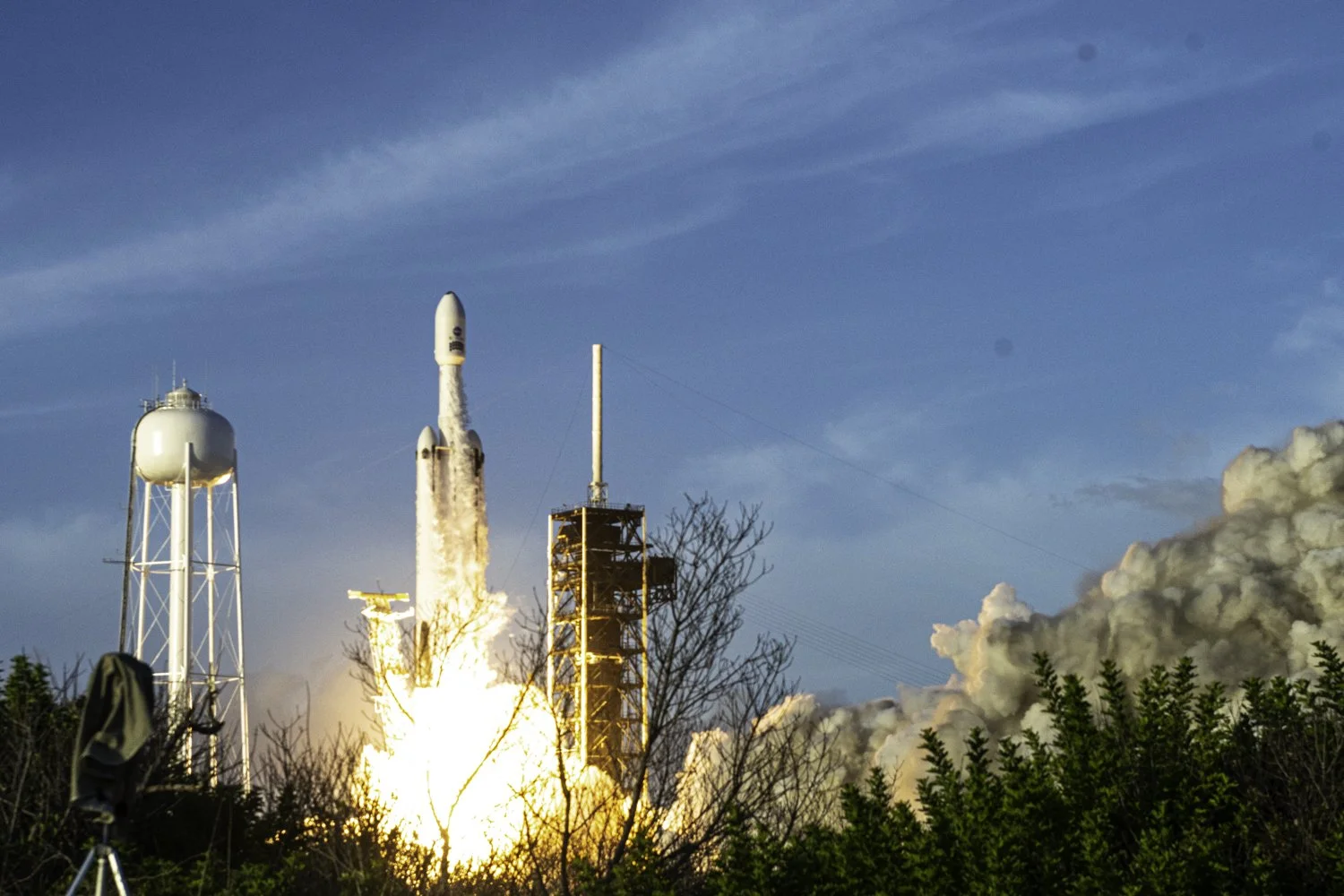
The Nancy Grace Roman observatory which was brought to life and originally funded back in 2010 was renamed from WFIRST, the Wide Field Infrared Survey Telescope to the Nancy Grace Roman telescope.
Nancy Grace Roman was the first NASA astronomer back in the 1960s, and without her input, knowledge, the already proven and widely known Hubble Telescope would never have been designed and built. Today, she is still known as “The Mother of Hubble”. The Hubble telescope was launched back in 1990 aboard the Space Shuttle Discovery.
The primary concept in building Roman was simplicity. The first objective was to build a shield covering the telescope’s mirror during launch and solar array to provide electrical power.
Roman when looked in comparison against Hubble or the James Webb is far less complex as it has a smaller 7.9-foot (2.4-meter) primary mirror that is nearly three times smaller than Webb’s. The mirror was originally built to be used by the National Reconnaissance Office, for a project that was cancelled.
Roman will see a wider swath of the universe from its planned orbit known as the second-Earth Lagrange point (L2) about a million miles (1.5 million kilometers) from Earth and opposite the sun.
Comparing Roman to the Hubble Space Telescope shows a distinct difference; Hubble has a single detector (1024 pixel) whereas Roman has 18 detectors with 4096 X 4096 pixels capable of capturing more infrared light coming through the telescope.
Utilization of these detectors enables the Roman Satellite to cover about 200 times more space than Hubble. This panoramic view will focus on dark energy, dark matter and exoplanet discovery.
Additionally,another “tool” is Roman Coronagraph, was built with masks, filters, and adaptive optics capable of filtering glare from stars It is designed to photograph planets far fainter than either the Webb or Hubble.
All of this data captured will be downloaded and readily available to scientists throughout the world. The big upside to all of this data is in which the time and speed in which it is captured and made available
going on in the Milky Way galaxy and in distant galaxies.
Article: Graham Smith/WRS
Images: Graham Smith/WRS, Michael Seeley/WRS, Mike Howard/WRS
#nasakennedy #kennedyspacecenter #spacex #romanspacetelescope
@spaceimagingatteledyne @baesystems #nro.gov #spacecoastdaily #canaveral.tours #launch @nikonusa @emrekelly

Starship on the Bayou
Final Starlink on Falcon 9 from Florida
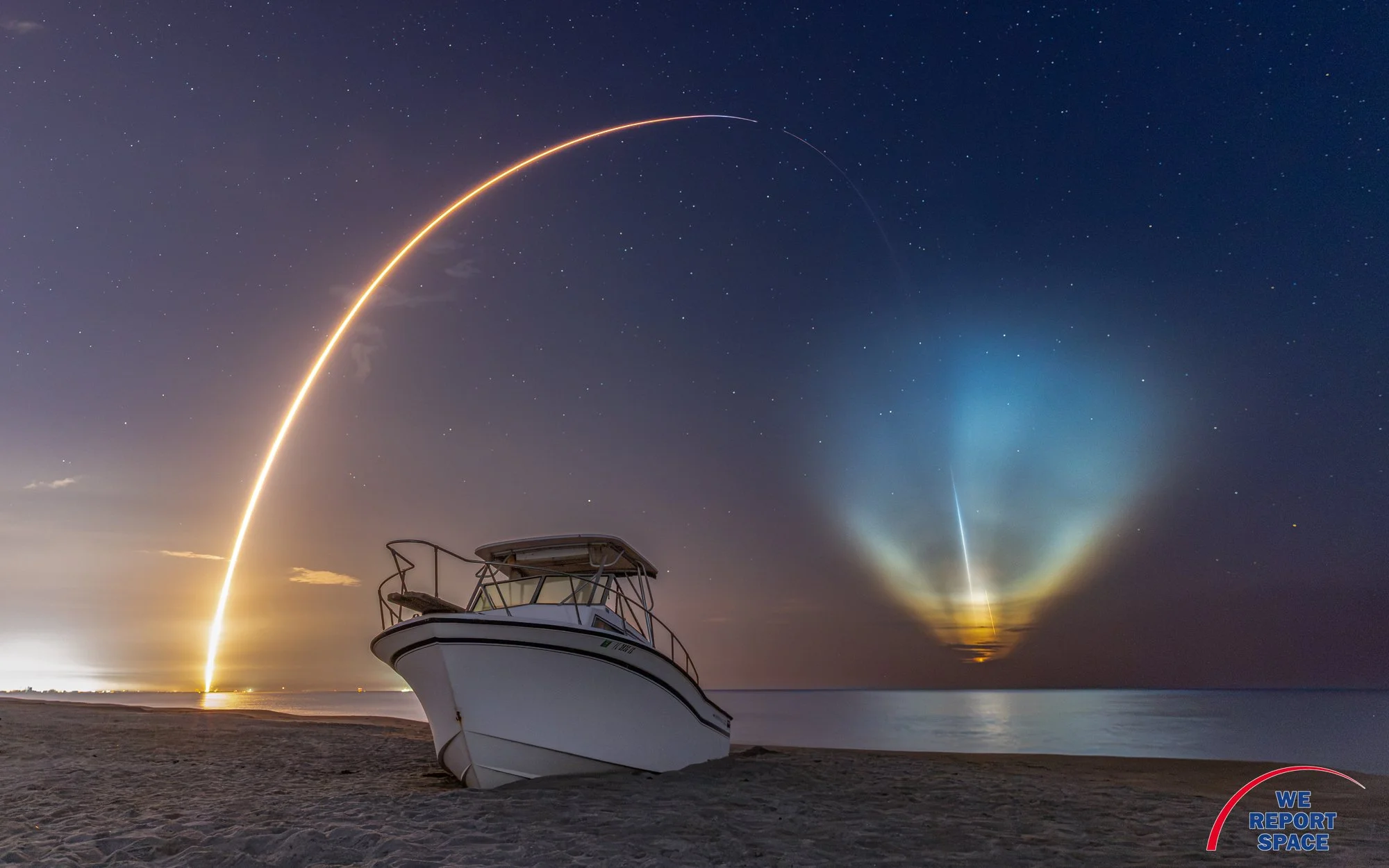
Cape Canaveral S.F.S. FL- In some exciting news from SpaceX, it was announced that this latest launch of Falcon 9 and the StarLink 10-49 Mission would be the last StarLink flight from Florida aboard the workhorse of SpaceX. StarLink 10- launched an hour and a half before sunrise. Lofting the mission was booster B1067 making its 37th launch and landing.
While the Falcon 9 is not yet retired, StarLink will now be flown from Florida on the massive Starship once the infrastructure is ready to support launch operations.
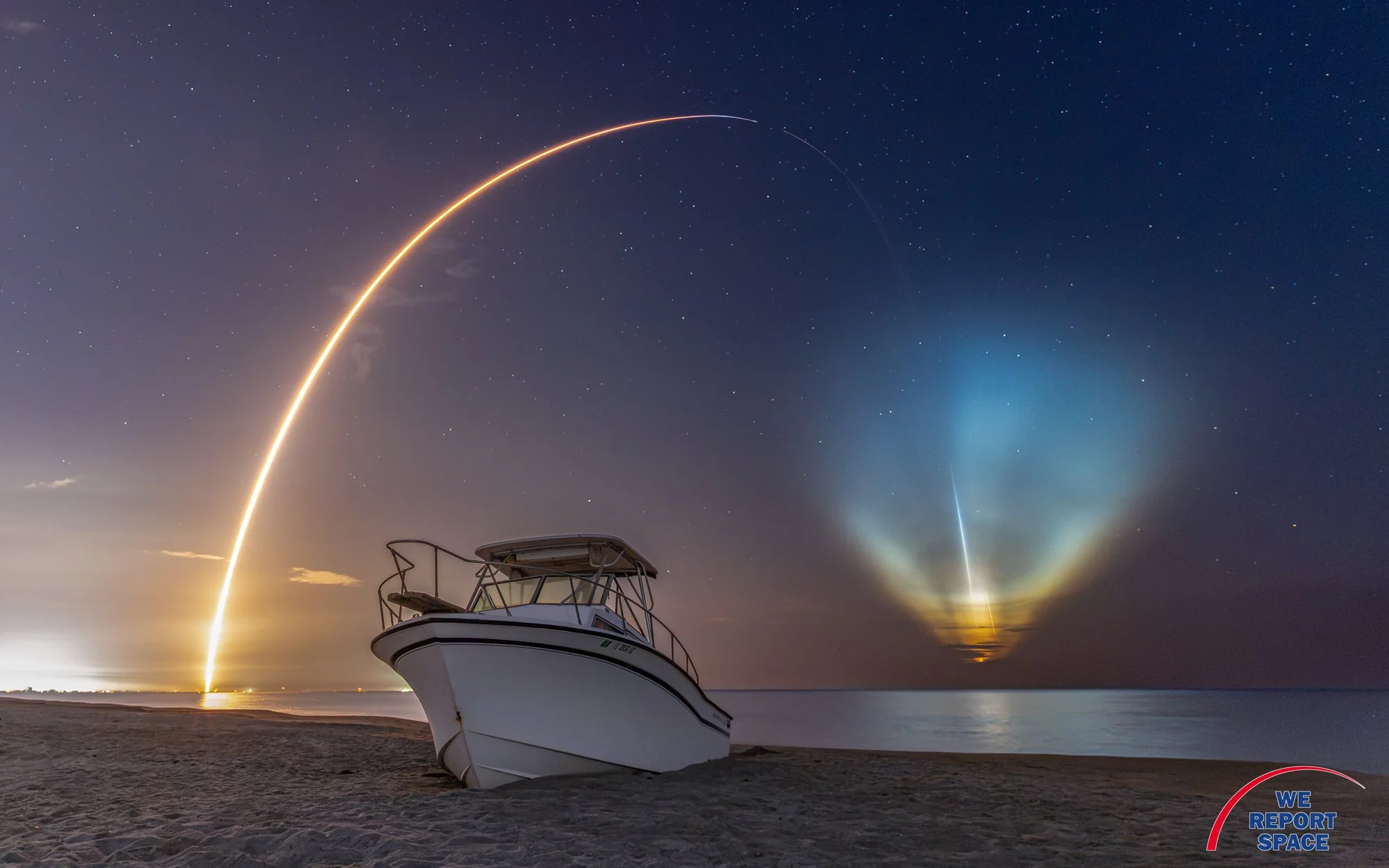
StarLink 10-49 Image By: Michael Seeley - We Report Space
Just hours later, SpaceX made a huge announcement they would be building a massive Starbase in southern Louisiana along the coast of the Gulf of Mexico (America).

Starbase Louisiana Rendering Credit: SpaceX
In a statement from Elon Musk:
“We’re preparing to build a spaceport that, until now, has only existed in science fiction,” SpaceX Founder & CEO Elon Musk said. “SpaceX was founded to bring about a future where humans are out exploring amongst the stars, which will only be possible when we make going to space as routine as flying on an airplane. Starbase, Louisiana will unlock that future. Thank you Governor Landry and the people of Louisiana for joining us on this journey and for their help in the years ahead as we work together to build one of the most inspirational places on the planet.”
In a press release from SpaceX:
“This self-sustaining spaceport is being designed from the ground up to have everything necessary to dramatically increase the rate at which Starship can launch. The site will include 10 Starship launch pads, deep-water shipping capabilities, vehicle processing facilities, and an airport. Additionally, the location in southern Louisiana comes with access to abundant natural gas, which SpaceX will use for the site’s power stations and to liquefy onsite into the liquid methane that fuels Starship.” A presentation video is available on the SpaceX website:
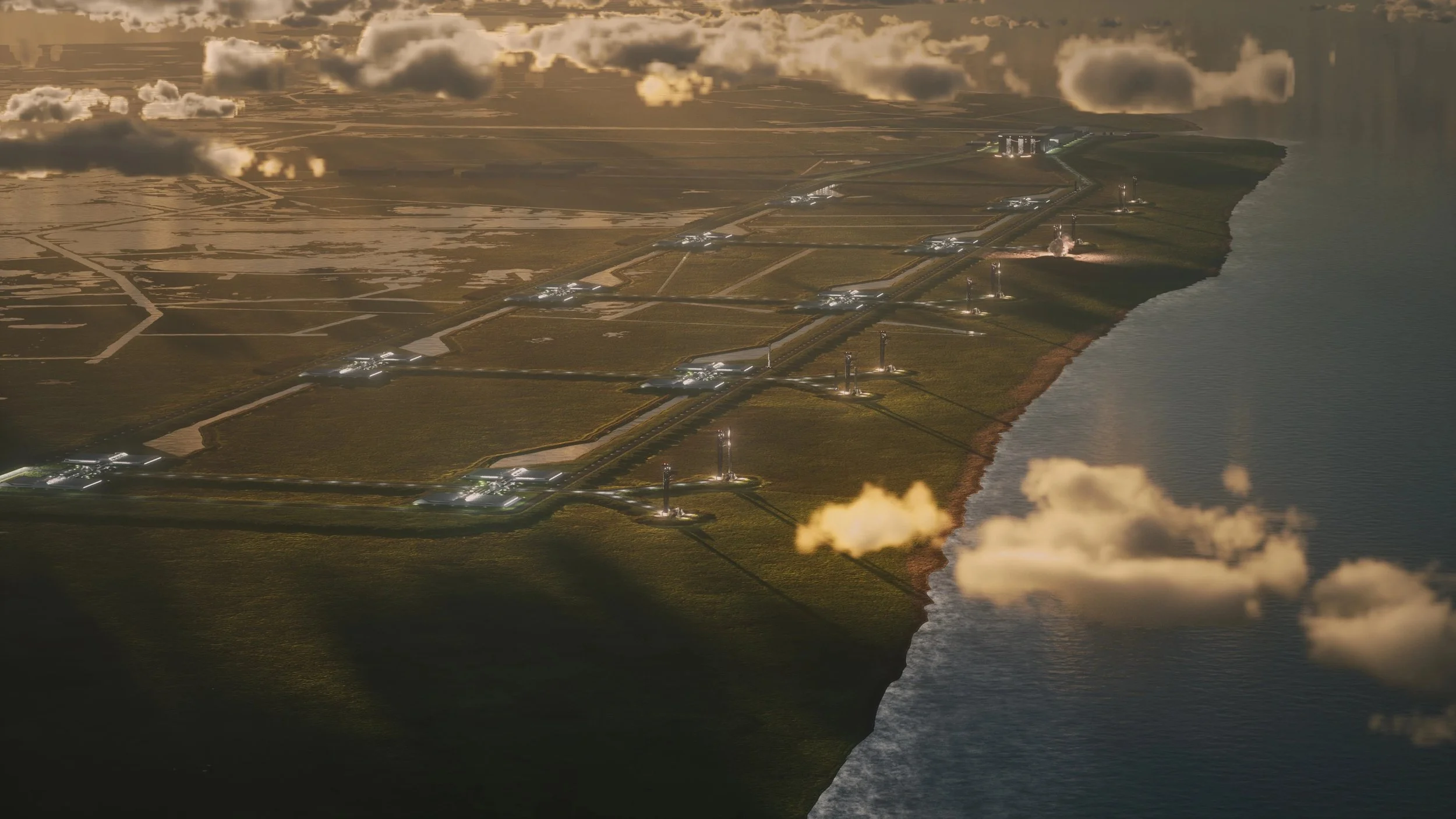
Starbase Louisiana Rendering Credit: SpaceX
In a statement from the Gov. of Louisiana:
“Today is a pivotal moment for Louisiana. This announcement pushes our state beyond $250 billion in new investment and puts us at the center of the next great frontier,” Governor Jeff Landry said. “We have the people and talent to build what the world once thought impossible, creating jobs on land, across the Gulf and through space. Our job creation knows no bounds. This is America First. This is Louisiana First. I want to thank Elon Musk and the entire SpaceX team for choosing Louisiana.”
With the building of 10 launch pads, this will surpass Florida which currently has really only five actively used launch sites. LC-39A and B on Kennedy Space Center with LC-37, LC-40 and 41 on the Cape Canaveral S.F.S are seeing a lot of use. Of those five, SpaceX uses 2 of them. NASA, United Launch Alliance and Blue Origin use the additional three.
Story By: Michael Howard - We Report Space
Starlink Launch Image By: Michael Seeley
SpaceX Louisiana Images By: SpaceX

Two Launches - Both Coasts - Minutes Apart
Fire in the Sky - GlobalStar 2-R Mission 1
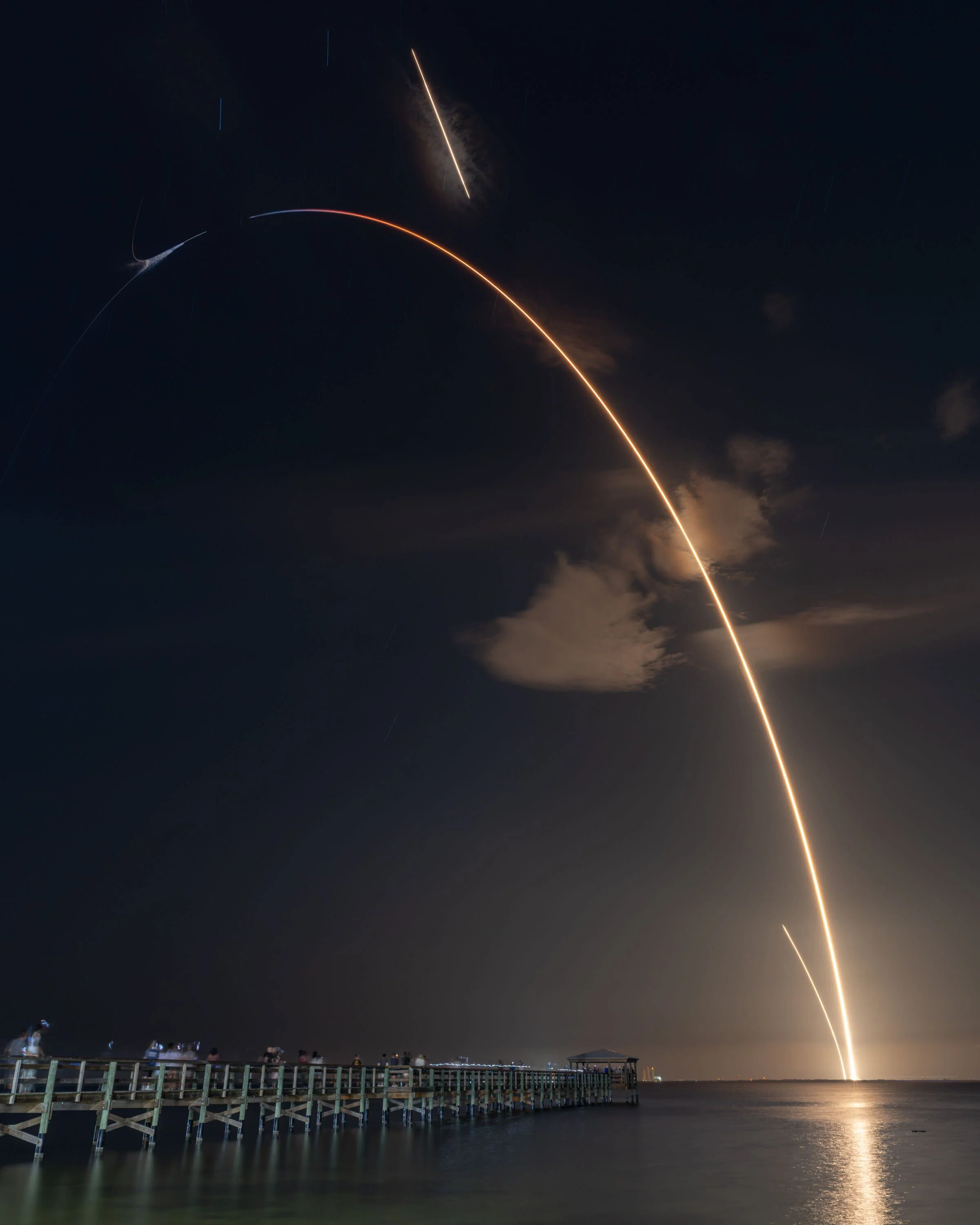
Launch, Land and Repeat - GlobalStar launch and landing from LC- 40 and LZ-40 Image Credit: Michael Seeley - We Report Space
Cape Canaveral S.F.S. FL. – In what is possibly a record, SpaceX pulled off a double header for launching two rockets, from two coasts less than 45 minutes apart. The first launch came at 9:12 PM EDT from Cape Canaveral in Florida and the second launch came at 9:50 PM EDT from Vandenberg S.F.S. in California. The Cape Canaveral launch included a landing of the first stage booster shortly after launching the GlobalStar 2-R Mission 1 communications satellite.
The Vandenberg launch was a secret mission for the U.S.S.F name USSF-366 lofting what is possibly some communications satellites for the military. The Cape Canaveral launch created an incredible sight of a “space nebula” as the first stage booster made its’ way back to the launch site.

“Space Nebula” along the Space Coast as first stage booster returns. Image Credit: Michael Seeley - We Report Space
Story By: Michael Howard – We Report Space
Images By: Michael Seeley – We Report Space
Max Power comes to K.S.C. this Fall
Max Power at K.S.C.
Kennedy Space Center, FL. – On the afternoon of August 14, 2026, NASA held a press conference with dignitaries, guests and media in attendance.
Among the noted speakers was NASA Administrator Jared Issacman. Other attendees and speakers included: Kennedy Space Center Director Brian Hughes, U.S. Senator Ashley Moody, U.S. Representatives Byron Donalds and Mike Haridopolos and Daren Soto.
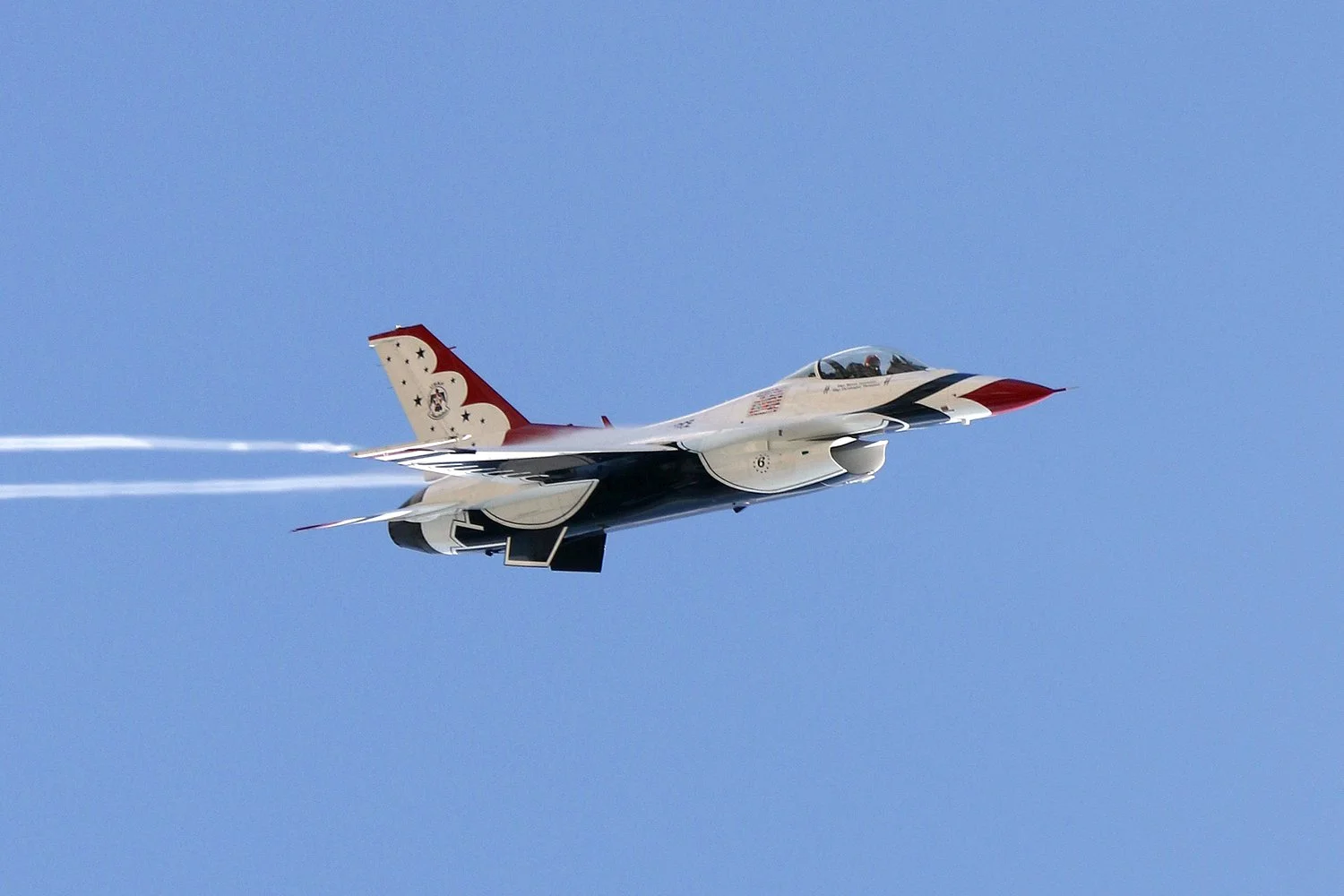
At this event, it was announced that a Salute to America 250 is planned with an Air Show at the Kennedy Space Center featuring the U.S. Air Force Thunderbirds for the first weekend of November. According to the Thunderbirds schedule website, there is a show scheduled for K.S.C. on November 7-8, 2026.
Thunderbird 6 in a previous air show - Image Credit: Michael Howard - We Report Space
In a statement from the producers of the air show: “It is an honor to collaborate with NASA and bring an aviation spectacle to the skies over Kennedy Space Center as part of MAX POWER,” said Bryan Lilley, CEO of Air Dot Show. “There could not be a more iconic place to celebrate the past, showcase the present and preview the future of American aviation and space exploration as our nation marks its 250th anniversary.”
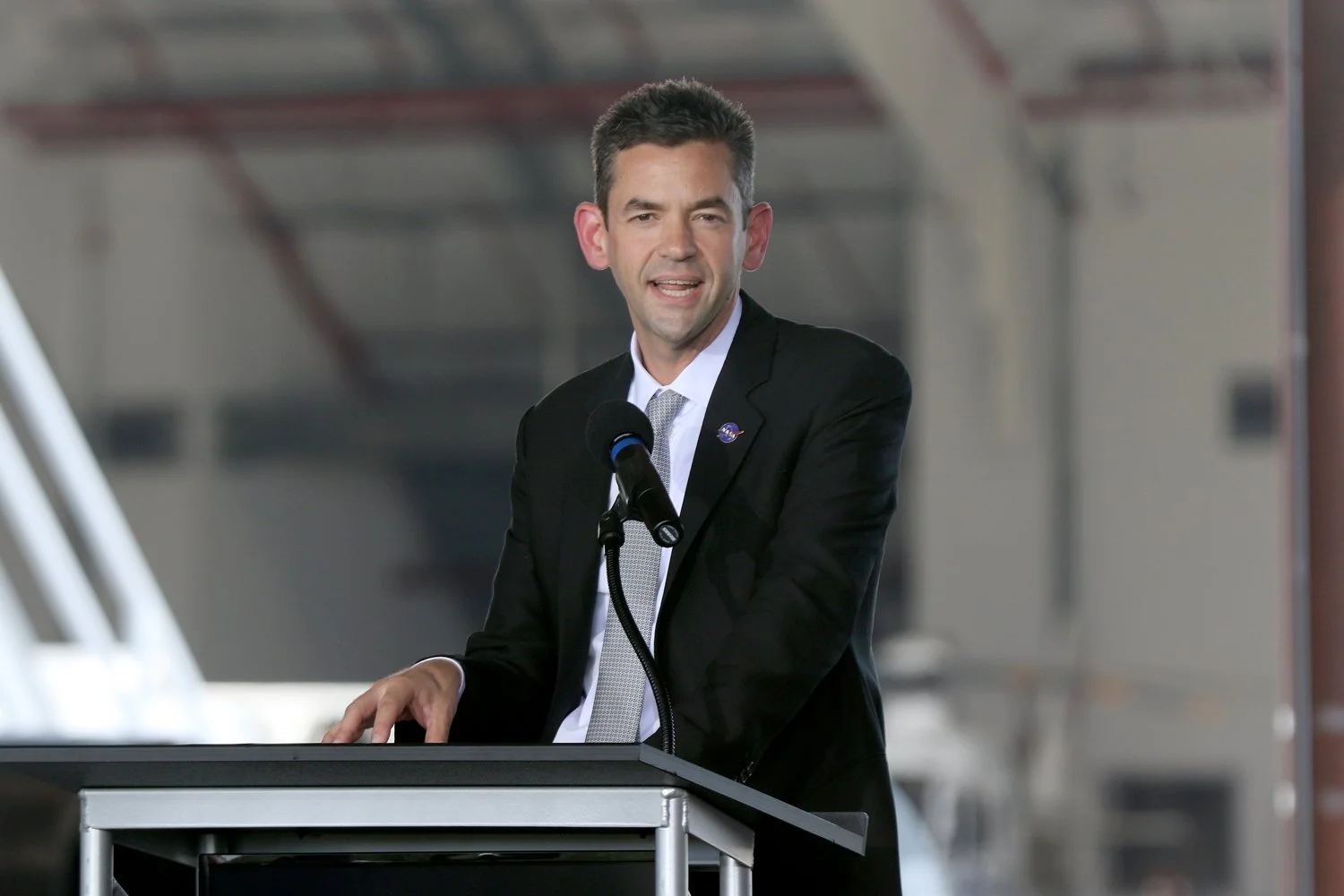
NASA Administrator Jared Issacman - Image Credit: Michael Howard - We Report Space
In a statement from NASA: “This November, we are opening Kennedy Space Center’s historic Shuttle Landing Facility to the public for America’s newest and most exciting aerospace technology expo and air show, and we are calling it MAX POWER,” said NASA Administrator Jared Isaacman. “For 250 years, America has advanced by building what did not exist, flying higher, moving faster, and reaching toward the near-impossible. There is no better place to celebrate that spirit than at NASA Kennedy, America’s gateway to the stars and the place where so many of our nation’s greatest achievements began.”
Plans include a variety of aircraft demonstrations from across the various branches of service as well as static and interactive displays on the Kennedy Space Center and the Visitors Center like the Saturn V Center. While we don’t yet fully know all of the displays, one might include mock up versions of the Lunar Landers that will fly next year as part of the Artemis Missions.
In statement from The Kennedy Space Centers Visitors Center:
“Kennedy Space Center Visitor Complex is where America’s history of aerospace innovation comes to life, from the aircraft that helped launch the space program to the spacecraft that carried us to the Moon and the technologies shaping what comes next,” said Therrin Protze, Chief Operating Officer of Kennedy Space Center Visitor Complex. “MAX POWER brings that entire story together in one place, giving the public an up-close look at the past, present and future of American aerospace.”
In a statement from Space Florida that helps to oversee the Launch and Landing Facility:
"Florida has been part of some of the most historic moments in American space exploration, and we're proud to welcome the nation to this storied site for MAX POWER this fall," said Col. Rob Long (Ret.), president and CEO, Space Florida. "Together with NASA, we have spent generations building the infrastructure, talent, and spirit of innovation that make moments like this possible, and this event offers a front-row seat to that ongoing story."
Florida has been a leader of space innovation and exploration for decades and now the public will have an additional opportunity to get a real “behind the scenes” look at our space program.
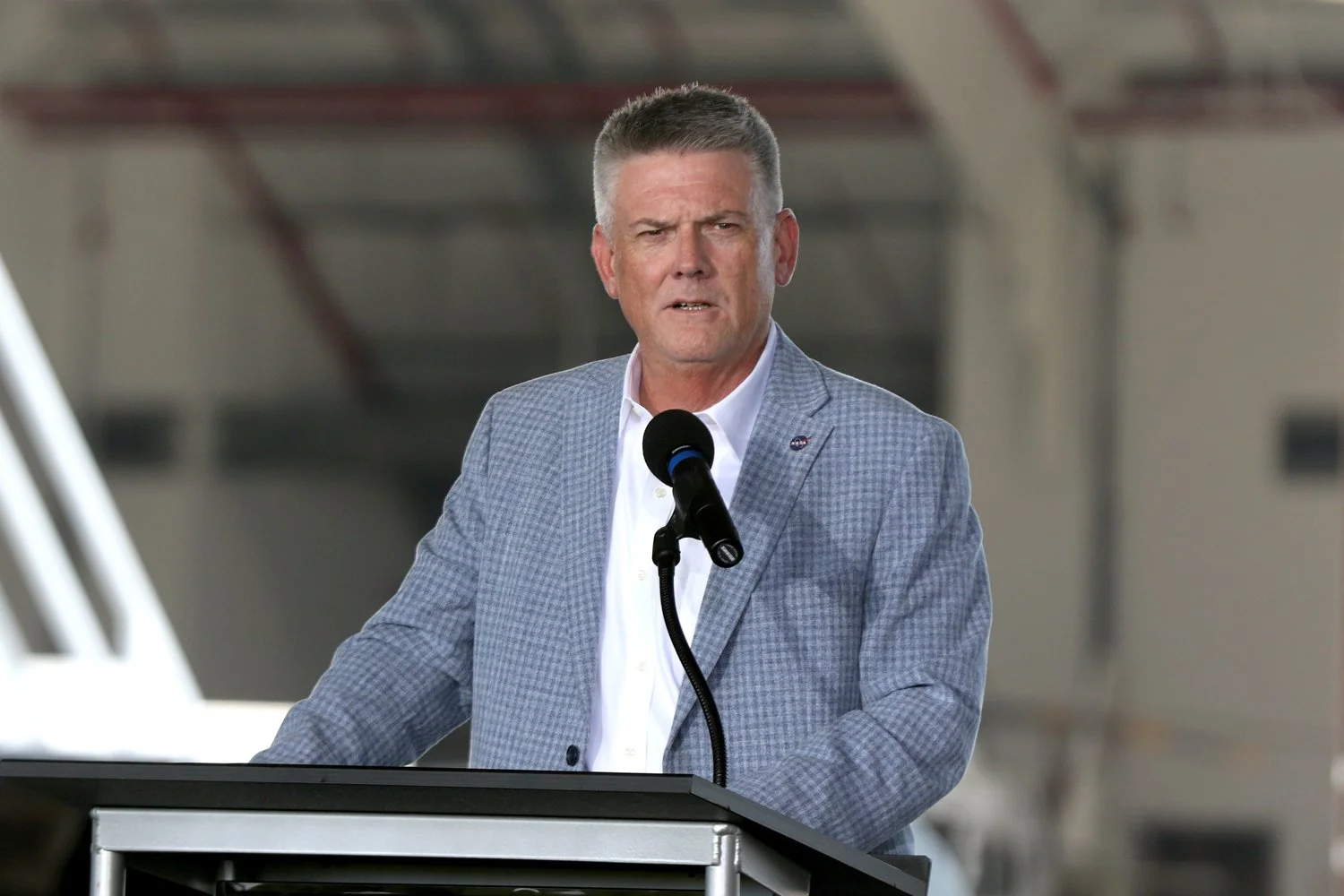


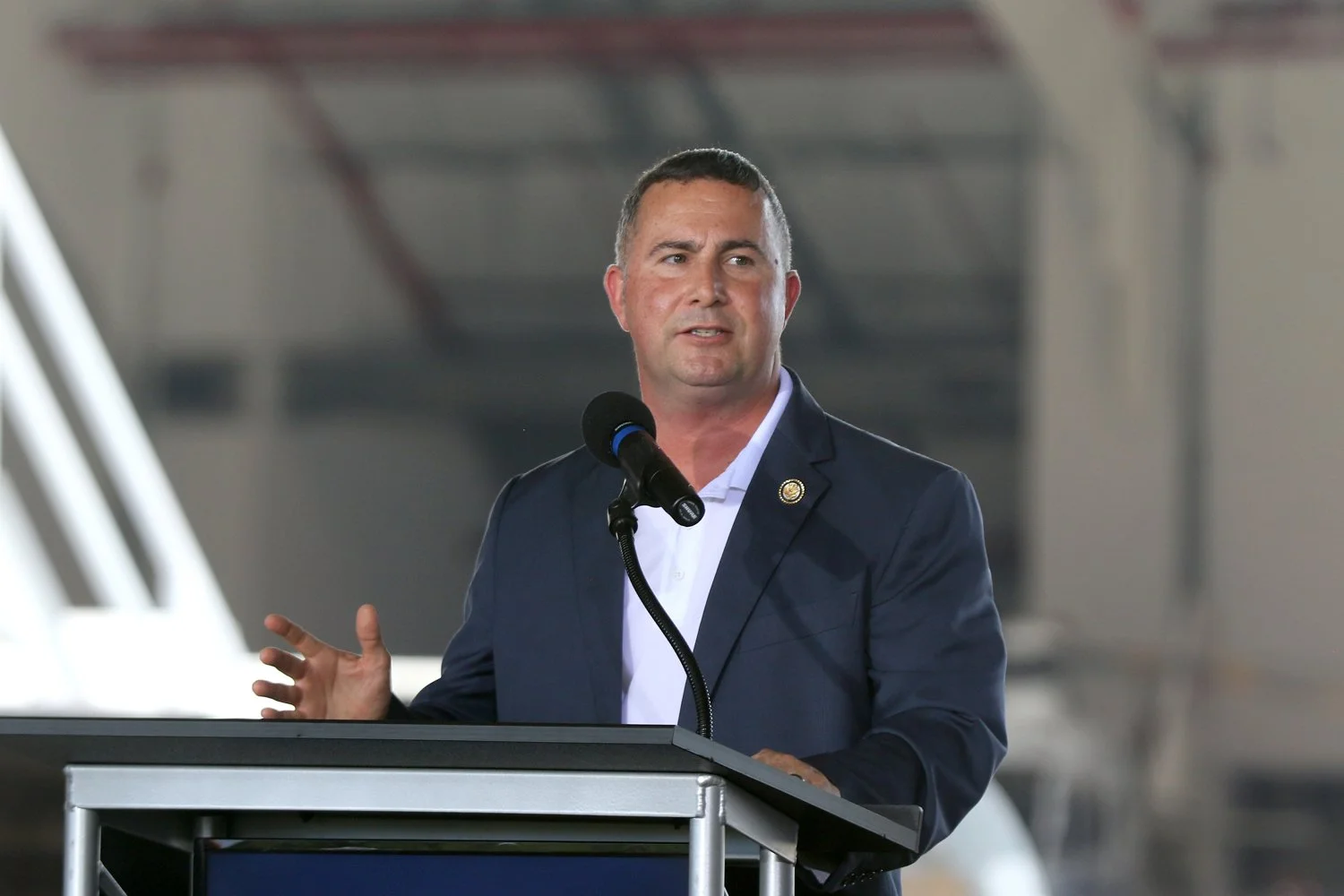

L-R: Brian Hughes - KSC Director, Senator Ashley Moody, Congressman Mike Haridopolos, Rep. Daren Soto and Congressman Byron Donalds
Story By: Michael Howard – We Report Space
Images By: Michael Howard – We Report Space
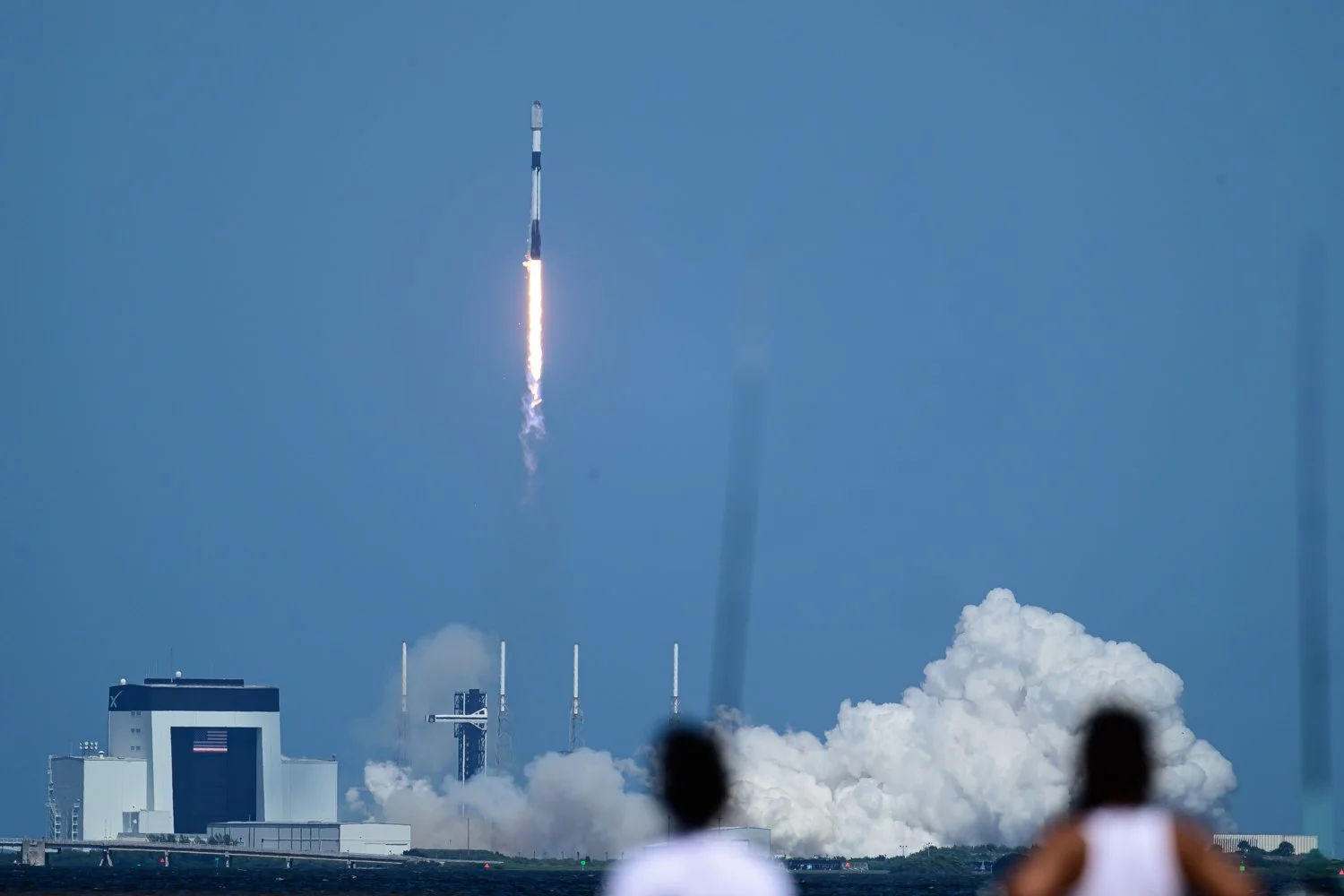
50th Launch from Florida’s Space Coast in 2026
Starlink Flies
Cape Canaveral Space Force Station, Fl~
To begin the business week off, SpaceX focused on populating the LOE (Low Earth Orbit) of outer space with an additional 29 StarLink Internet communication satellites.
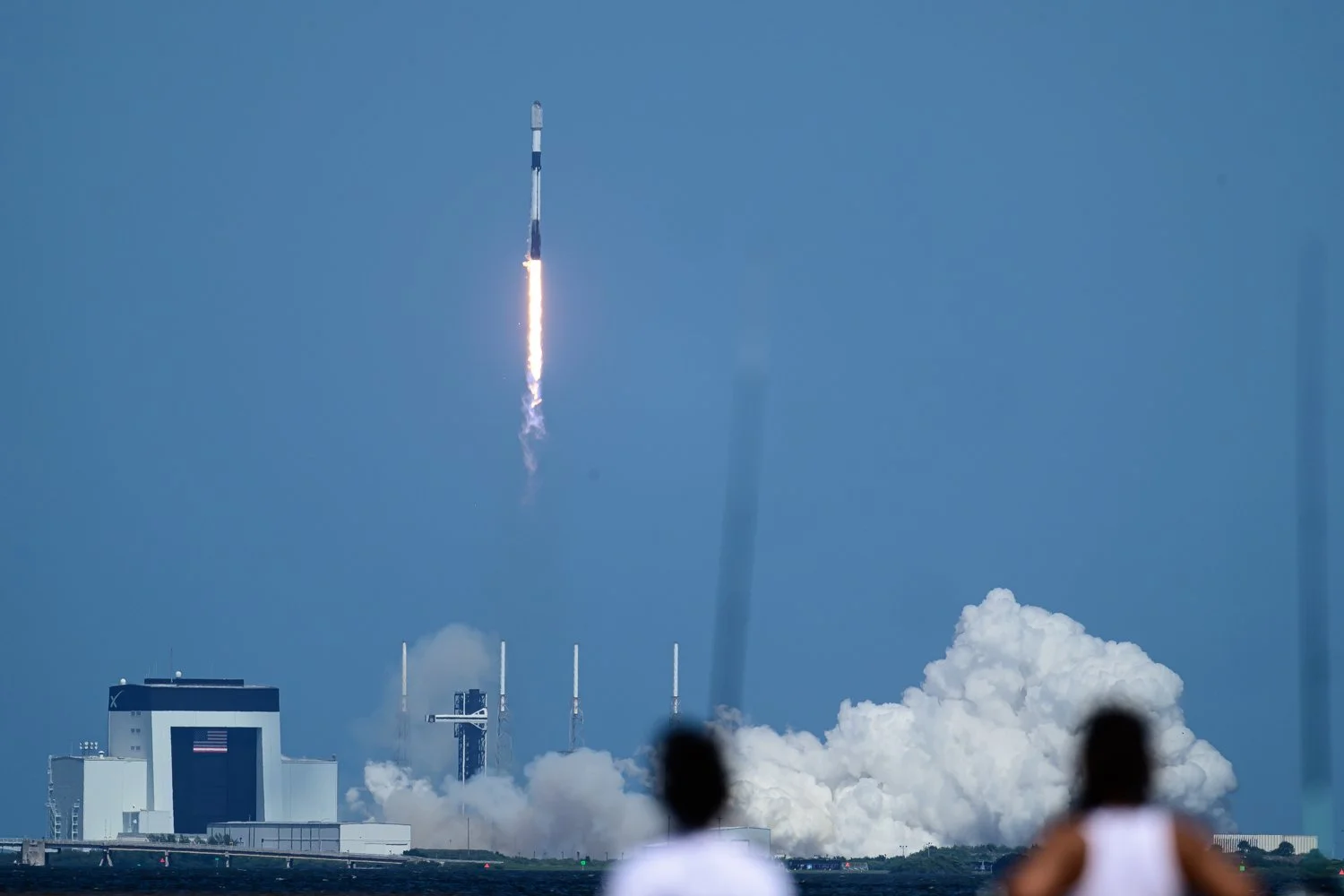
Starlink Launch Stock Image By- Graham Smith - We Report Space
Lift off from SLC- 40 at Cape Canaveral Space Force Station occurred at 11:58 AM on August 11, 2026 under incredible blue skies and headed out on an N E trajectory.The launch had been scrubbed the day before we believe due to weather in the recovery area.
As with almost every other mission, SpaceX relied on a previously used first stage booster (B1085) which completed its 18th flight landing offshore in the Atlantic Ocean aboard the recovery ship “A Shortfall of Gravitas”, the SpaceX owned ASDS (Automated Spaceport Drone Ship).
As typical with other Starlink V2 Mini missions, the satellites were scheduled to deploy after SECO (Second Stage Engine Cut Off). Once deployed, the satellites will use onboard ion thrusters to raise themselves into their operational orbital shells, adding to SpaceX's broader Starlink constellation that provides global broadband internet coverage.
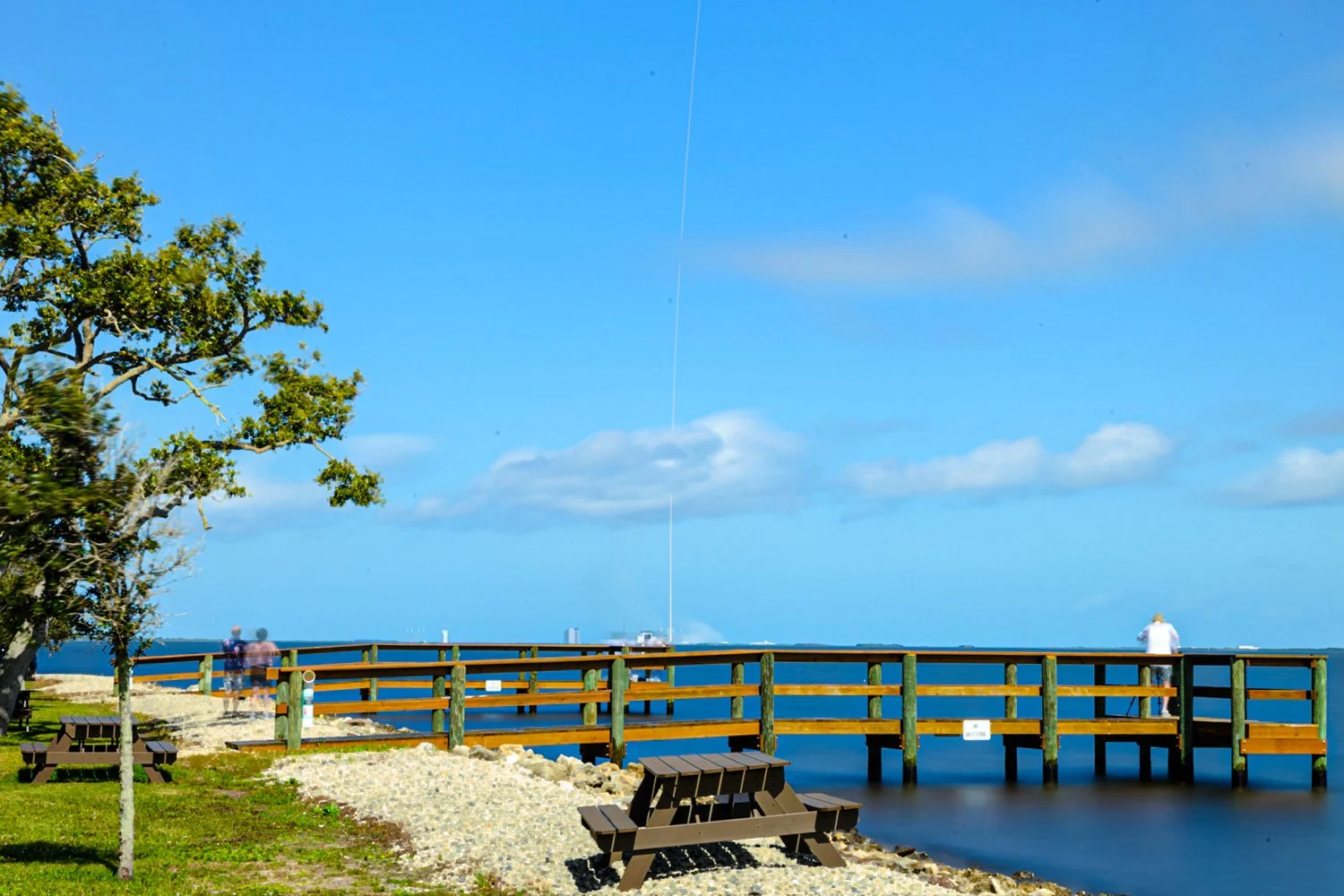
Starlink Launch Stock Image By: Graham Smith - We Report Space
Todays launch will be the 50th launch from the Space Coast in 2026 and this launch will close the books on the 96th mission overall for SpaceX in 2026. To date, there are an estimated 12,761 StarLink satellites that have been placed into orbit with over 10,000 on orbit and operational.
Article: Graham Smith/WRS
Images: Graham Smith/WRS
#spacex #starlink #capecanaveralspaceforcestation #sldelta45 #usspaceforce #spacecoastdaily #karsparkksc #canaveral.tours #bkadventure @emrekelly
Blue Origin and a Step Closer to Flying
New Glenn in Flight
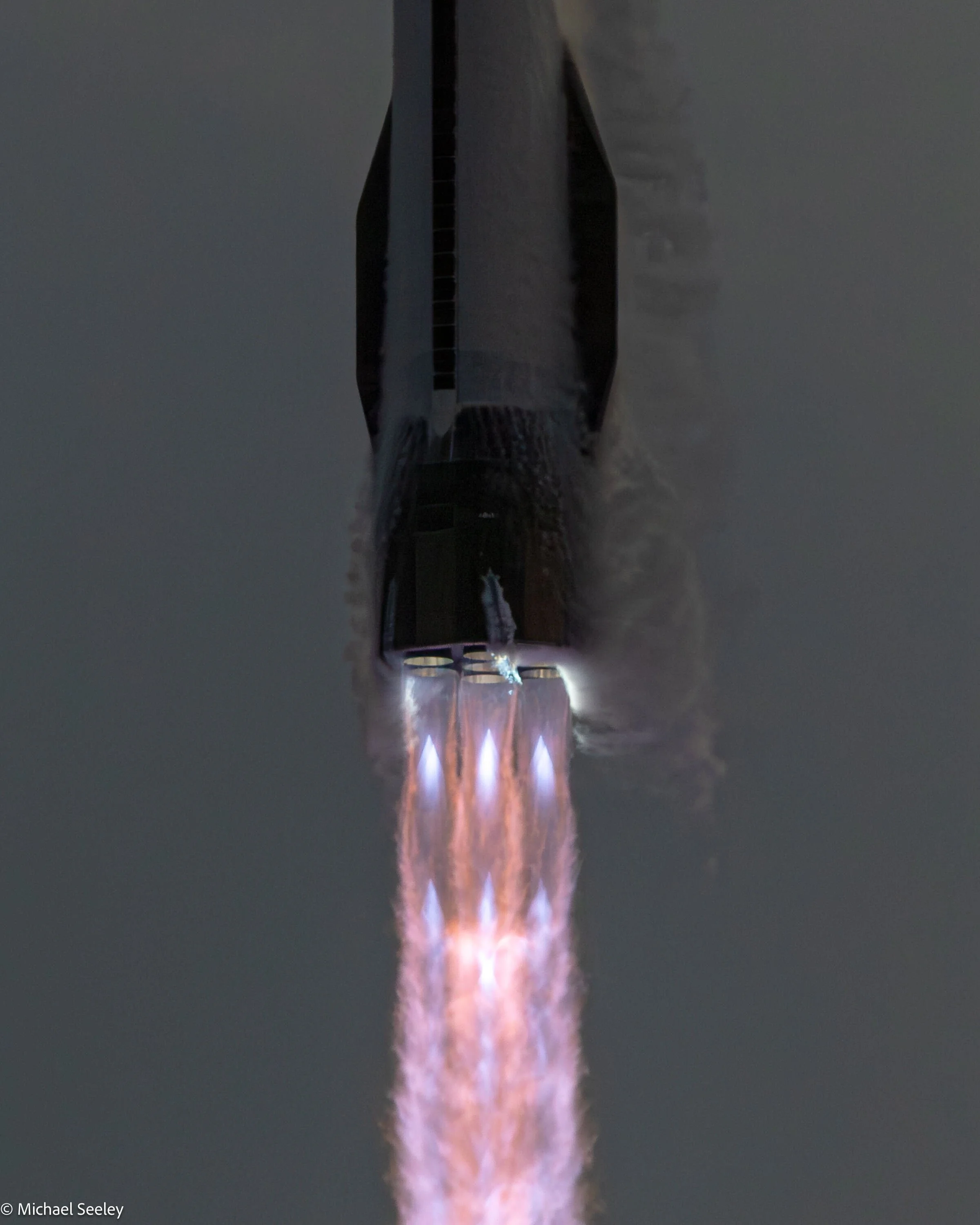
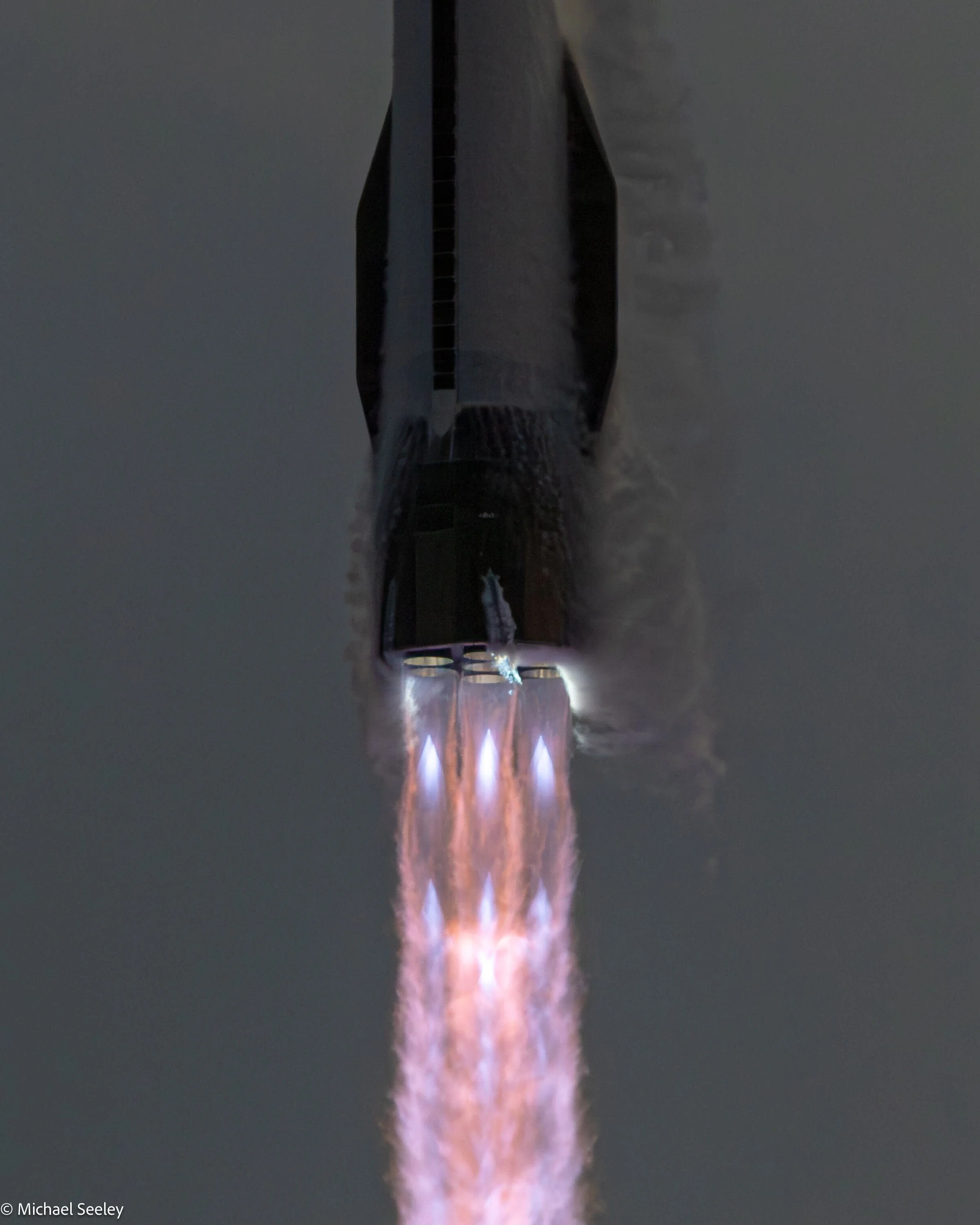
New Glenn Flight highlighting the BE-4 engines. Image Credit - Michael Seeley
Cape Canaveral S.F.S. FL., - In a press release this week from Blue Origin, it was announced that a root cause of the New Glenn rocket explosion had been identified. As you recall, the evening of May 28, 2026 during a hot fire test at LC-36, New Glenn experienced a major anomaly destroying the rocket and most of the launch pad area.
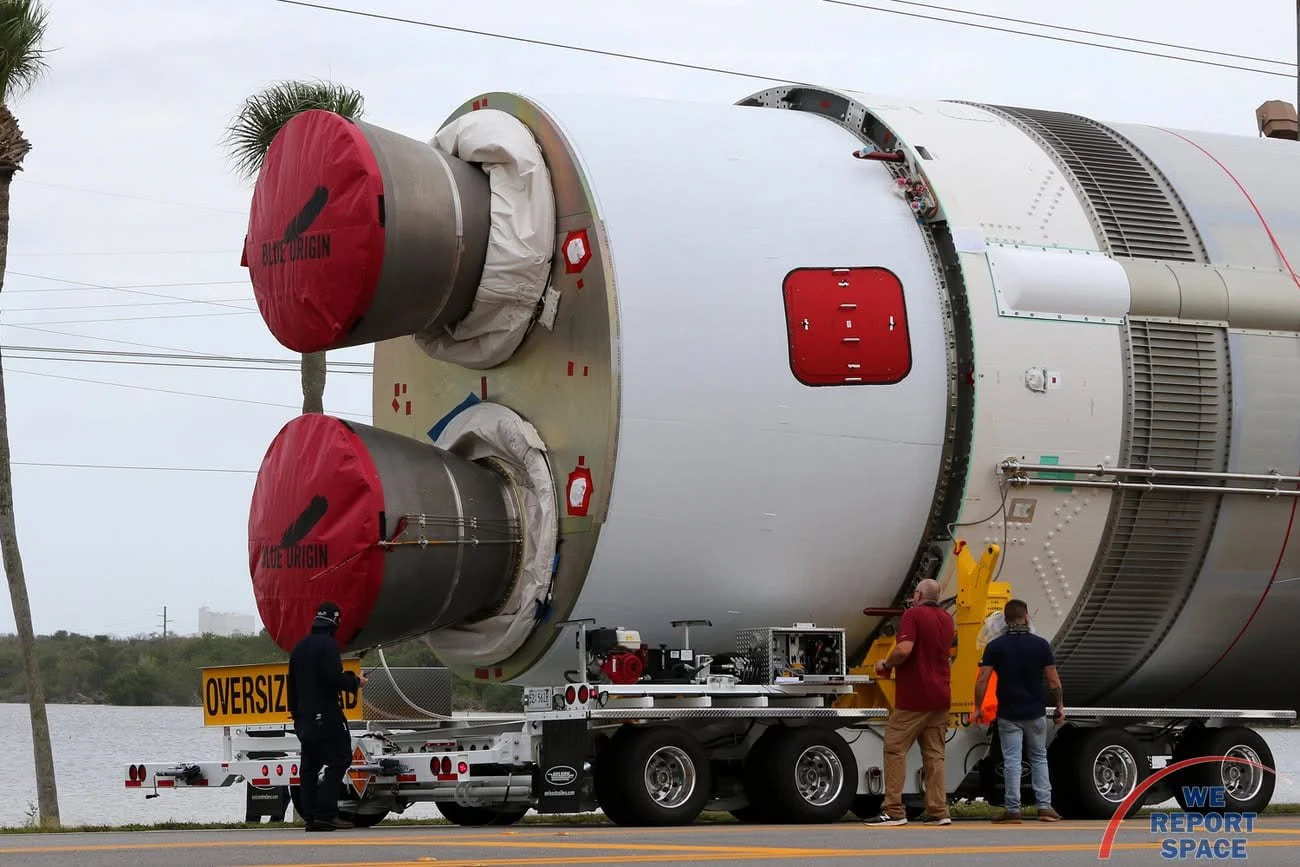
U.L.A. Vulcan “Pathfinder” with BE-4 Engines on the first stage booster - Image Credit: Michael Howard - We Report Space
In a statement released from Blue Origin CEO Dave Limp: “The anomaly originated at the main oxygen valve on one of the BE-4 engines, which was later confirmed by hardware recovery and inspections. Extensive component-level and engine hot fire tests have been conducted to understand the failure mode better and inform mitigations. The path forward is clear. We're making small modifications to the valve that can be quickly retrofitted to existing engines. We’re manufacturing the updated hardware, which will be ready by the end of this month. In parallel, we're working through the remaining fault tree analysis.”

Vulcan in flight with BE-4 engines highlighted - Image Credit: Graham Smith - We Report Space
Though this might be seen as path forward, this engine issue also has complications with launch provider United Launch Alliance (U.L.A.) which is also using similar BE-4 engines on its’ Vulcan rocket. Vulcan has been grounded for months after issues with the solid rocket motors and adding to that grounding are those BE-4 engines of which Vulcan uses two of them on the first stage booster. It is being noted that while the U.L.A. BE-4 engines are not identical in that U.L.A. does not have the need for reuse and relighting for a first stage booster landing. However, it is being reported that Blue Origin will be making changes to the U.L.A. version of the BE-4 engines ahead of the next Vulcan flight that is currently NET than September of this year.
While progress is being made on all fronts for both Blue Origin and its New Glenn rocket as well as U.L.A. and the Vulcan rocket,
Blue Origin is working hard to bring the heavily damaged launch pad back to flight ready operation before the end of this year.
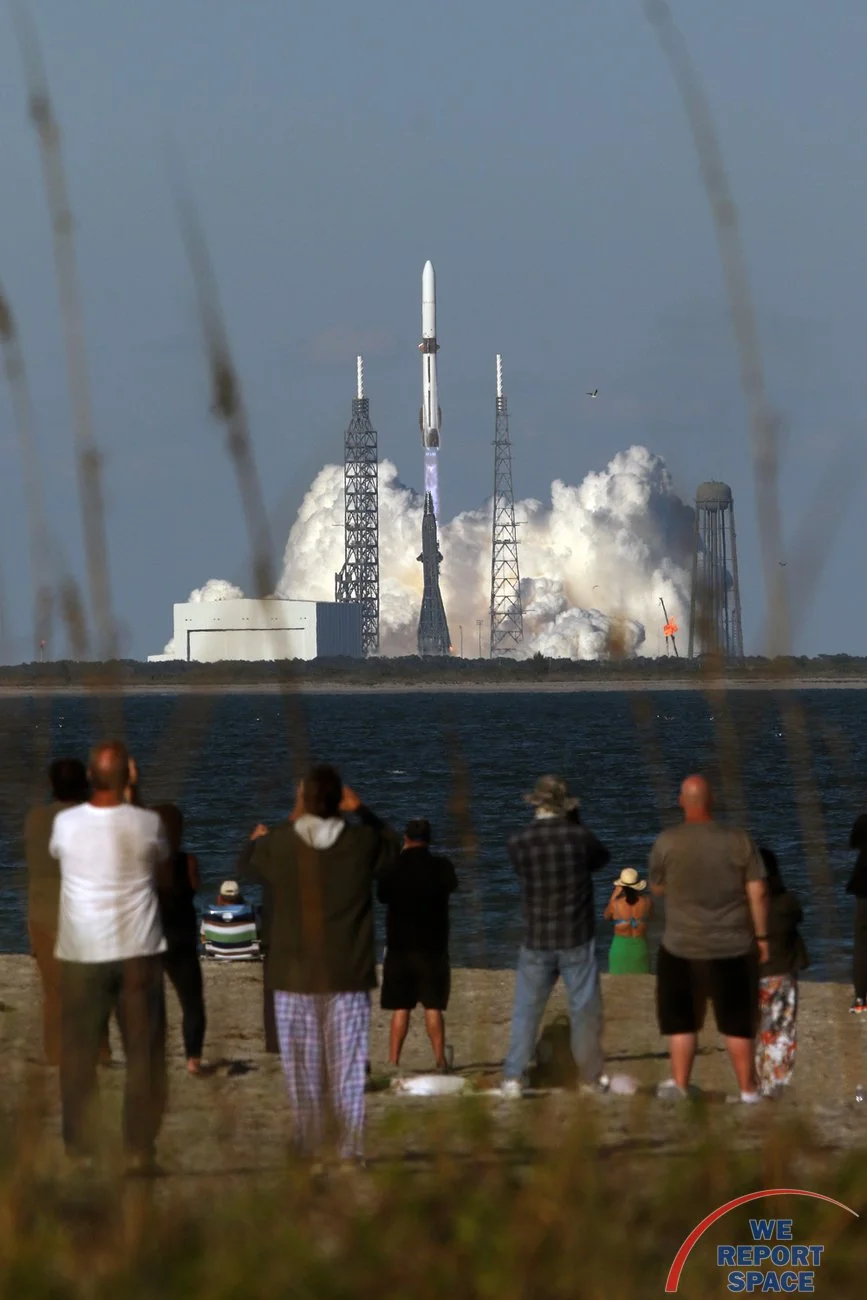
New Glenn launch as seen from Cape Canaveral - Image Credit: Michael Howard - We Report Space
Story By: Michael Howard
Images By: Michael Howard, Michael Seeley and Graham Smith – We Report Space
Three BlueBirds Take Flight
BlueBirds Take Flight
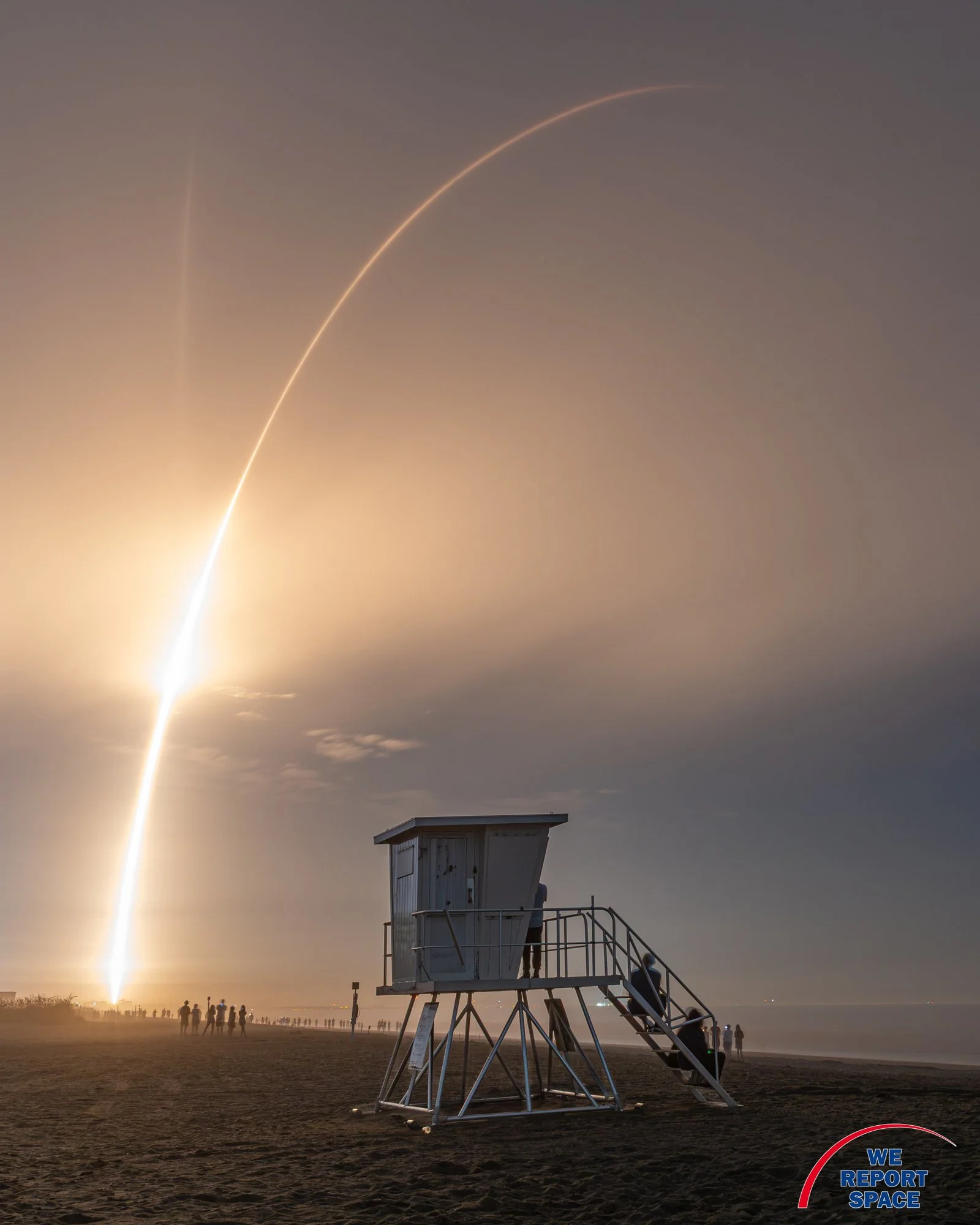
BlueBird Mission 11-13 Satellites Take Flight - Image Credit: Michael Seeley - We Report Space
Cape Canaveral S.F.S., FL – In the wee hours of Wednesday August 5th, SpaceX woke up the Space Coast with the BlueBird Mission. Under hazy/cloudy skies, the launch came at 3:49 AM EDT from Launch Complex 40 sending the BlueBird 11, 12 and 13 satellites into orbit. The BlueBird Satellites are communication satellites designed for cellular network coverage. This was the 30th flight for booster B1077 which landed down range on the recovery ship A Shortfall of Gravitas.
Image Credit: Michael Seeley – We Report Space
SpaceX launches NROL-95
NROL-95
With a small group of dedicated media, multiple millions of dedicated mosquitos held off by a gentle breeze, SpaceX sent its latest payload off from SLC #40 on a NE trajectory.
Working on a contract awarded 2 years ago by the National Security Space Launch program, the classified NRO (National Reconnaissance Office) sent NROL-95 on its way. The U.S. Space Force, Space Launch Delta 45 & Space Systems Command provide key support to the NROL for this launch
Typical of all NRO launches, few if any public details have been released. This launch was the 4th time that NRO has placed satellites in orbit. The previous being NROL-105, NROL-172 & NROL-179, all of which were launched from Vandenberg Space Force Base, Ca in what is an expected N-S orbit.
Roughly 8 ½ minutes later, the first stage booster set down at LZ-2 sending off a sonic boom that awakened more than a few dogs, set off car alarms as well as some light sleepers.
Article: Graham Smith/WRS
Images: Graham Smith/WRS Michael Seeley/WRS
#spacex #falcon9 #nro_gov #capecanaveralspaceforcestation #sldelta45 #usspaceforce #ussf_ssc #sldelta30 #vandenberg_sfb #floridaspacecoast #canaveral.tours @emrekelly
Starship Flight 13 was More than Lucky!
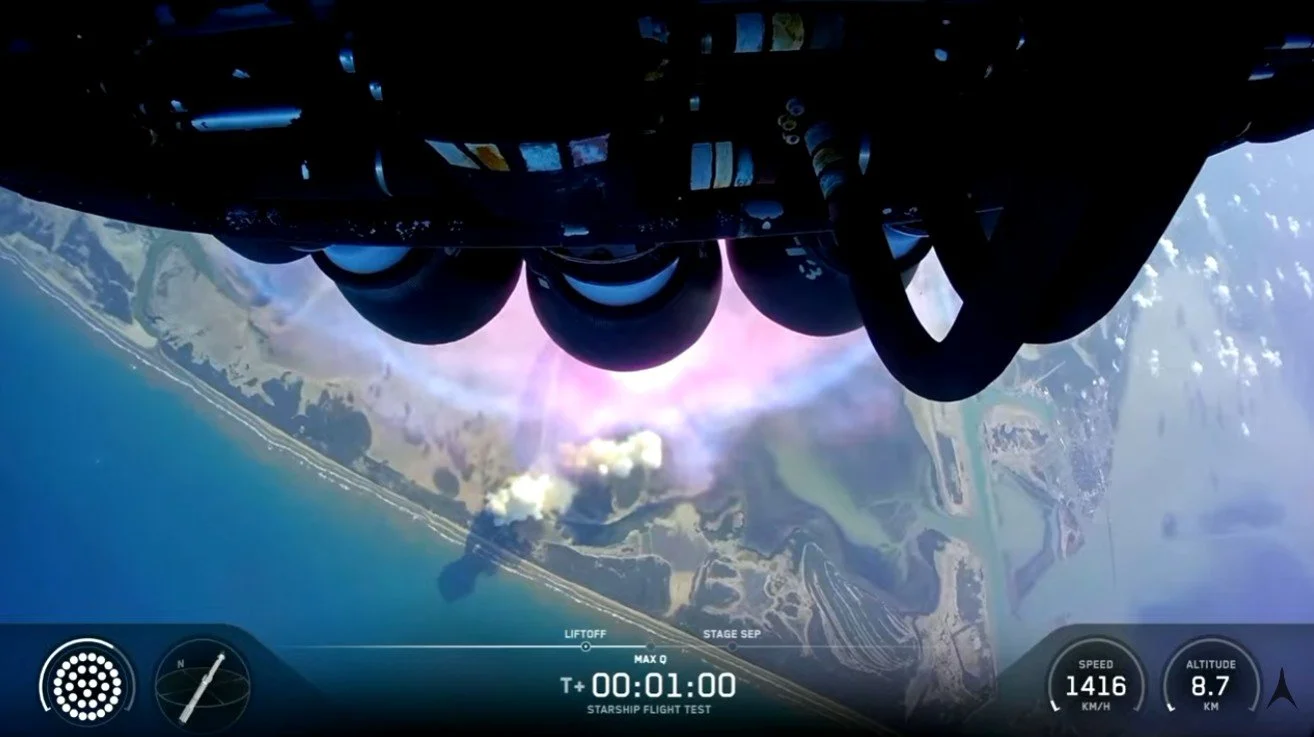
Image Credit: SpaceX Video Stream at 1 minute into flight.
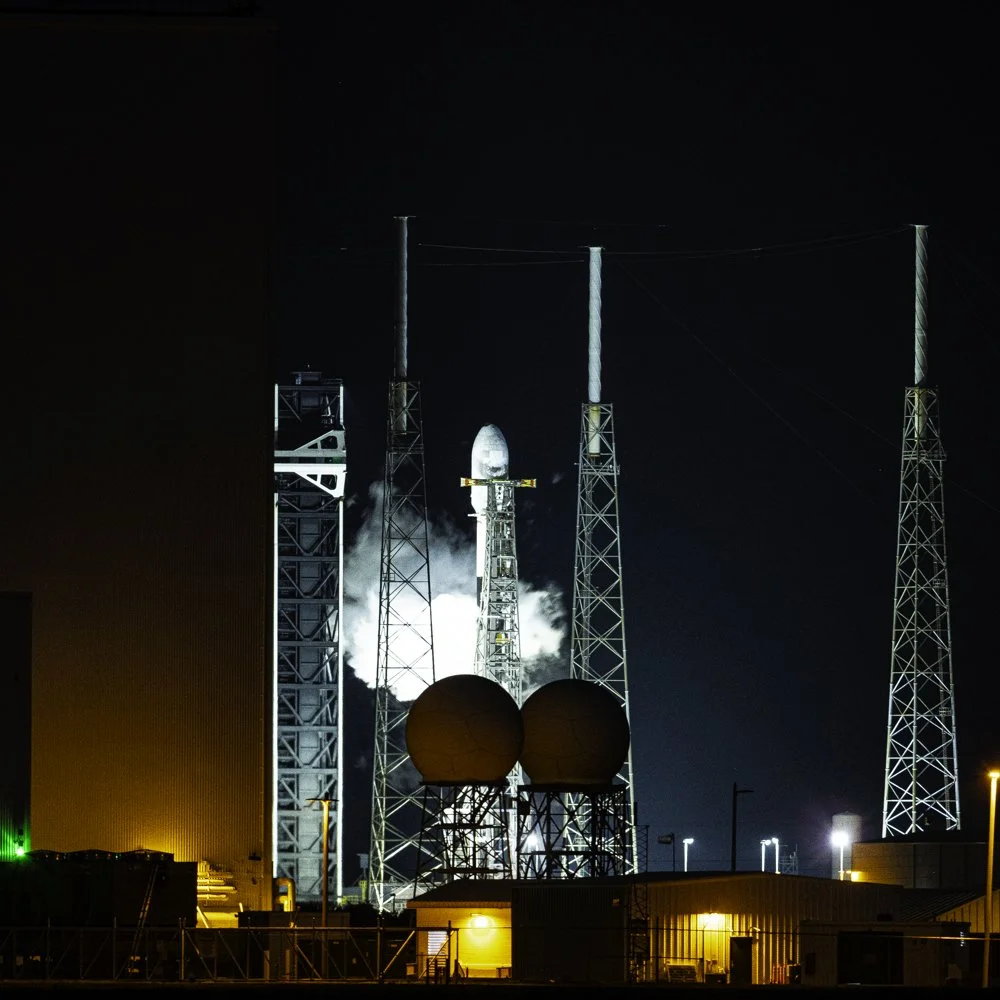
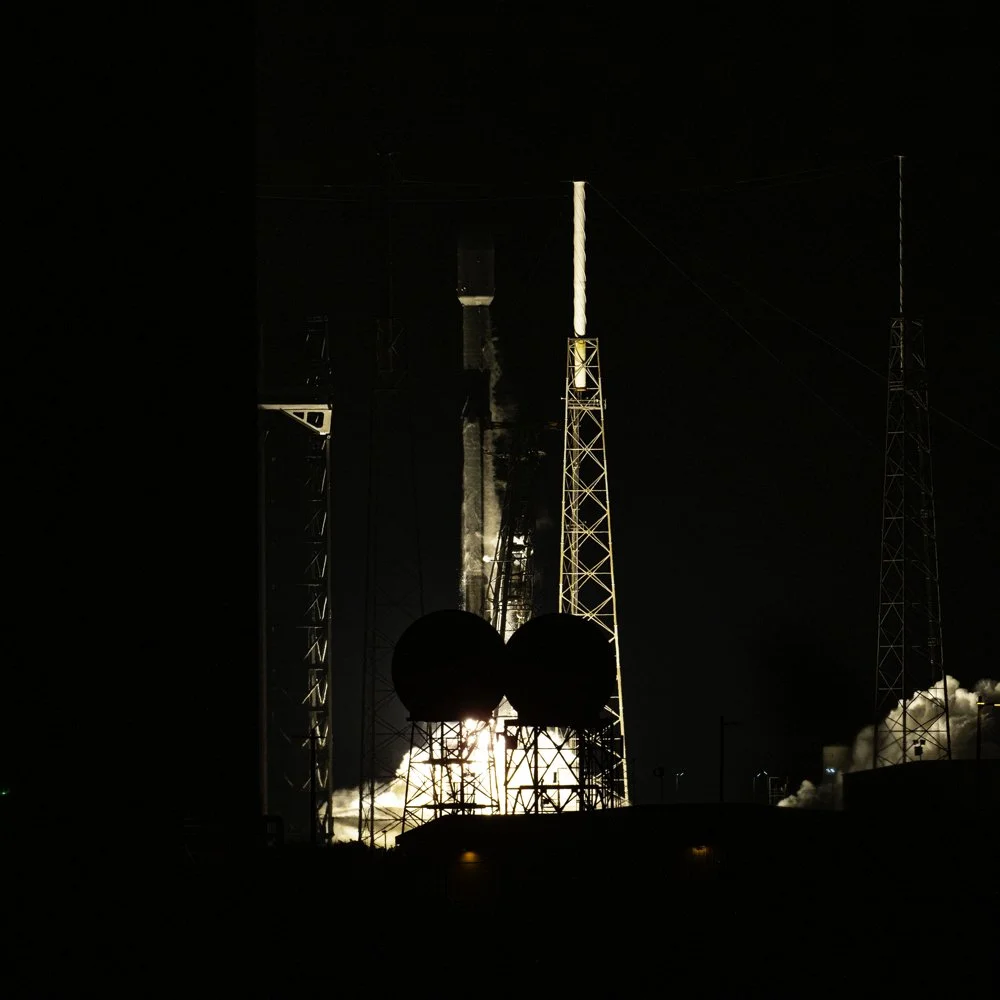
Boca Chica - Starbase, Texas On the evening of May 22, 2026 and going into the Memorial holiday weekend, with countless thousands of SpaceX fans, interested space officials, media & employees with glued to the launch site or watching thru a live stream, SpaceX launched their latest version of Starship, SpaceX sent the Heavy V3 version of Starship into a sub-orbit flight ending in the Indian Ocean. This was the twelfth flight of the massive SpaceX rocket.
Now fast forward to today, July 24, 2026 and the thirteenth flight of Starship from Texas. Flight Thirteen launched at 6:51 PM EDT. This is an impressive feat to have a turnaround of flights just two months apart. This launch was delayed from a previous attempt when the rocket aborted at ignition and then again due to weather.
The mammoth vehicle towering 124 meters (406 feet) tall completed several objectives bringing SpaceX to be on the cusp of readiness for orbital flight which included launch, stage separation a boost back burn, deployment of functional StarLink V3 satellites, and landing the booster offshore while the Starship portioned attained a sub-orbital flight and landed in the Indian Ocean.
With each new flight of Starship, SpaceX continues to learn, rework and develop systems that keep the entire program moving into what hopes to be a first orbital flight of the rocket.
This launch solidifies SpaceX’s over all grip on launch abilities and capabilities and sets forth that its rockets as being “ready for prime time” allowing NASA to seriously consider SpaceX as being preferred vendor moving forward to landing on the moon with their continued success. This also shows with the construction of the Giga-Bay and the building and work at both LC-39A and LC-37 and Kennedy Space Center and Cape Canaveral S.F.S. in Florida.
With flight thirteen, a couple of items of note: SpaceX successfully deployed a series of functional Starlink V3 satellites and by all accounts were in communication with ground systems. It is being reported 20 satellites were deployed as well as the successful relighting test of a Raptor engine while in space.
While the Starship has nowhere near the cadence of Falcon 9 launches, flight eleven of Starship took place last year on October 14, 2025 when SpaceX launched the rocket from Boca Chica, Texas. At present, Starship launches about twice a year as development of this new rocket continues.
Successful on so many levels, SpaceX continues to develop and test the world’s most powerful rocket.
While they have not yet made a full Earth orbit attempt with the Starship portion of the rocket, progress continues to both the Starship and first stage booster with each launch. As with some other launches, the first stage booster did not make an attempt at a catch landing back at the launch site rather it landed in the Gulf of Mexico (America) East of the launch site. It appears that the booster did not light all the landing engines and made a hard landing while Starship continued its flight. Just over an hour later, the Starship made an incredible reentry and landing in the Indian Ocean. Video feeds of the flight show an amazing landing and the rocket floating perfectly on the ocean surface. Will flight fourteen attempt a full orbit of the Earth? With so much success of this flight, one wonders.
Article by: Graham Smith and Michael Howard – We Report Space
Image Credit: SpaceX
Northrup Grumman & SpaceX send a MacGyver satellite to space
CApe Canaveral Space Force Center, Fl.
Northrop Grumman’s MRV-1 “MacGyver” Spacecraft
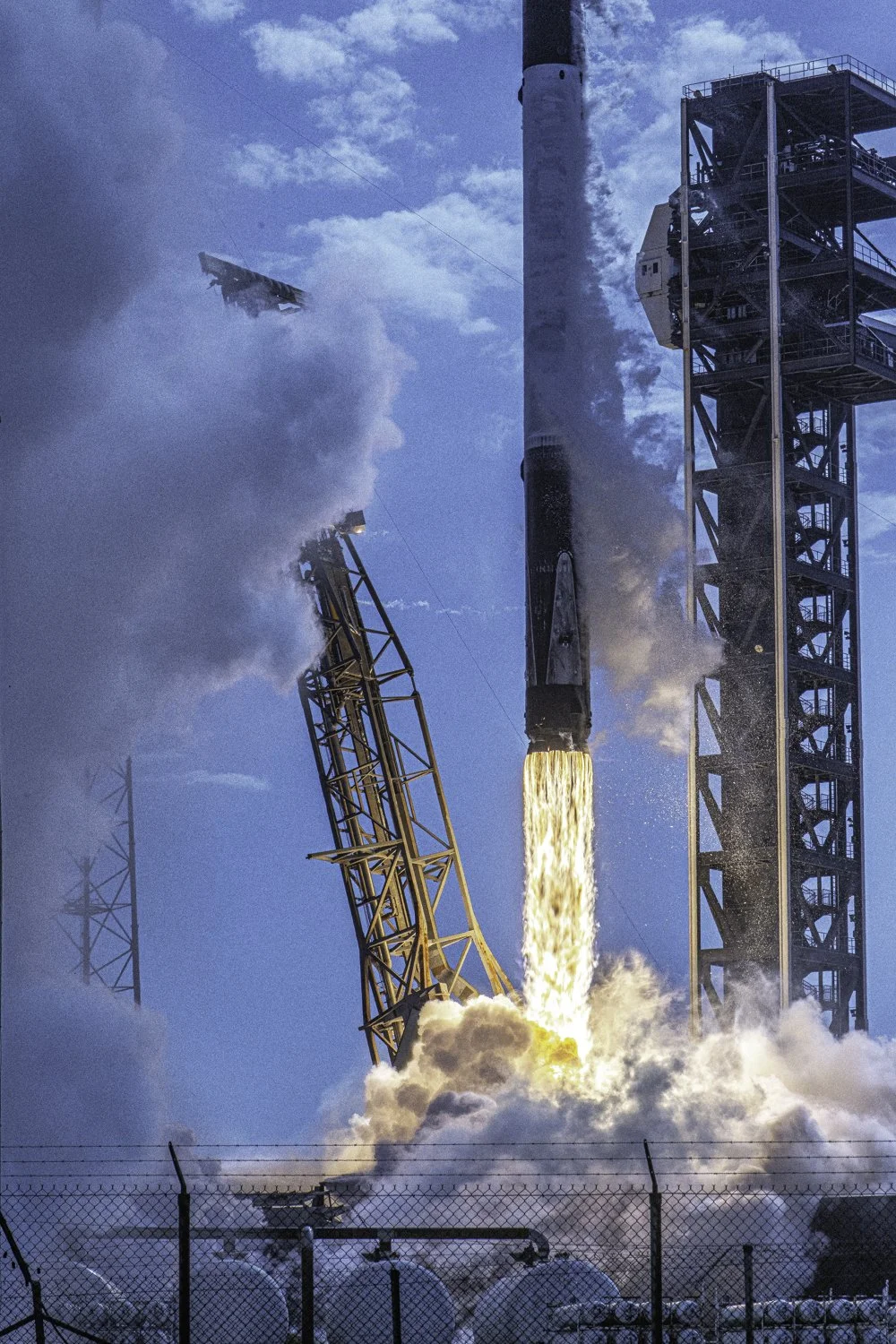
Earlier this afternoon at 5:15 at the opening of the launch window, SpaceX yet again, did what they are so well known for in thye space industry. On time, no delays, no issues. Just 9 Merlin engines firing up and delivering the space cargo to it intended destination.
If one looks back over the history of space launches, only one notable “repair” in space of an orbiting satellite comes to memory, the mirror adjustment of the Hubble Telescope.
However there have been thousands of launches where fuel used for maneuvering has expired, or power batteries have died, solar panels have not expanded leaving countless numbers of multimillion dollar satellites inoperable.
Enter in SpaceLogisitics a subsidiary of Northrup Grumman headquartered in Sterling, Virginia working on a DARPA (Defense Advanced Research Projects Agency). Think of DARPA as an agency where emerging technologies & dreams are justified and brought to life by qualified agencies or private companies.
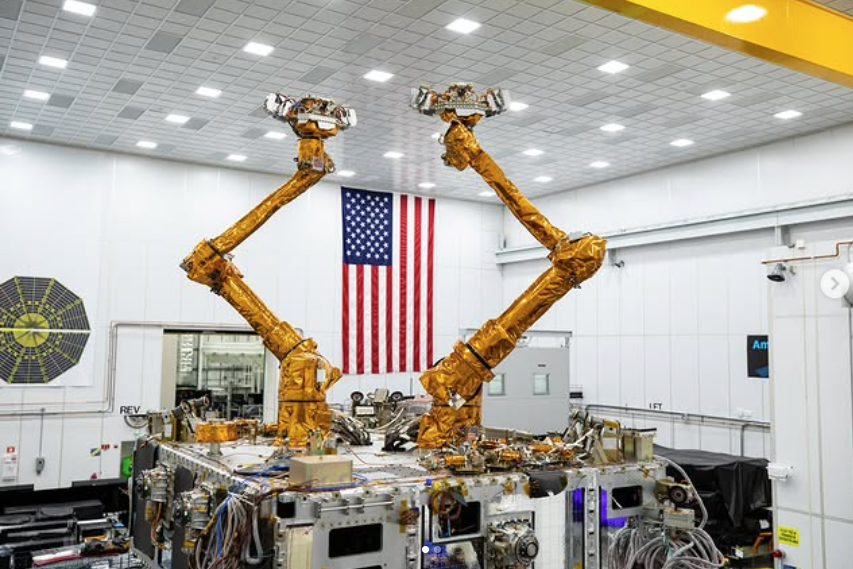
Backed by its parent corporation, Northrup Grumman, SpaceLogistics has designed and built the MRV-1 (Mission Robotic Vehicle). In plain terms think of it as a recovery/repair satellite.
After a year’s trip in reaching a geosynchronous orbit, the MRV-1 will try and attach propulsion systems to failing or failed satellites, physically inspect them, allowing them to be brought back online into service, all while orbiting at about 36,000 kms.
The geosynchronous region is a hotly contested region of space with various types of GEO satellites, military, communications GPS to name a few, each one has the capability of “seeing” or covering roughly 1/3 of the earths surface.
SpaceLogistics has already posed success in tackling this issue of “space repair” with its MEV-1 & MEV-2 successfully docking in 2020 & again in 2021 with aging satellites. The downside is the MEV satellites were single use and expensive.
The MRV and earlier MEV are two different technologies. The MRV is equipped with a robotic arm (RAS-1) (Robotic Arm System-1) designed by the U.S> Naval Research Laboratory with the same dexterity of the human wrist and capable of turning 7 different ways.
Another noticeable difference is the MRV-1 is also capable of being refueled while in orbit and is expected to have a space life of 10 years and the capability to deliver new MEPS to various customers.
Article: Graham Smith/WRS
Images: Graham Smith/WRS … White Room Image: Courtesy of DARPA
#DARPA #usnrl #northrupgrumman #usspaceforce #intelsat #spacex #falcon9 #capecanaveralspaceforcestation #sldelta45 #canaveral.tours #spacecoastdaily #floridaspacecoast #launch @emrekelly
SpaceX completes 85th mission of 2026
SpaceX StarLink 10-45
Cape Canaveral Space Force Station, Fl. ~
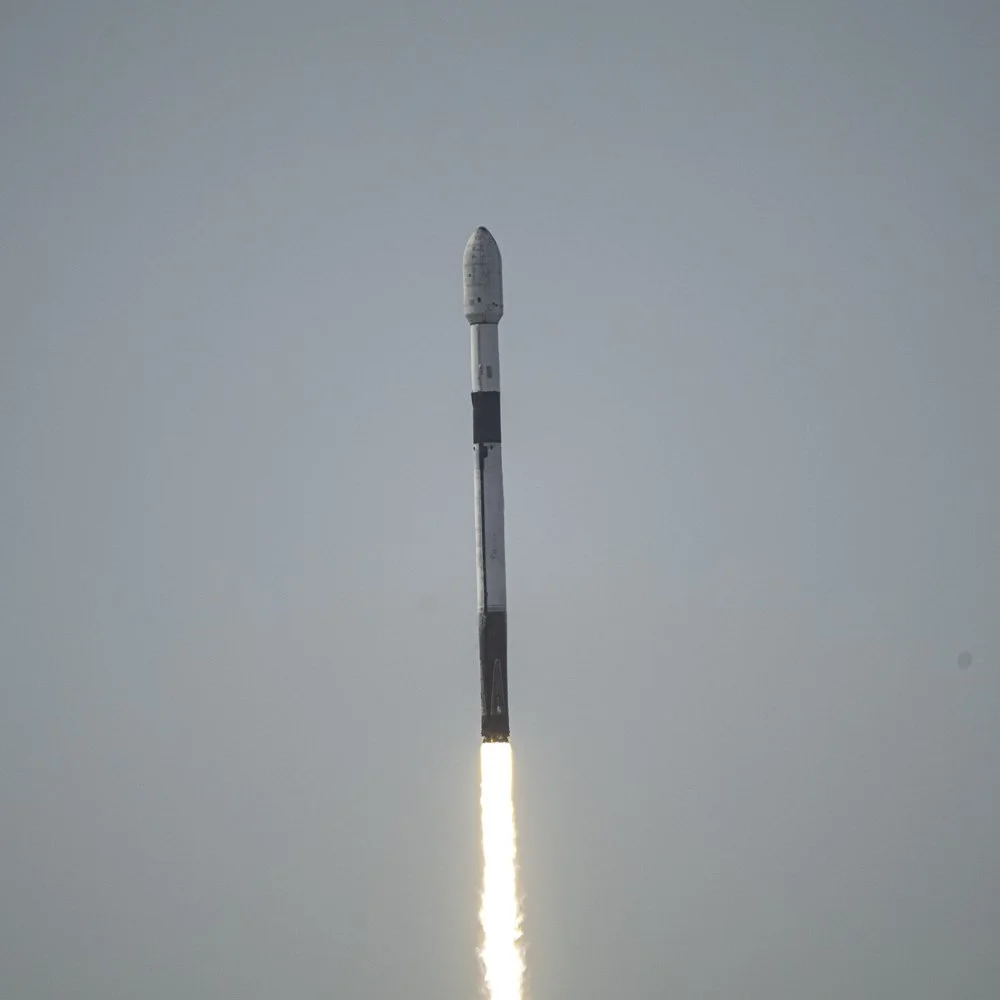
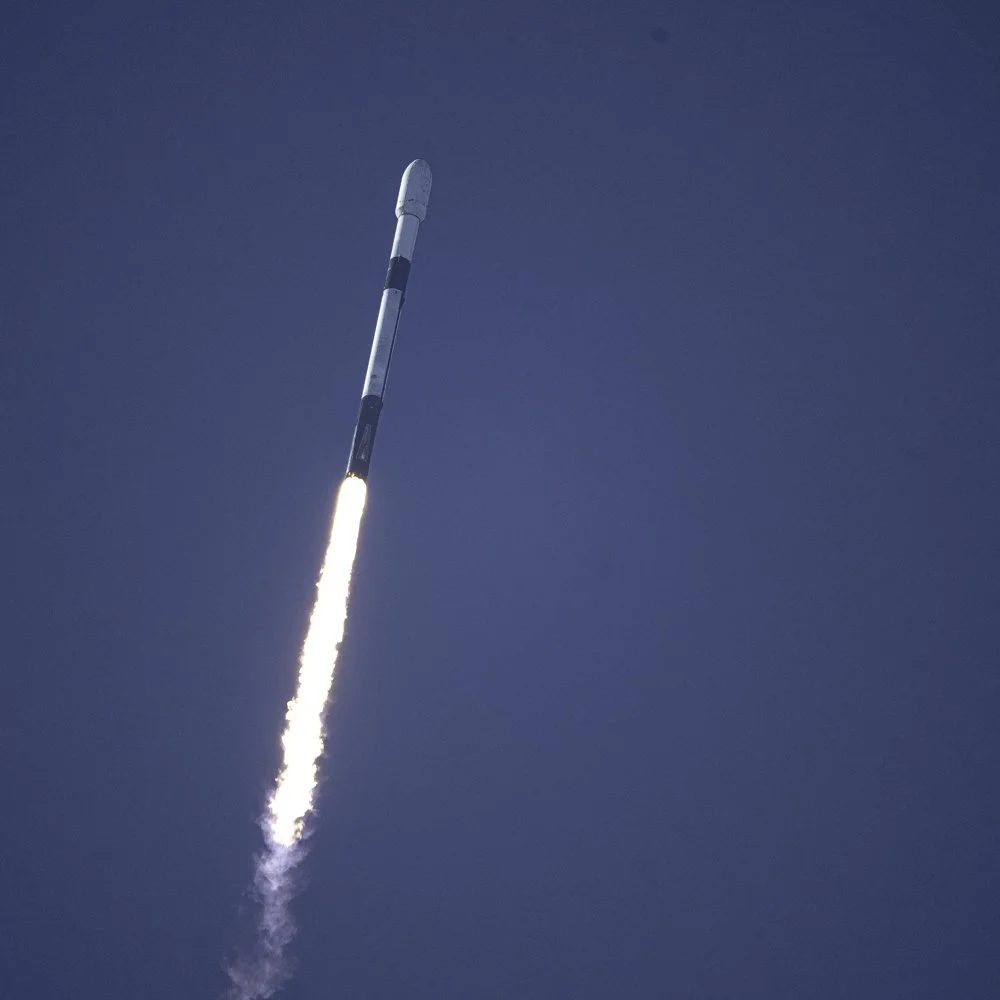
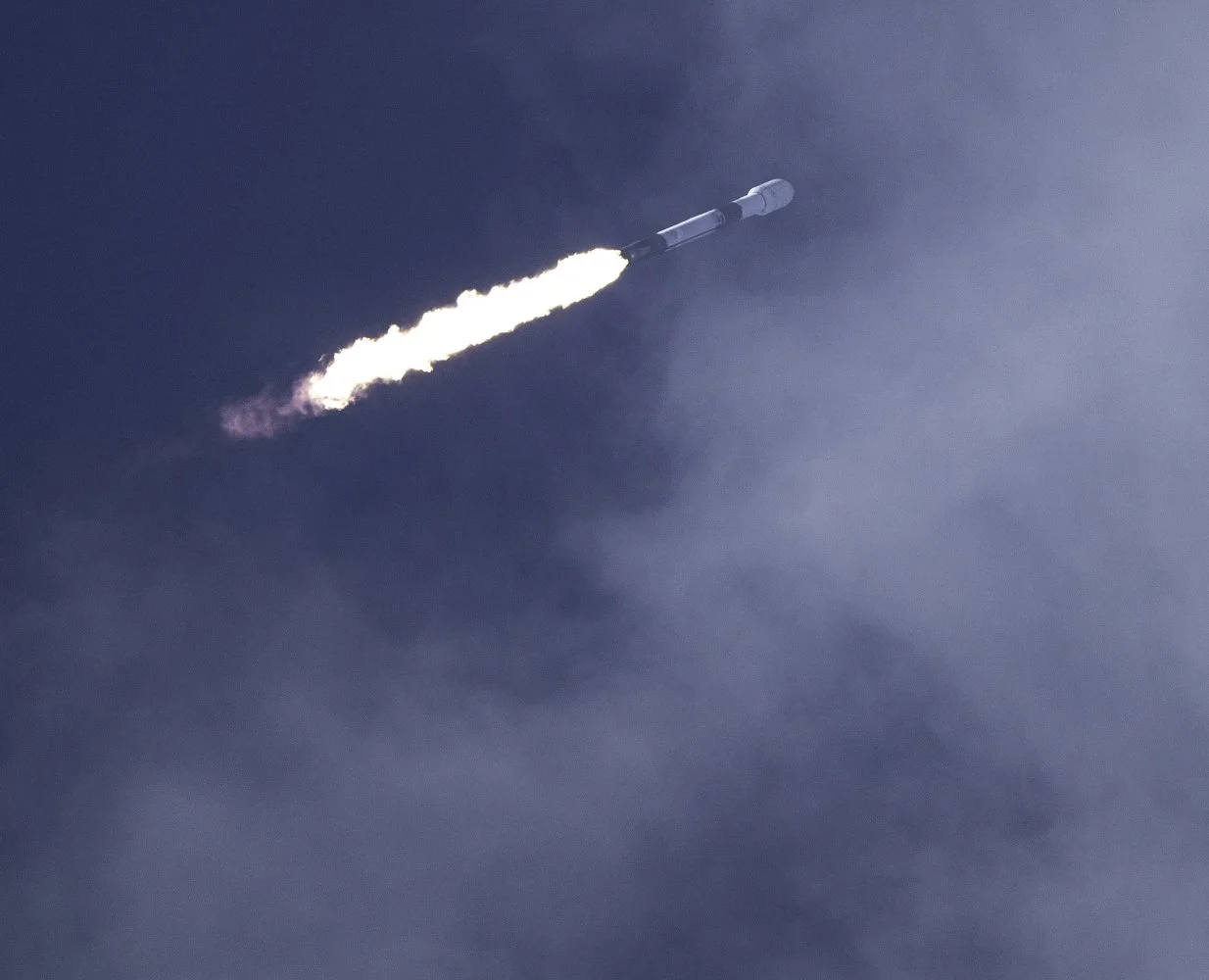
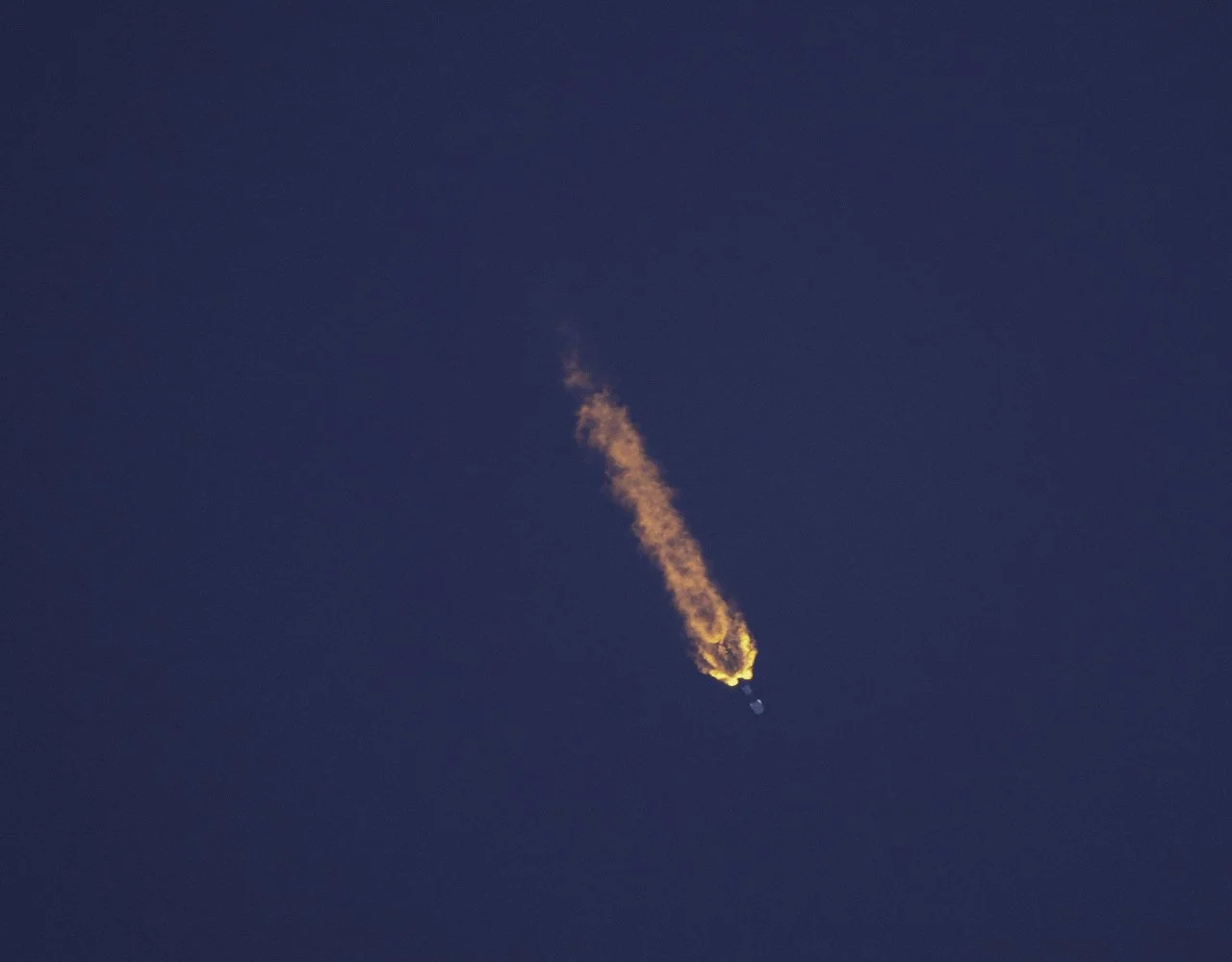
For the 39th time this year A Falcon 9 lifted off of SLC # 40 @ Cape Canaveral Space Force Station, Fl. Its cargo this time is another group of StarLink satellites which headed out on a NE trajectory.
The first stage booster (#B1080) completed its 28th flight, landing on A Shortfall of Gravitas (ASOG) the SpaceX ASDS (Autonomous Spaceport Drone Ship).
With the completion of this launch, SpaceX will have completed 85 mission launches in 2026.
Article: Graham Smith/WRS
Image: Graham Smith/WRS
#spacex #falcon9 #starlink #sldelta45 #capecanaveralspaceforcestation #launch #canaveral.tours @emrykelly
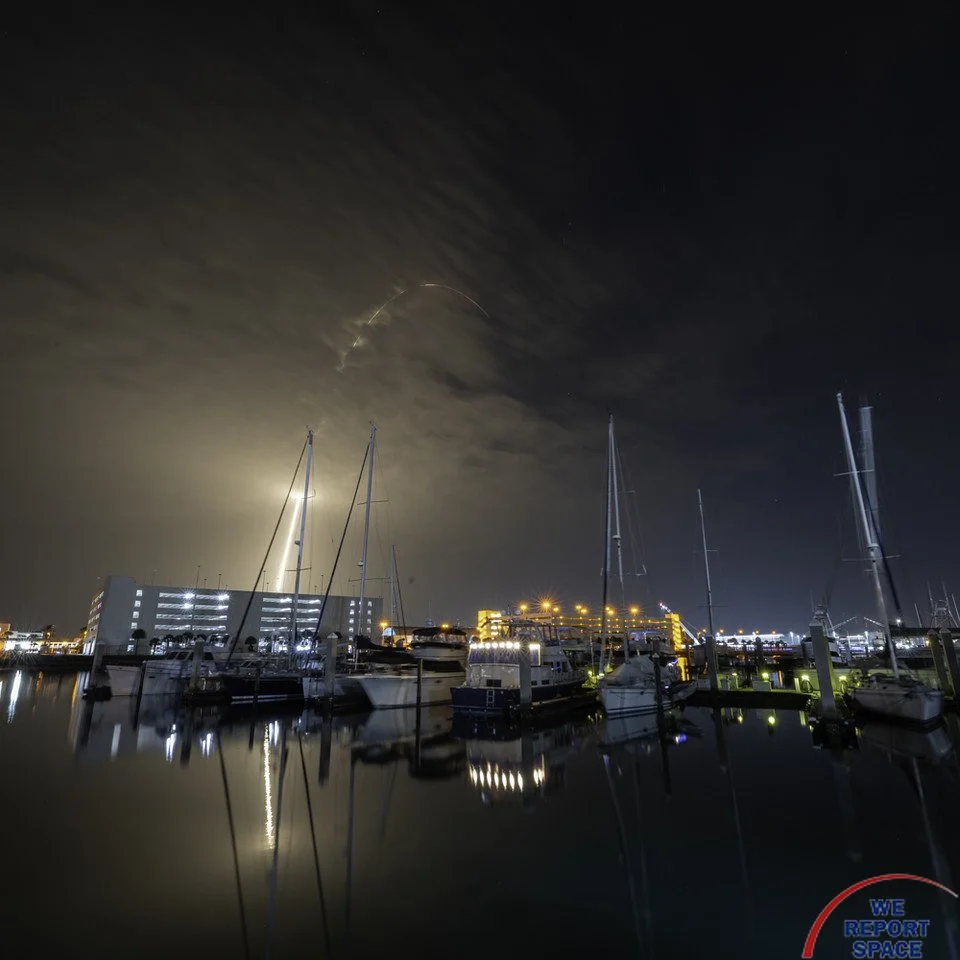
Nancy Grace Roman Air conditioning heros
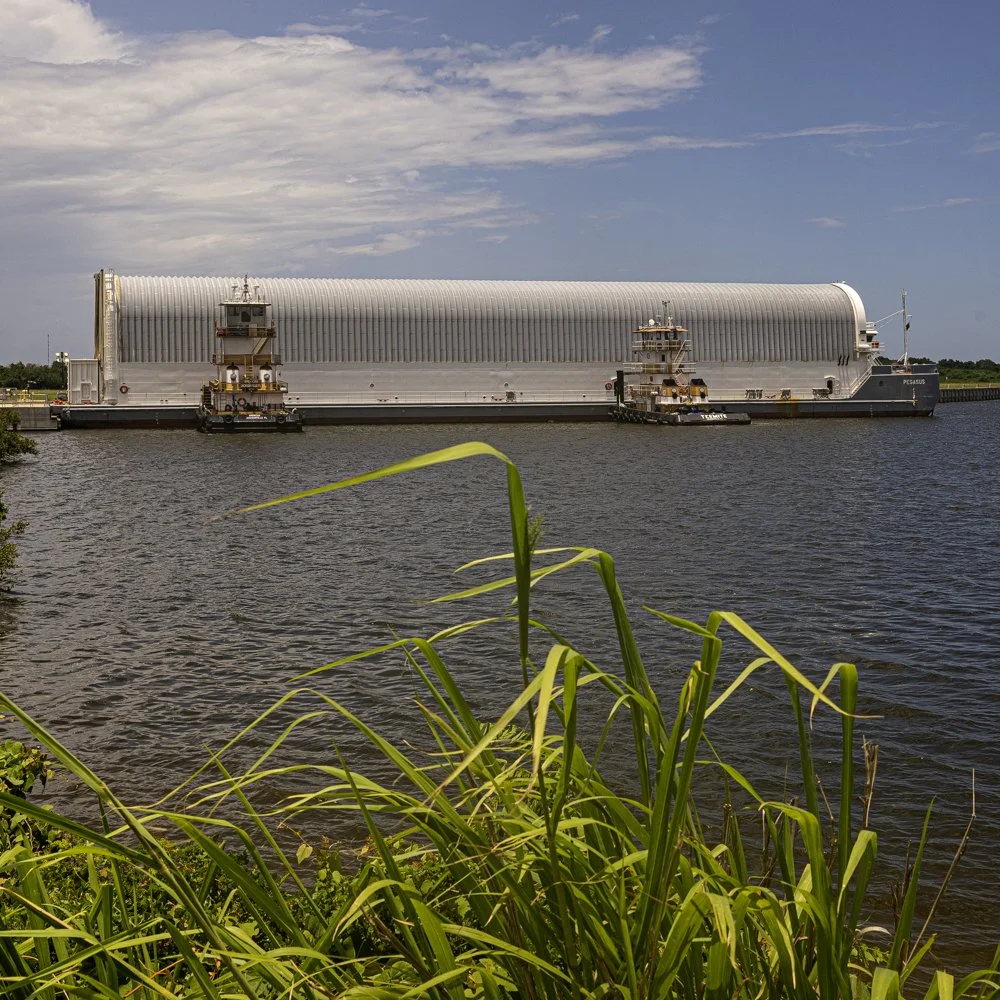
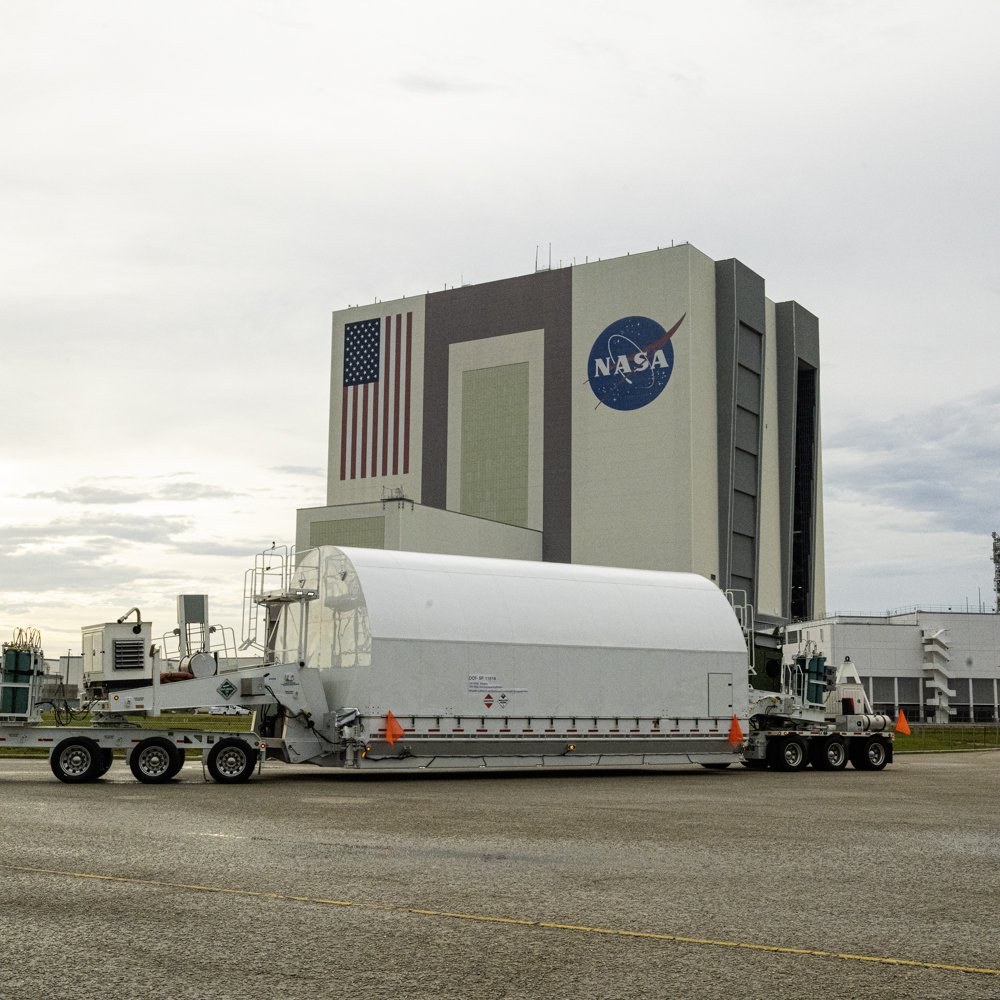
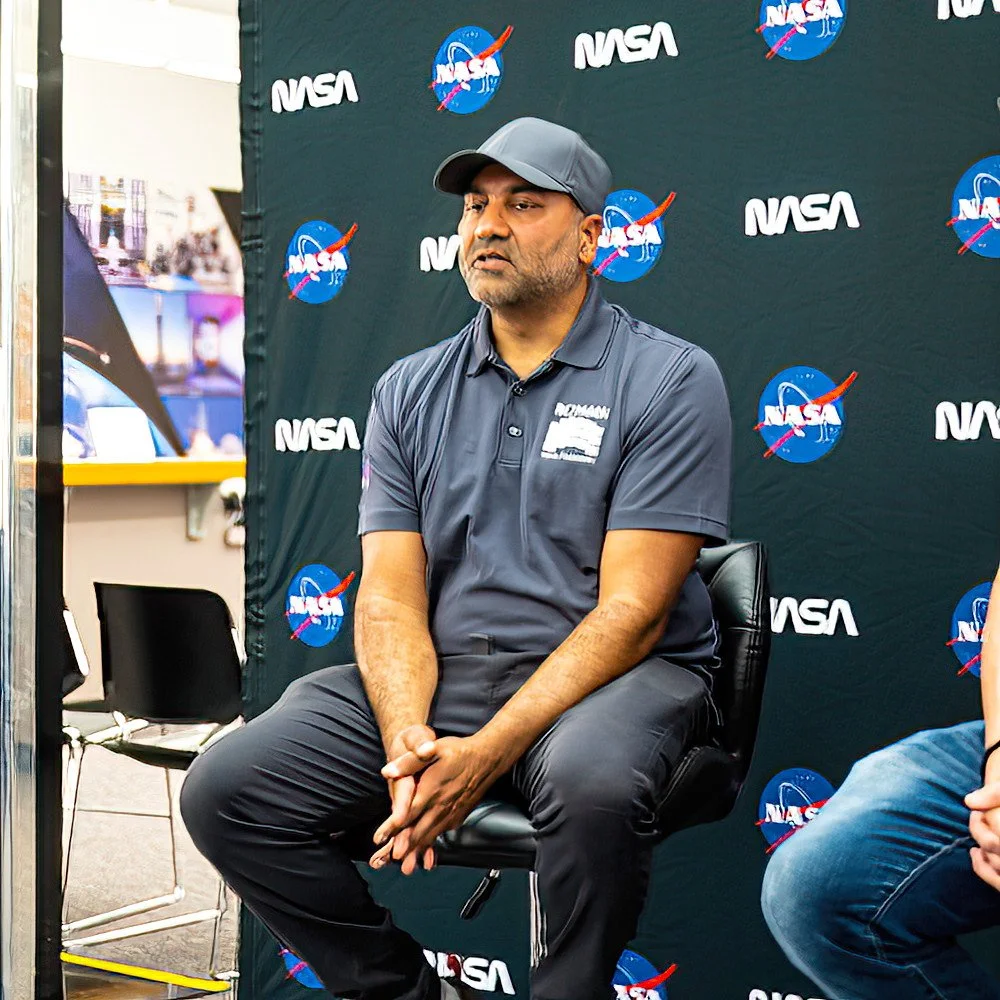
When the Pegasus barge arrived from NASA Goddard in Greenbelt, Maryland, Neil Patel the lead mechanical engineer on the Roman project spoke with media and mentioned a temperature issue that had been encountered enroute.
Temperatures inside the enclosure had come dangerously close to 72F. The air-conditioning and back up air-conditioning system were failing at maintaining the temperatures below 72. What was not mentioned was why this was a critical issue. Research into this has yielded the following:
The NGR satellite has numerous (18) mercury cadmium telluride infrared detectors (HgCdTe) installed in various locations. For those unfamiliar with mercury cadmium telluride technology, it is what is used in night vision systems currently used by the U.S. Military.
The main downside to HgCdTe is its sensitivity to external heat (the trip to Florida encountered much higher than normal temperatures and humidity than expected after leaving NASA Goddard.)
The buildup of external heat could cause issues of calibration integrity. All instruments are calibrated for normal operation in extreme cold temperatures.; thermal damage to material used in the build with bonding to electronics. Lastly contamination risks that could be presented with condensation seen with high humidity.
Mr. Patel accompanied the NGR satellite while it was on the barge and had to find emergency contacts to acquire temporary emergency mobile air conditioning on the fly that were capable of dropping the temperature as well as decreasing the humidity. more importantly, coordinating the arrival and installation e the equipment and crews for the installation in a very short time period.
While the names of the portable & temporary personnel are unknown, Patel likened the fix and crew as a “MacGyver Team approach” Highly probable, Patel had more than a few sleepless nights on the barge.
#romanspacetelescope #nasa #nasakennedy #nasagoddard #portcanaveral #spacecoastdaily #floridaspacecoast #spacex

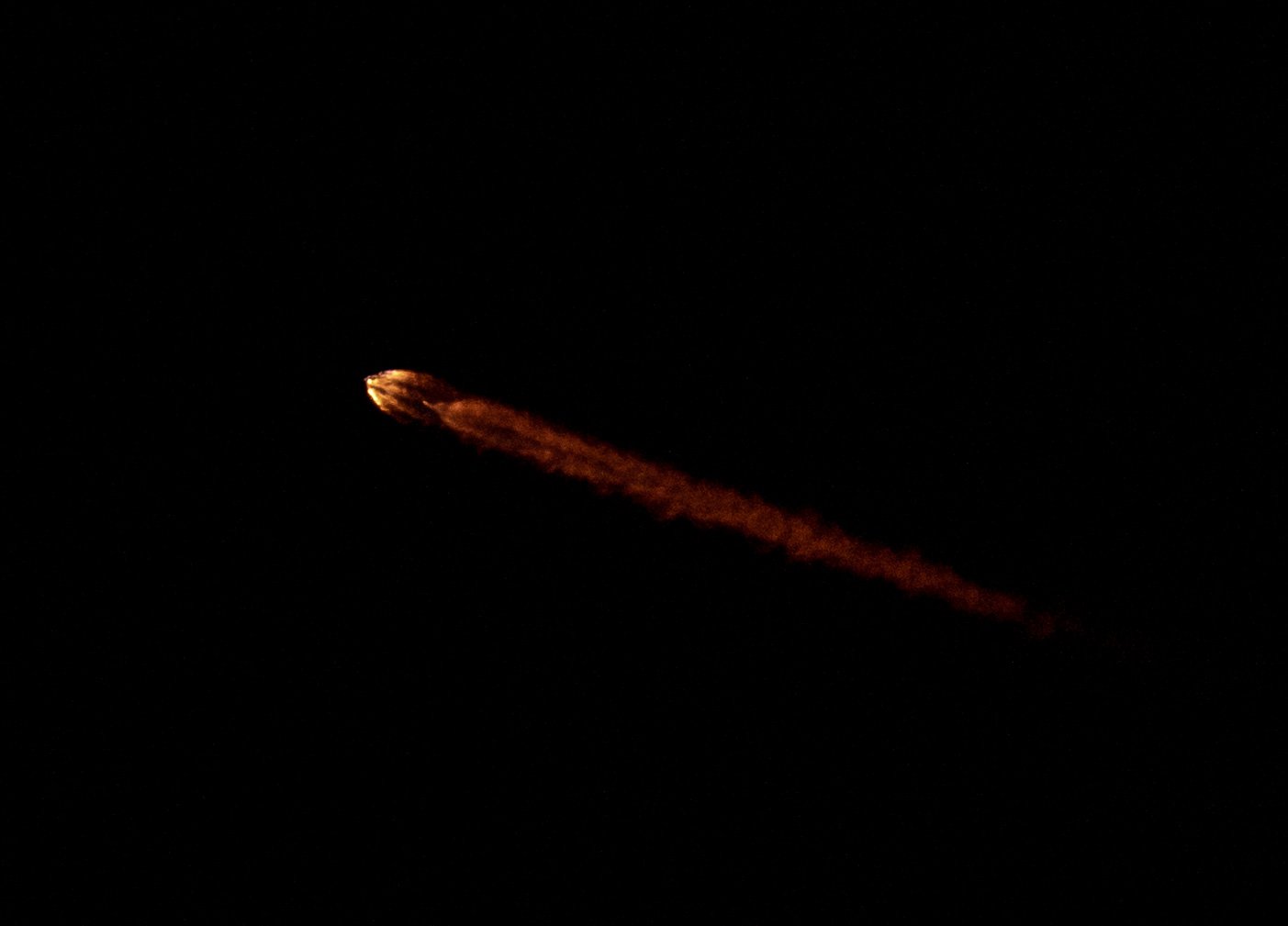
Starlink 10-42 Amazes the Space Coast
Starlink 10-42 streaks into the early morning. - Image Credit: Eric Moore - We Report Space
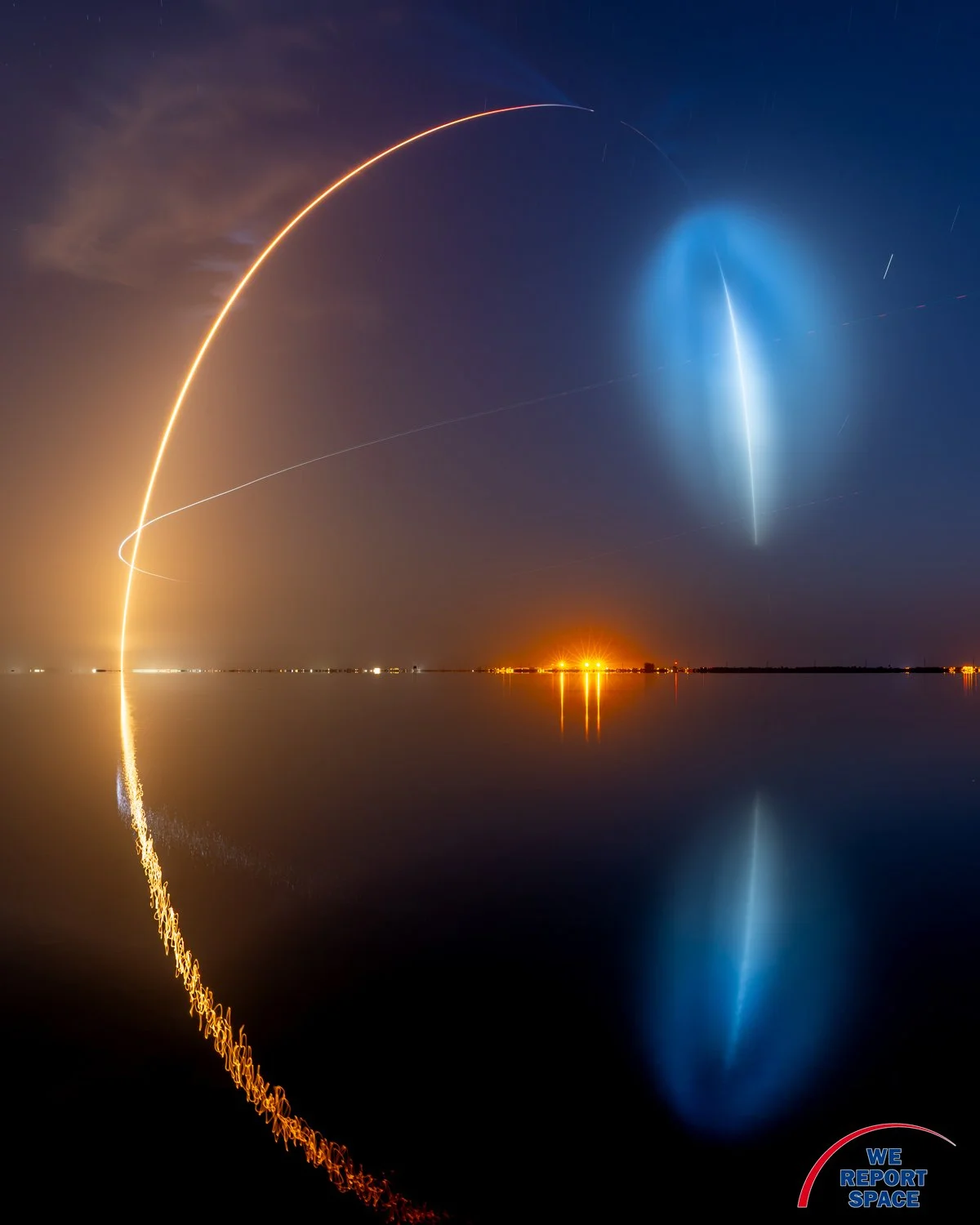
Streaking into the Dawns Early Light - Image Credit: Michael Seeley - We Report Space
Cape Canaveral S.F.S., FL – In the moments before dawn of July 9, 2026, a SpaceX Falcon 9 lifted off from LC-40 sending 29 more Starlink satellites into orbit. Liftoff came at 5:25 AM EDT about an hour prior to sunrise.
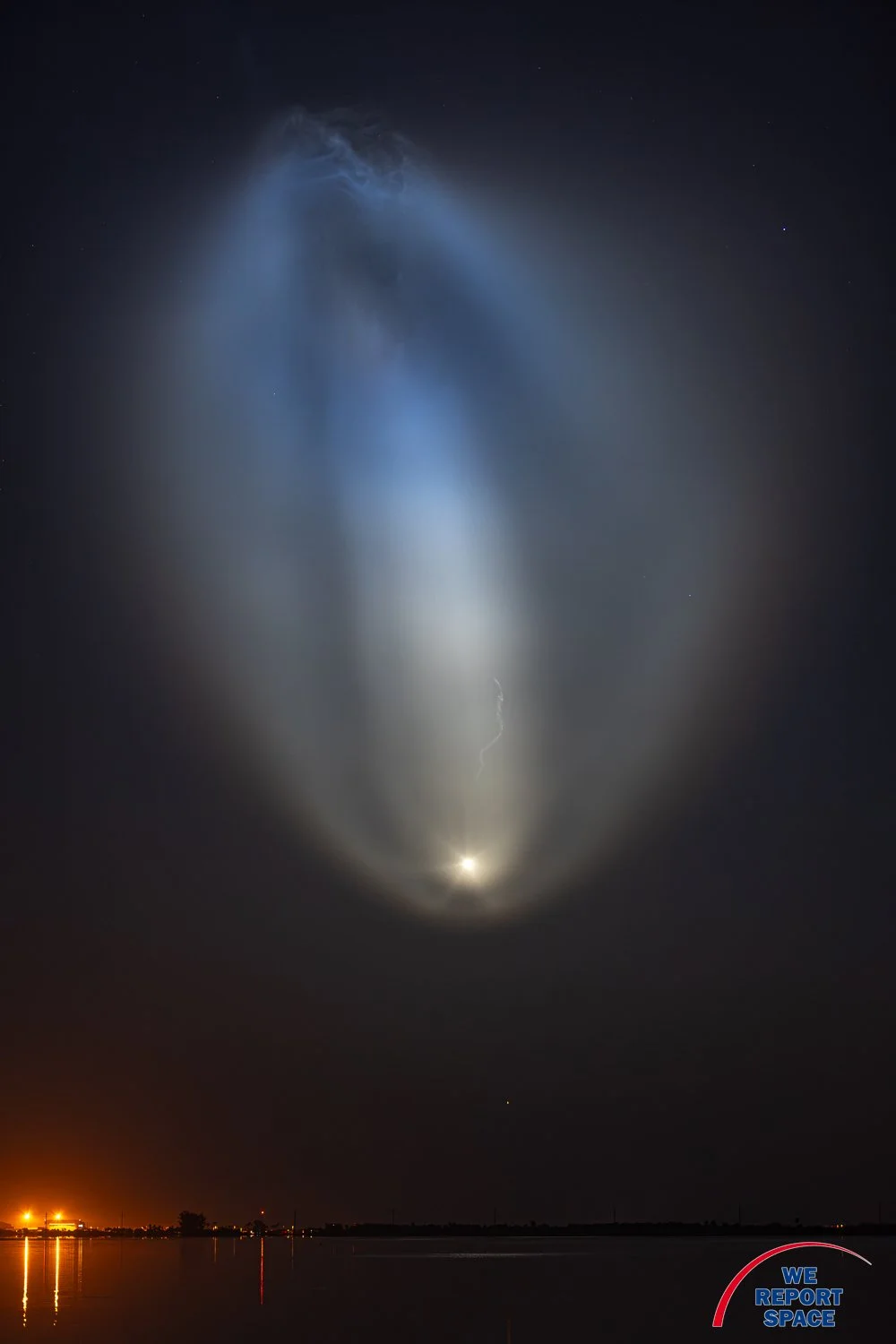
The “Space Jellyfish” Image Credit: Michael Seeley - We Report Space
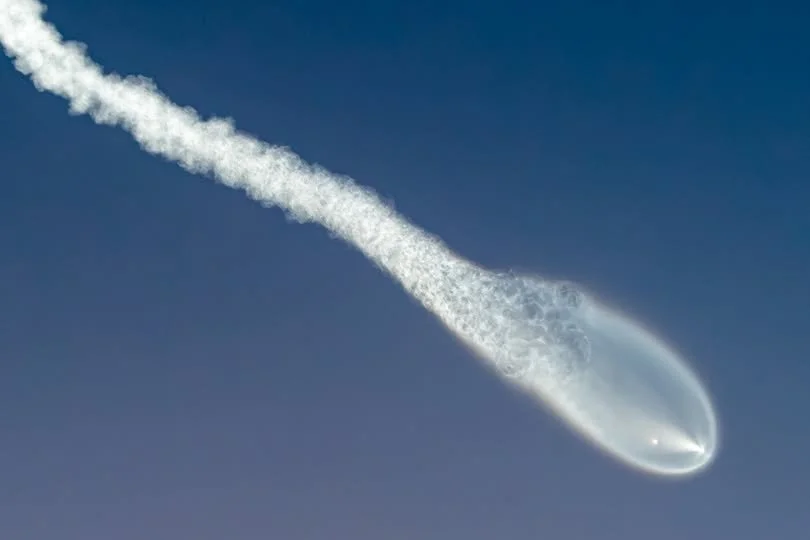
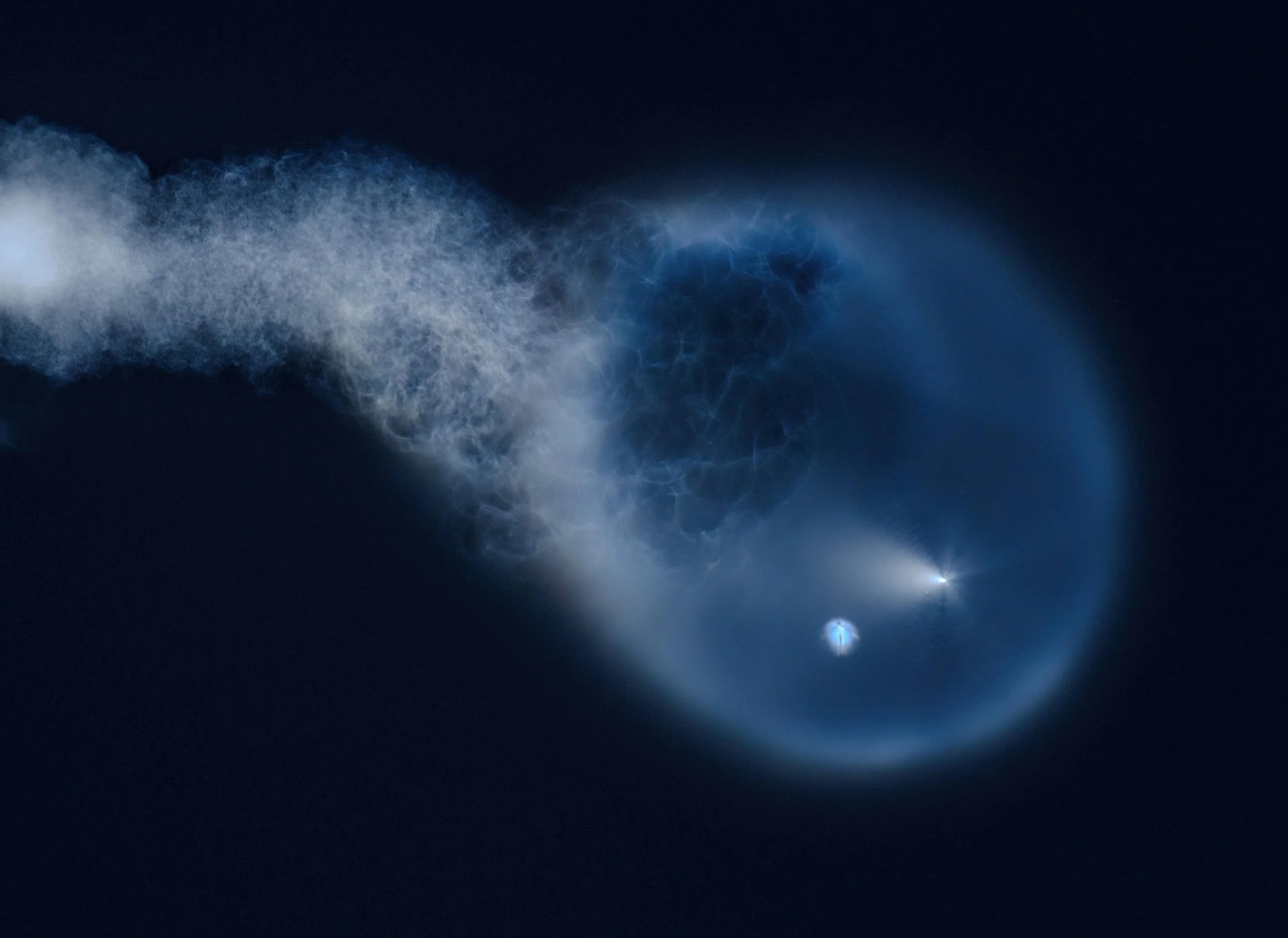
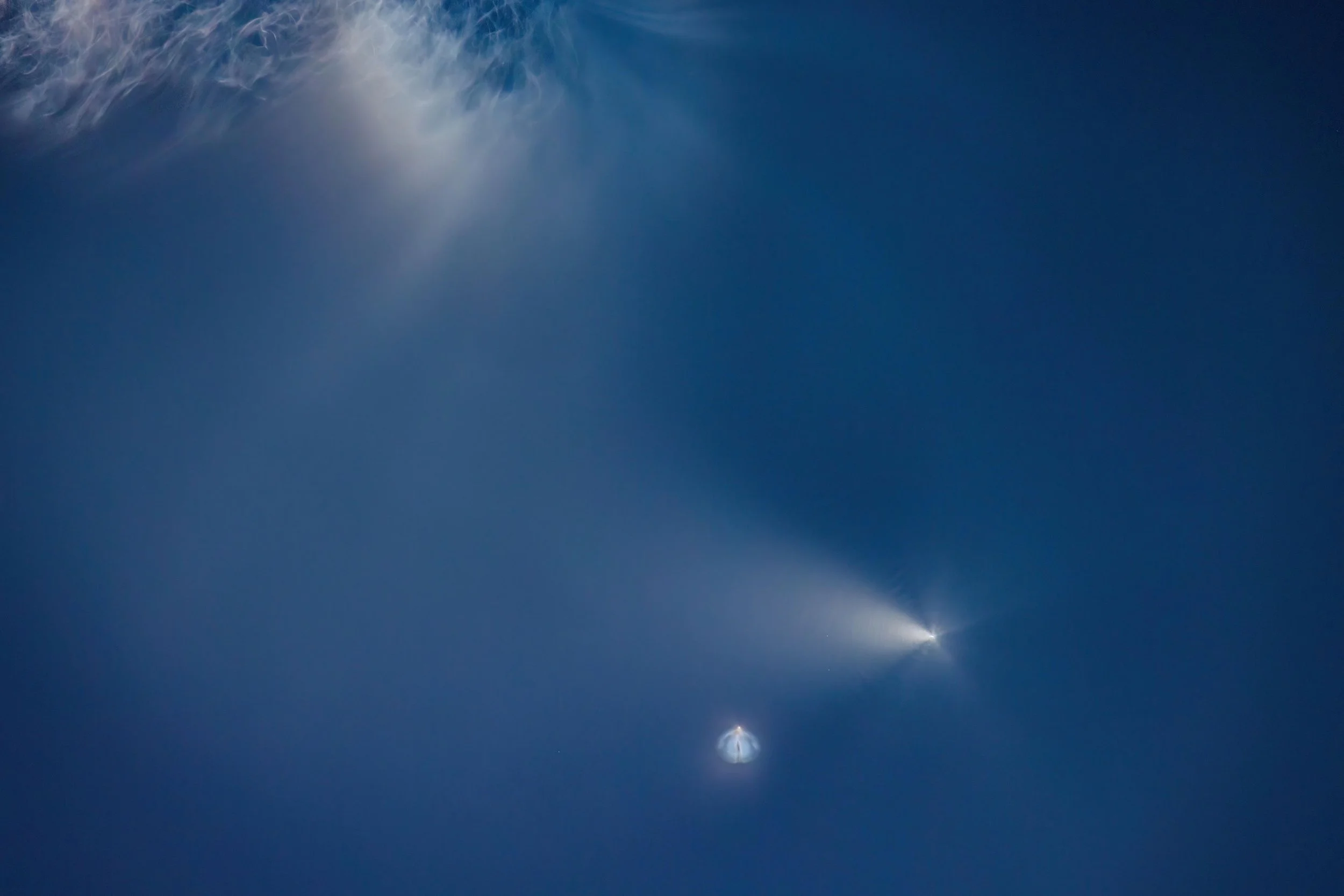
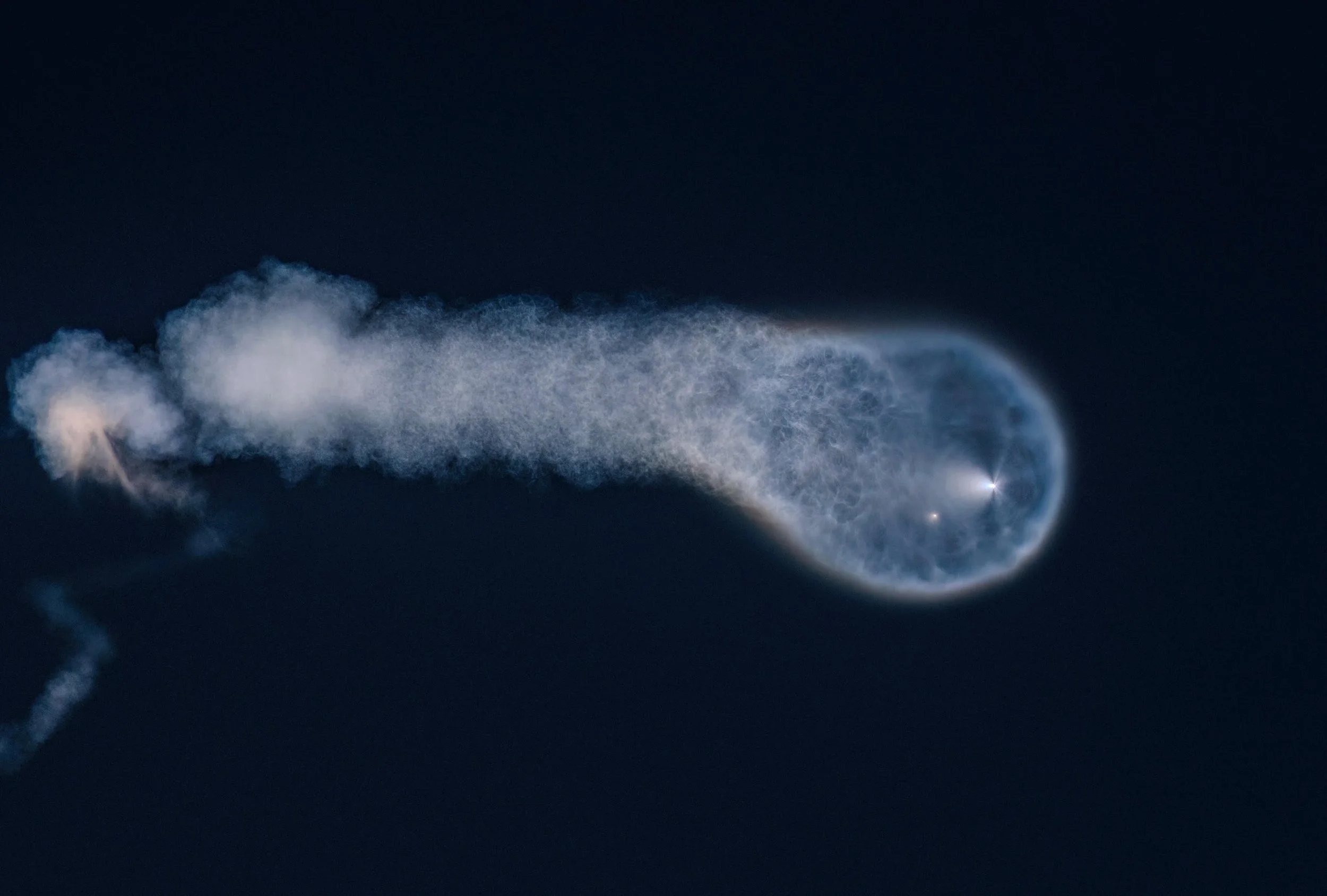
The magical launch time created the “space jellyfish” that was seen for hundreds of miles along the flight path. We Report Space photographer caught the flight north of Orlando. Shortly after launch this 36 time flown booster made a landing on the recovery ship “A Shortfall of Gravitas”.
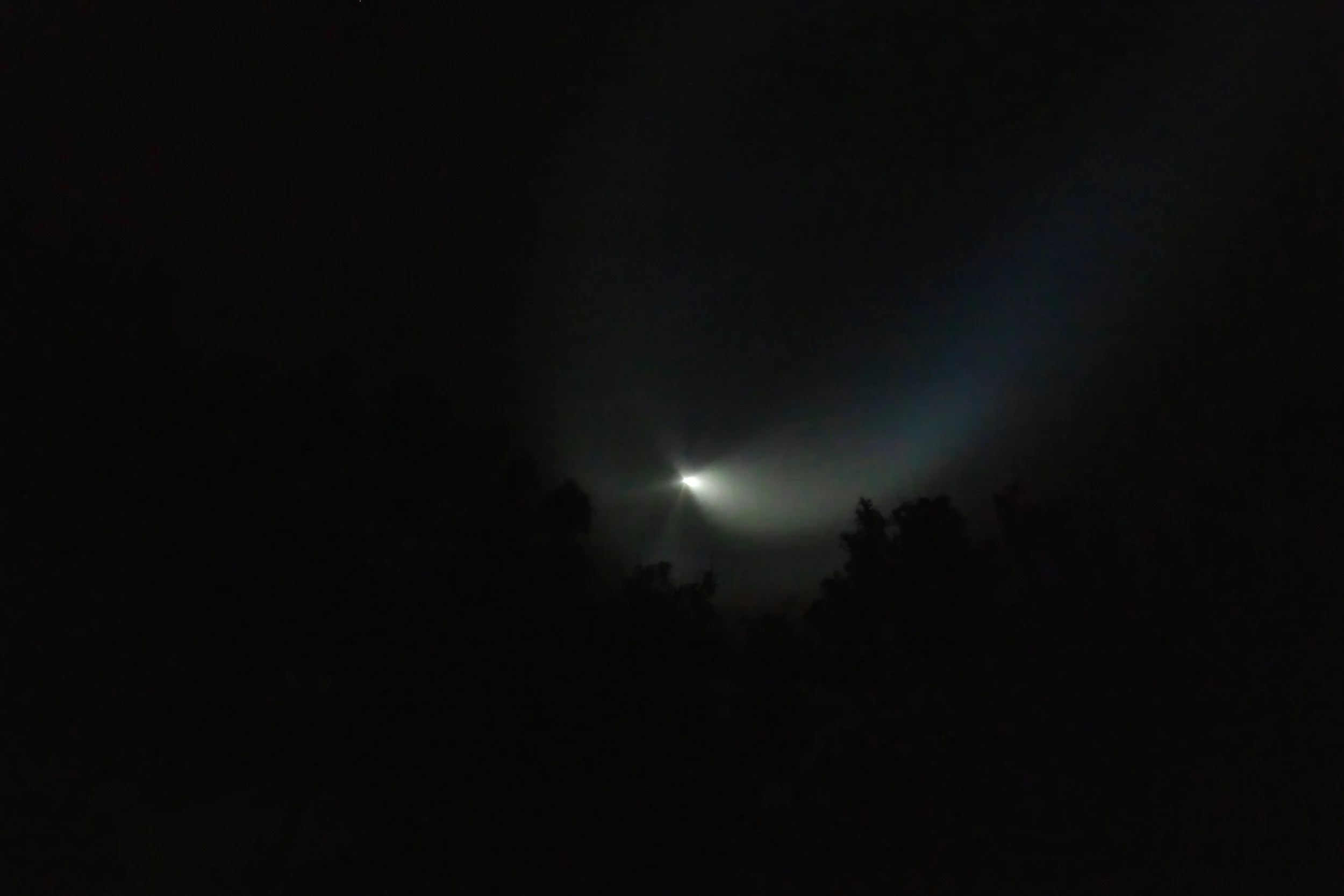
“Space Jellyfish” as seen North of Orlando, FL. - Image Credit: Eric Moore - We Report Space
Image Credits: Michael Seeley and Eric Moore – We Report Space
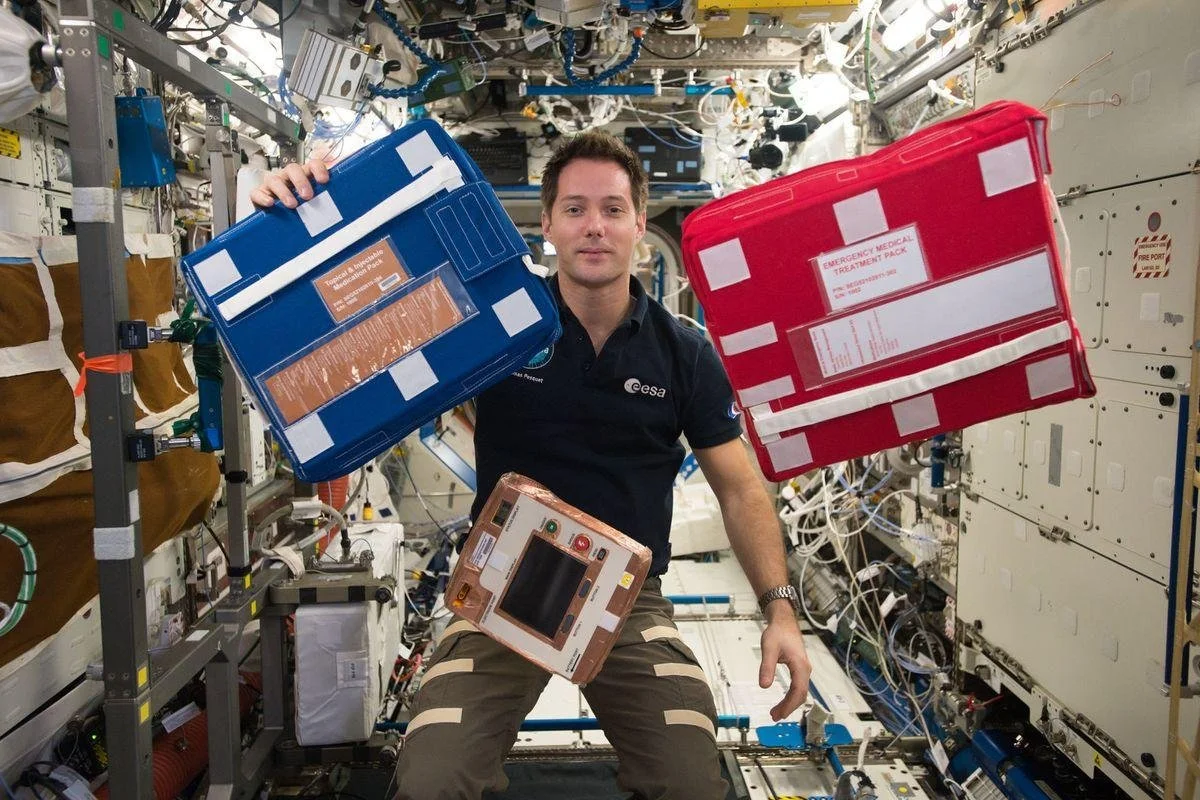
When the I.S.S. needs 911
When the ISS needs 911 - Image Credit: NASA
Kennedy Space Center, FL. – Prior to the orbiting space stations of today, it was impossible to have the opportunity to call “911” on orbit. Today, after stations like Skylab or that of Mir, astronauts now have even more emergency medical equipment than ever before on hand in the unlikely event a medical situation should arise. However, back in January of 2026, an astronaut did have that 911 event. The call was placed to ground support and the medical training of the astronauts went into action.
We Report Space team member Dr. Eric Moore presents:
The Emergency Room in Orbit: How the International Space Station Practices Medicine 250 Miles Above Earth
Dr. Eric Moore, We Report Space
As a physician who periodically covers rocket launches from Florida’s Space Coast as part of the media corps, I have often found myself staring at a Falcon 9 disappearing into the sky and wondering about something that receives far less attention than engines, trajectories, and docking procedures:
What happens when somebody gets sick up there?
The International Space Station is, after all, a permanently occupied outpost orbiting Earth at 17,500 miles per hour, roughly 250 miles overhead. It is not a hospital. There is no emergency department, no CT scanner, no operating room, and certainly no trauma surgeon waiting behind swinging doors.
Yet astronauts are human beings, and human beings develop sore throats, kidney stones, migraines, arrhythmias, and abdominal pain regardless of altitude.
Space medicine has quietly become one of the most fascinating areas of modern medical planning.
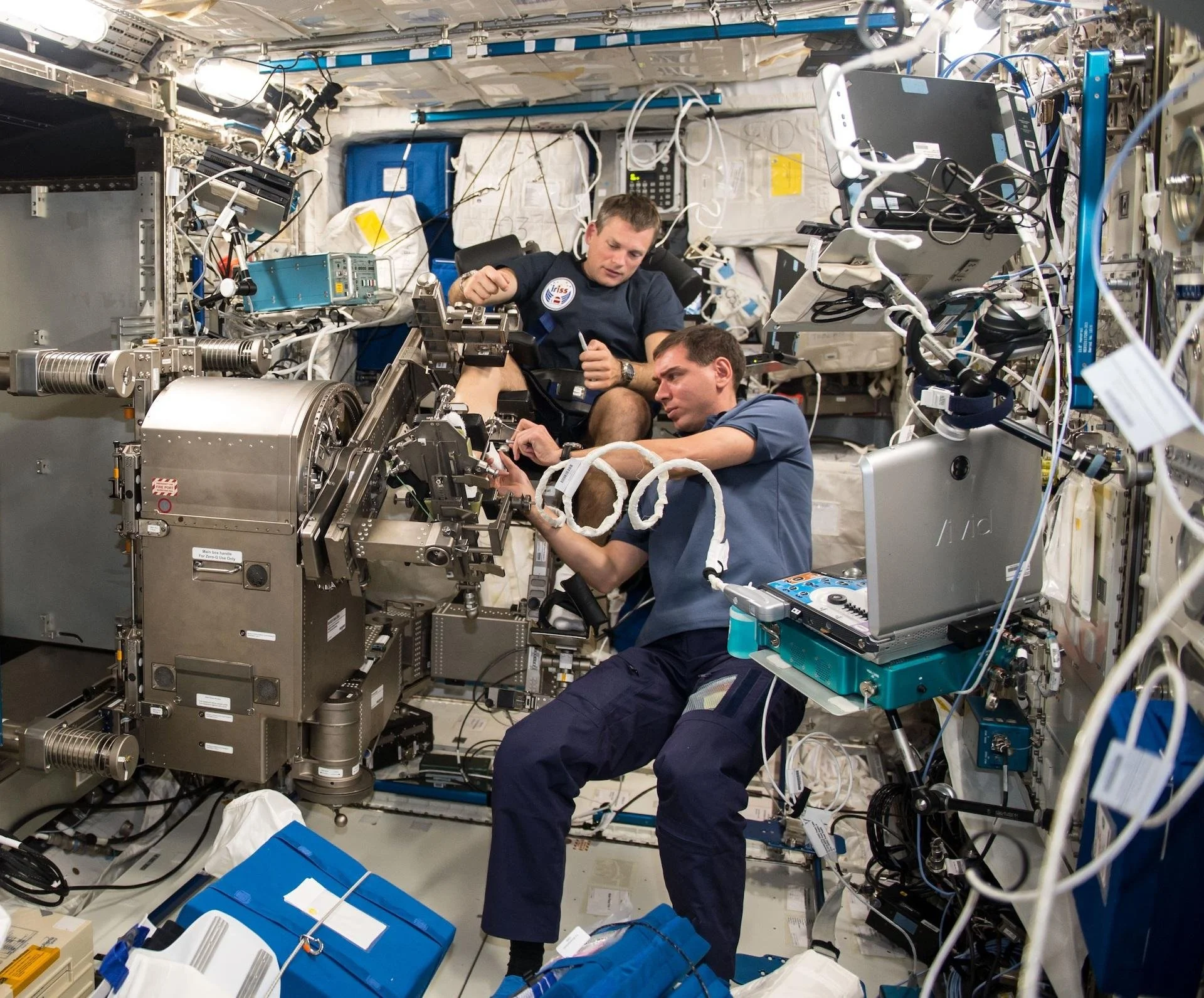
Image Credit: NASA
The ISS Sick Call
Routine medical complaints aboard the ISS are surprisingly mundane.
Astronauts experience headaches, nasal congestion, skin rashes, minor injuries, sleep disturbances, back pain, and gastrointestinal illnesses much as we do on Earth.
The most common early complaint is congestion.
In microgravity, body fluids redistribute toward the head, producing the characteristic “puffy face and bird legs” appearance seen in astronauts during their first days in orbit. The sensation resembles a persistent head cold, and many astronauts report feeling as though they have sinusitis or allergies.
For genuine upper respiratory infections or sore throats, the treatment is familiar to any family physician:
· Acetaminophen and NSAIDs for fever and discomfort
· Decongestants
· Cough suppressants
· Hydration
· Rest
· Antibiotics when clinically indicated
The station maintains a substantial medical inventory that includes analgesics, antiemetics, antibiotics, IV supplies, emergency medications, splints, wound care supplies, and dental equipment.
There is even capability for intravenous fluid administration if needed.

Image Credit: NASA
Every Astronaut Is Part Medic
NASA does not send physicians on every mission.
Instead, one crew member receives extensive medical officer training prior to flight and serves as the Crew Medical Officer. Depending on the mission, that individual may be an engineer, pilot, scientist, or occasionally a physician.
Crew members train extensively in:
· Ultrasound examinations
· Intravenous access
· Airway management
· Cardiac monitoring
· Trauma care
· Medication administration
· Emergency procedures
When necessary, the crew can perform ultrasound studies while specialists on Earth watch in real time and guide probe placement from Mission Control.
In many ways, the model resembles telemedicine practiced in the most remote regions of Earth — except the patient is traveling around the planet every ninety minutes.
What Is Actually on Board?
The ISS carries an impressive amount of medical equipment considering the severe mass and volume constraints of launch.
Available capabilities include:
· Defibrillator and cardiac monitor
· Portable ultrasound
· Pulse oximetry
· Emergency airway equipment
· IV fluids and infusion supplies
· Laboratory sampling capability
· Minor surgical instruments
· Dental emergency kits
There is, however, one conspicuous absence.
There is no operating room.
No anesthesia machine.
No sterile surgical suite.
No capability for abdominal surgery.
This is by design.
The Question Every Physician Eventually Asks
What if an astronaut develops appendicitis?
As physicians, this is often the first hypothetical scenario that comes to mind.
The answer is straightforward:
They come home.
An astronaut developing acute appendicitis aboard the ISS would likely receive antibiotics, intravenous fluids, analgesia, antiemetics, and serial examinations while NASA flight surgeons coordinated an expedited return to Earth.
Modern management of uncomplicated appendicitis increasingly includes antibiotic treatment, which buys valuable time. The objective in orbit would not be definitive treatment but stabilization and evacuation.
Fortunately, unlike future missions to Mars, astronauts aboard the ISS are never truly stranded.
At virtually all times there is a docked spacecraft capable of returning crews to Earth on relatively short notice.
For the ISS, evacuation is the surgical suite. If an Astronaut developed an acute appendicitis this morning, they could be on a surgical table on earth in a few hours.
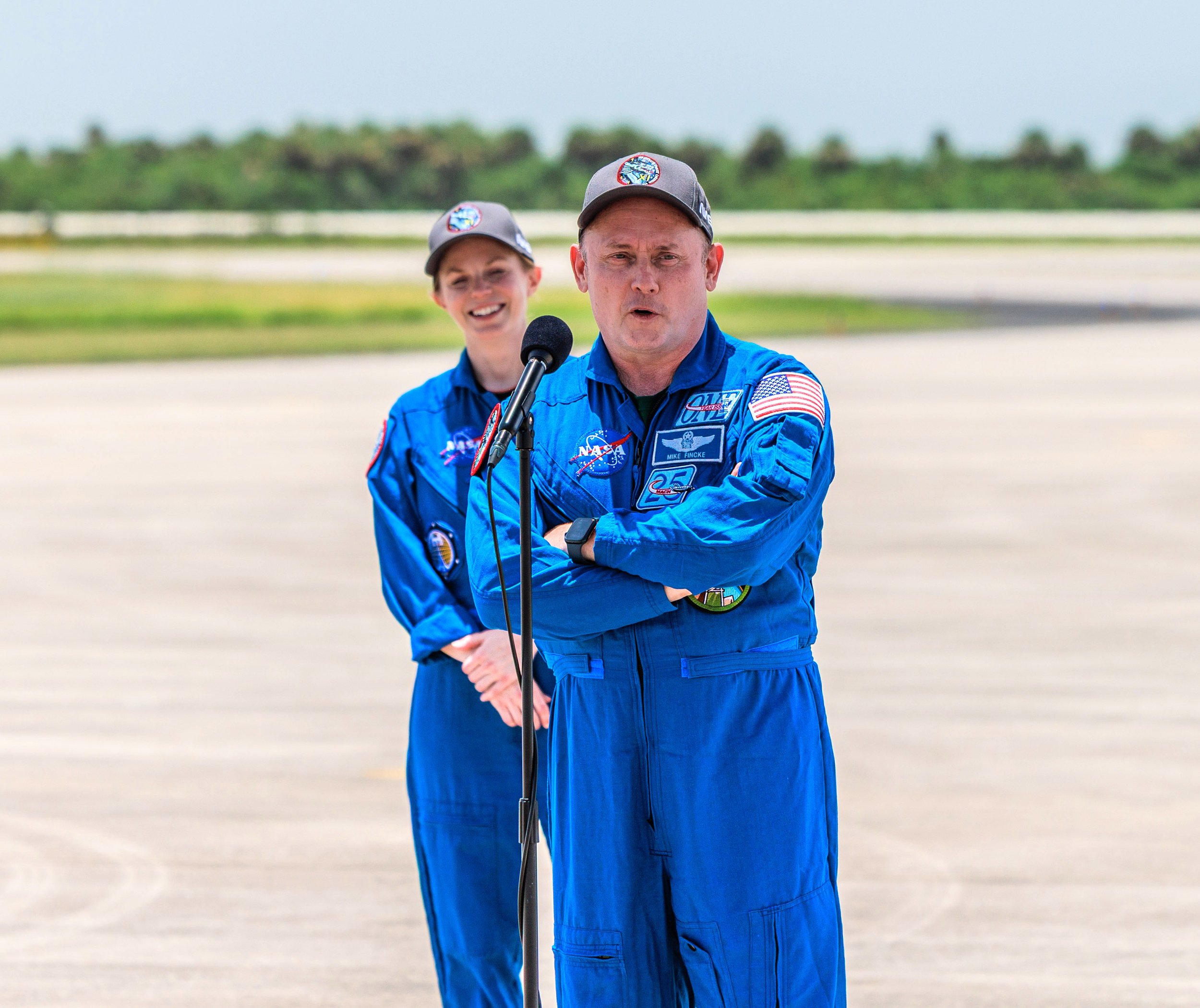
Mike Fincke arrives at KSC for the Crew-11 Launch to the ISS in 2025: PHOTO CREDIT ERIC MOORE
A Recent Reminder
Earlier this year NASA conducted its first medical evacuation from the International Space Station after astronaut Mike Fincke developed a sudden neurological event while in orbit.
According to Fincke, he abruptly lost the ability to speak for approximately twenty minutes while preparing for an upcoming spacewalk. His crewmates immediately initiated emergency protocols while NASA flight surgeons on the ground became involved in real time.
The symptoms resolved, but NASA ultimately ended the mission early and returned him to Earth for evaluation.
Even months later, physicians still do not know exactly what happened.
The episode served as a reminder that despite decades of operational experience, medicine in space remains an exercise in managing uncertainty.
The station has telemetry.
It has telemedicine.
It has highly trained personnel.
What it does not have is a hospital.
Mars Changes Everything
The ISS sits only a few hours from definitive medical care.
Mars is different.
A medical evacuation from Mars would take months.
The physician on a Mars expedition may eventually need to perform surgery in partial gravity using autonomous diagnostic systems and robotic assistance while communicating with Earth under delays approaching twenty minutes each way.
In other words, the medical future of deep-space exploration may look less like Houston Methodist and more like Antarctic expedition medicine crossed with naval submarine medicine and battlefield surgery.
The first appendectomy in deep space may someday become as historic as the first moonwalk.
For now, however, if an astronaut develops acute appendicitis aboard the International Space Station, the treatment plan remains refreshingly terrestrial:
Stabilize the patient.
Light the engines.
Come home.
Story By: Dr. Eric Moore
Image Credits: NASA - Onboard ISS
Image Credit: Astronaut - Mike Fincke: Dr. Eric Moore