
SpaceX Starlink 10-54
Cape Canaveral Space Force Station, Fl. ~
With sporadic ominously dark clouds descending on the Cape Canaveral Space Force Station, SpaceX decided to have 2 special events for Friday June, 12.
The long awaited IPO for SpaceX stock is set to occur, and the second event a bit more routine. Rumbling away from SLC # 40, SpaceX ignited the 9 Merlin engines on the Falcon 9 First Stage Core (B1080) which carried its payload of 29 StarLink v2-mini communications satellites in a NE trajectory.
With the return of the first stage core (27th time) and successful landing SpaceX completed their 70th successful mission of 2026.
Article: Graham Smith
Images: Graham Smith
#spacex #falcon9 #starlink #capecanaveralspaceforcestation
#floridaspaceflight #karsparkksc #usspaceforce #nasakennedy #nasa #spacecoastdaily #launch #floridaspaceflight @emrekelly
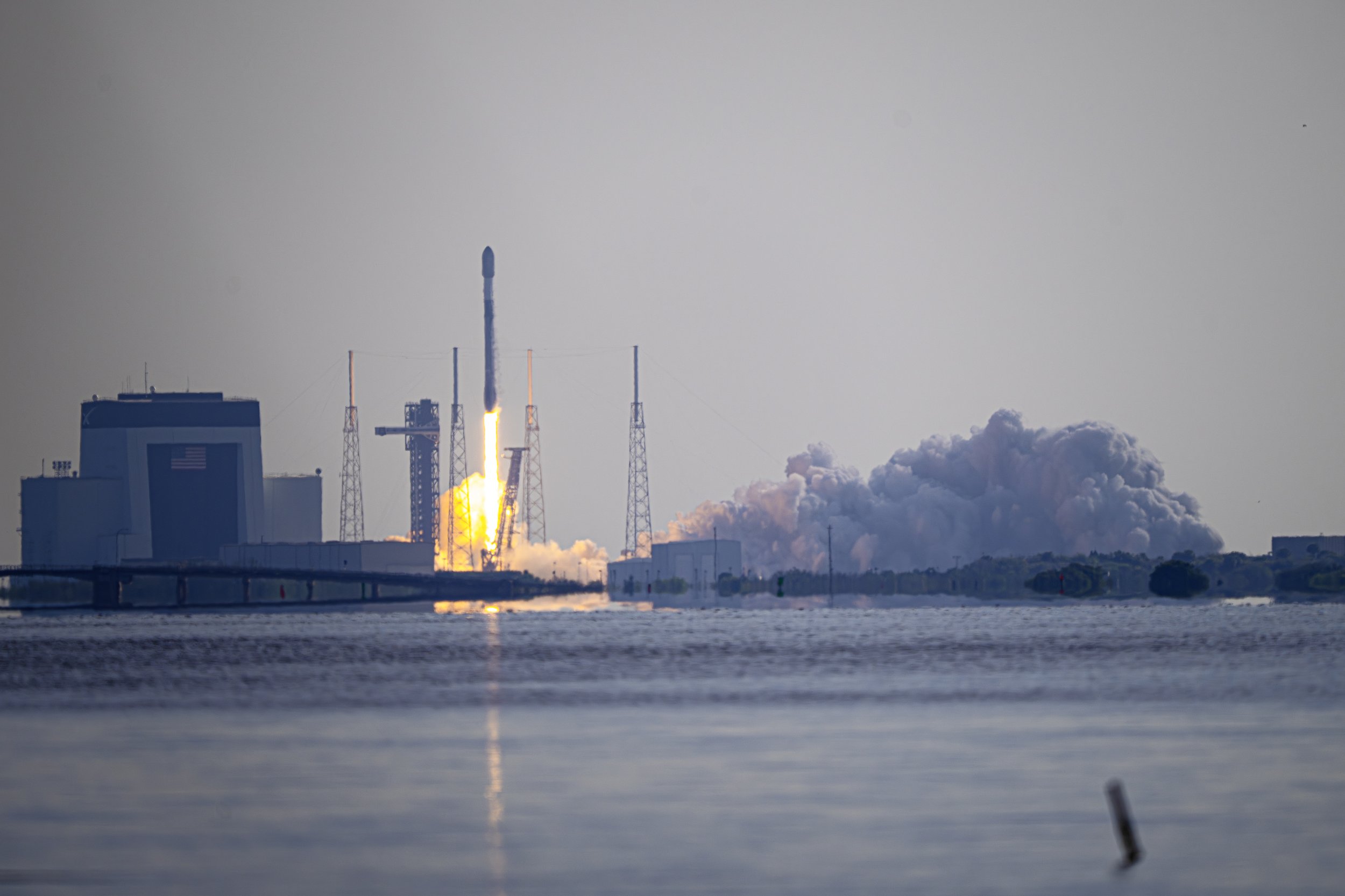
SpaceX StarLink 10-54 launching from SLC # 40
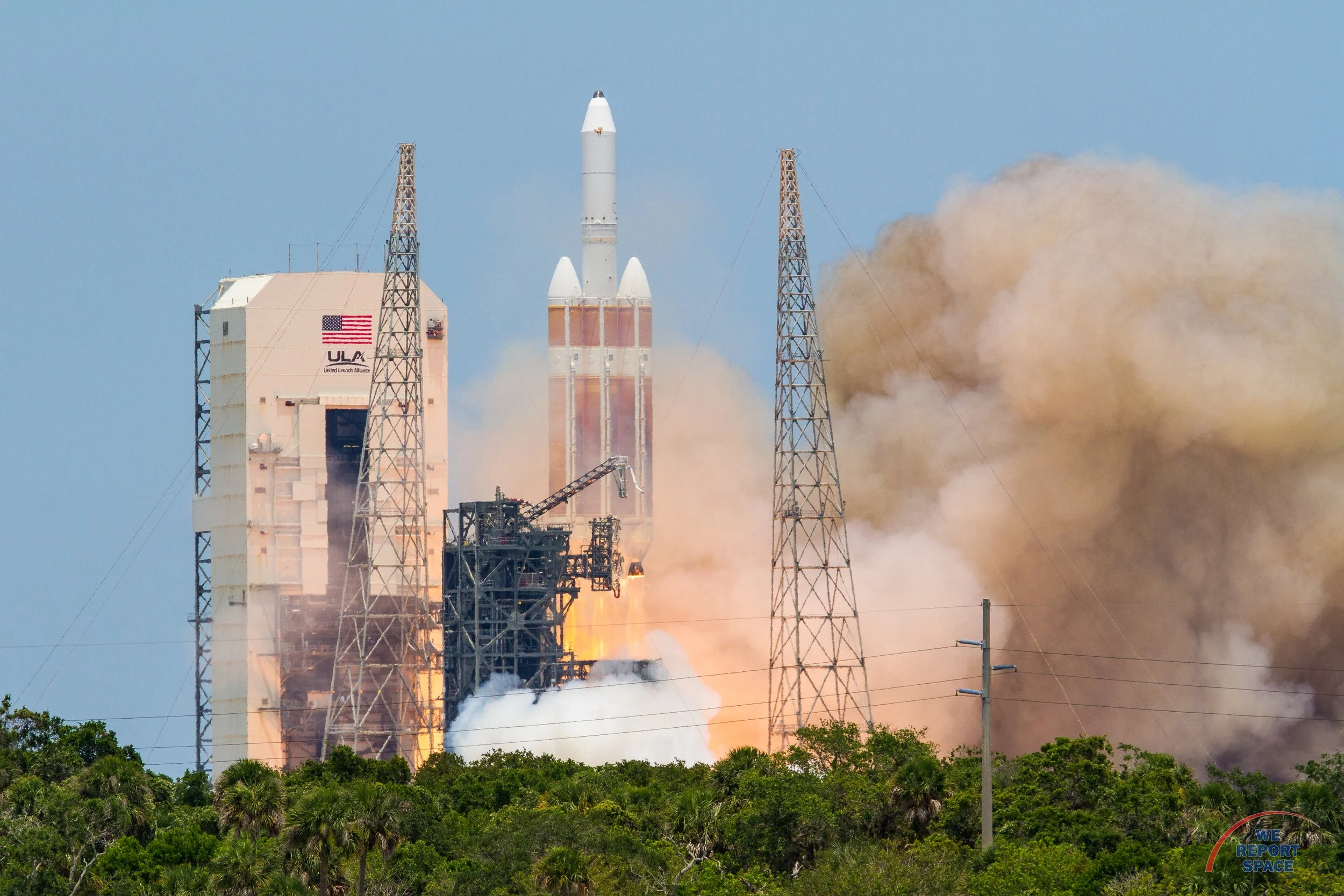
Ten Years Ago Today: Remembering the Delta IV Heavy and the Rocket That Defined an Era
Ten years ago today, a United Launch Alliance Delta IV Heavy rocket lifted off from Space Launch Complex 37B at Cape Canaveral carrying the NROL-37 mission for the National Reconnaissance Office. It was one of 16 missions the Delta IV Heavy would fly over its lifetime, and for those of us who were there to photograph it, one of the most visually extraordinary rockets ever to leave Florida's Space Coast.
The Delta IV Heavy is gone now. Its final flight came in April 2024, closing the book on a rocket program that traced its roots back 60 years to the earliest days of the American space program. Standing at the pad, the Heavy was unmistakable: three Common Booster Cores strapped together, each burning liquid hydrogen, producing a fireball at ignition that briefly engulfed the lower third of the vehicle before the rocket climbed free. It was, as more than one engineer called it, the most metal thing in the launch business.
The Delta IV Heavy first flew in 2002. Over the course of its operational life it launched some of the most significant payloads in American national security and science history. It carried NASA's Orion spacecraft on its first flight test in December 2014, an unmanned shakedown mission called EFT-1 that put the capsule through the high-speed re-entry conditions it would need to survive on the way back from deep space. It sent the Parker Solar Probe on its way to the Sun in 2018. And it launched mission after classified mission for the National Reconnaissance Office, the agency responsible for America's spy satellite constellation.
All but four of its 16 missions were for the NRO. Most launched from SLC-37B here at Cape Canaveral. A handful flew from Vandenberg in California. Every one of them was a spectacle.
What replaced it is a different kind of rocket, and its path to operational status was harder than ULA anticipated. Vulcan Centaur, designed to replace both the Atlas V and the Delta IV Heavy, flew its second certification mission in October 2024, but a solid rocket booster nozzle fell off mid-flight, delaying Space Force certification by months. Vulcan finally received full certification for National Security Space Launch missions in March 2025. Then, at the end of that year, longtime ULA CEO Tory Bruno departed the company, leaving a leadership void at a critical moment in Vulcan's development. 2025 fell short of ULA's launch projections by most measures.
But Vulcan is flying. It uses Blue Origin BE-4 engines burning liquid natural gas, comes in configurations ranging from no solid rocket boosters to six, and is certified to fly the most demanding national security payloads. It is the primary launch vehicle for Amazon's Project Kuiper broadband constellation, with the first Kuiper launch on Vulcan scheduled for September from SLC-41 at Cape Canaveral. ULA says 2026 and 2027 will be pivotal years for establishing Vulcan's place in a launch market now crowded by Falcon 9, Falcon Heavy, and New Glenn.
Whether Vulcan fills the void left by the Delta IV Heavy depends on what you valued about the older rocket. As a capable heavy lift vehicle, Vulcan makes a credible case for itself. As a spectacle, nothing quite replaced what happened at SLC-37B when those three cores lit up.
We were there for NROL-37 ten years ago today. The photos are in the gallery below.
Photography by Michael Seeley, We Report Space
Artemis III Crew Announced
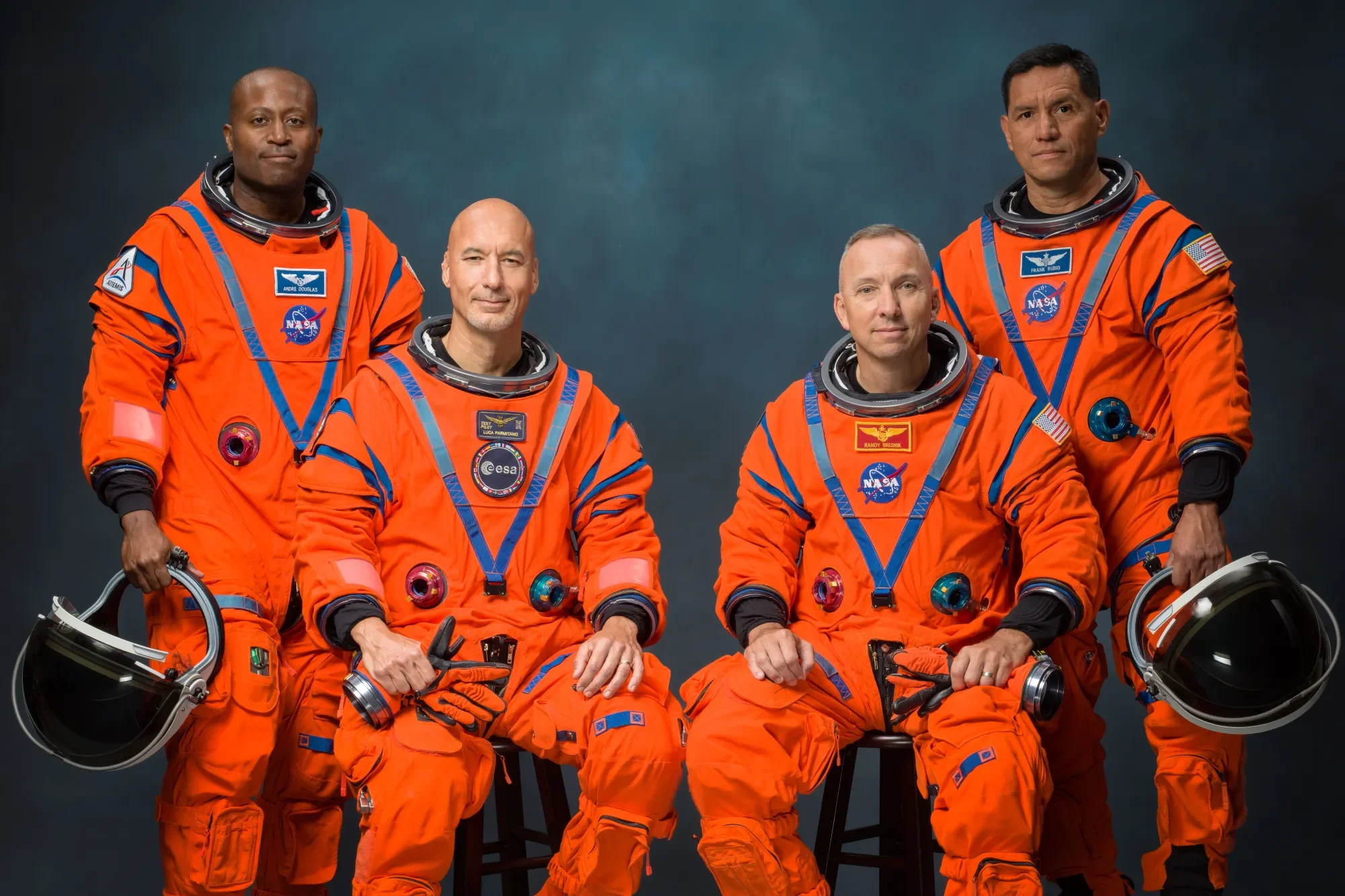
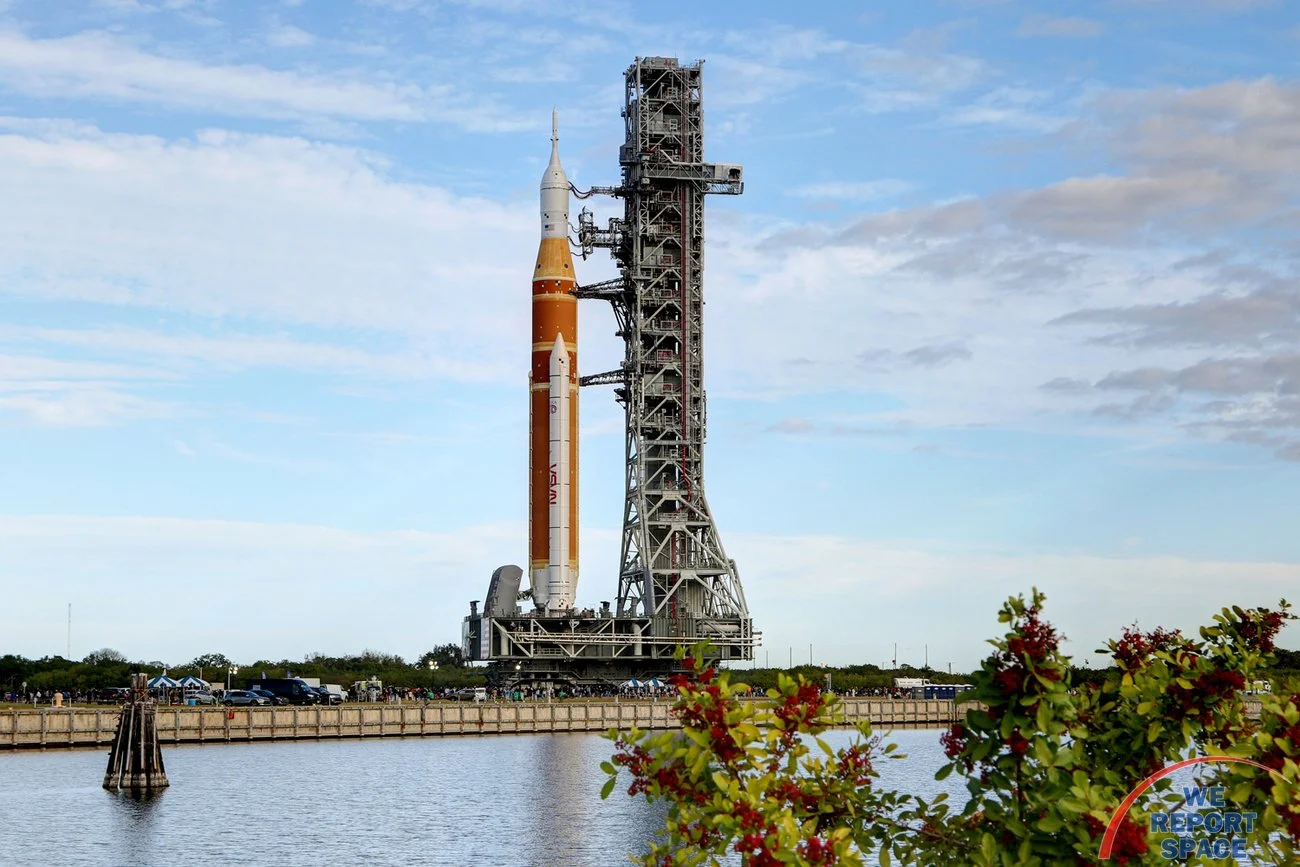
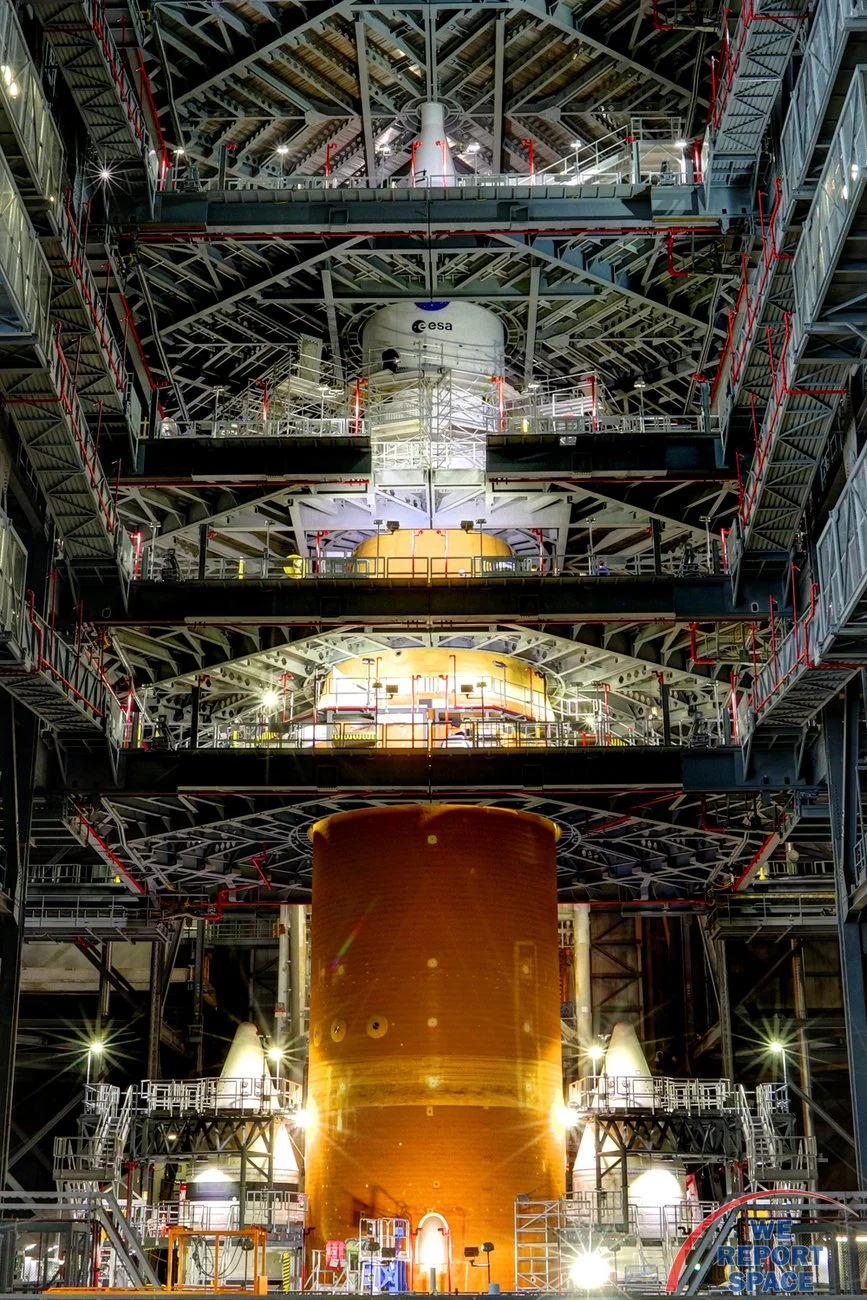
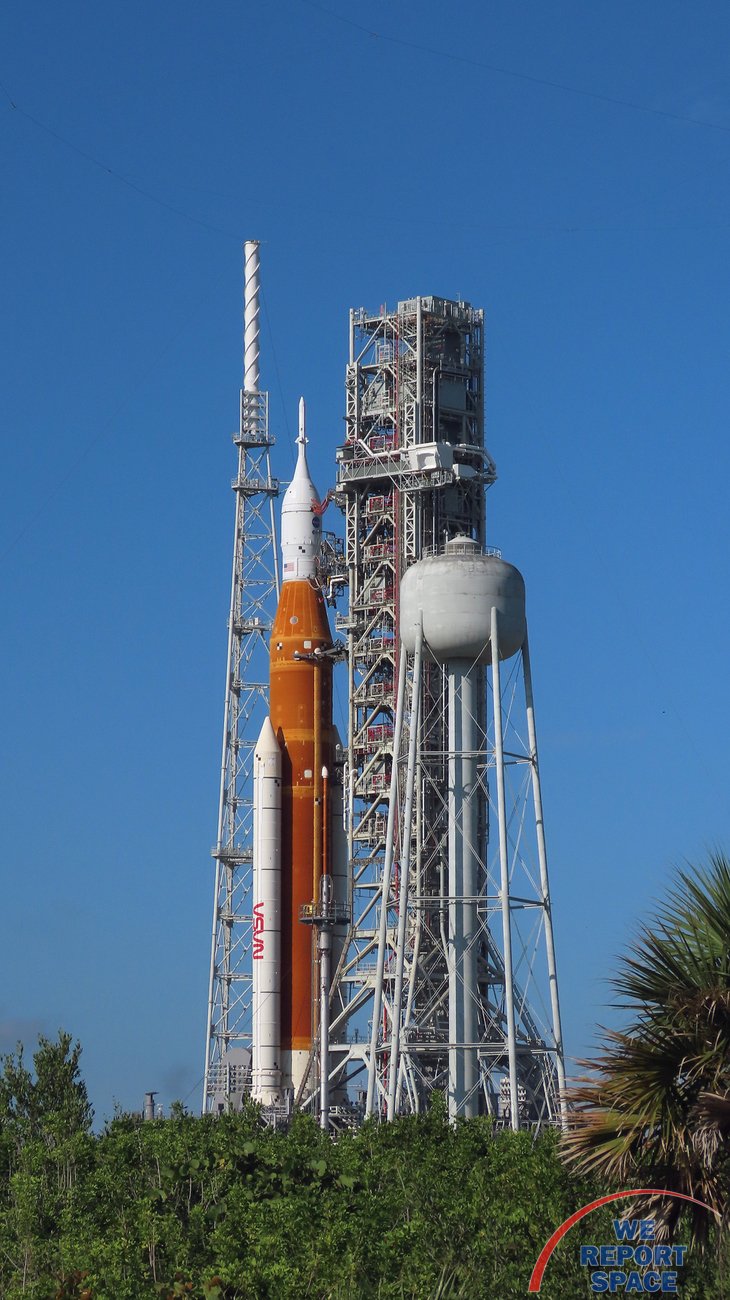
Coming off the incredible success of Artemis II, today, June 9, 2026 NASA and the European Space Agency (ESA) announced the names of the Artemis III crew and the future plans for the Artemis program going forward. Image Credit: NASA / Bill Stafford
Johnson Space Center, TX. – Coming off the incredible success of Artemis II, today, June 9, 2026 NASA and the European Space Agency (ESA) announced the names of the Artemis III crew and the future plans for the Artemis program going forward.
The Artemis III crew is: Commander: Randy Bresnik (NASA), Pilot: Luca Parmitano (ESA) and NASA Mission Specialists, Andre Douglas and Frank Rubio.
The Artemis III mission will be conducted in Low-Earth orbit and last nearly two weeks. During the mission, the crew will be conducting maneuvers in space that have never been done at this particular level before. Maneuvers conducted by the crew that will include multiple dockings with two separate and different spacecraft that are the SpaceX Starship and the Blue Origin MK-1 Lunar Lander.
These procedures are necessary and for this mission, can be conducted close to home on the unlikely chance that the crew would have to return to Earth and be only hours from a splashdown verses a several day return from the Moon.
In a statement from NASA: "Today we take another bold step in humanity’s return to the Moon, building on the extraordinary foundation laid by the Artemis II astronauts,” said NASA Administrator Jared Isaacman. “Their achievements reignited global excitement for exploration, and now they pass the torch to the Artemis III team, Randy, Luca, Frank, and Andre. Artemis III will demonstrate the power of American innovation and international partnership as we test complex rendezvous and docking operations and advance the technologies that will one day carry us deeper into the solar system. This mission will require the most awe-inspiring coordination of heavy-lift rocket launches in history, drawing on the talent and capability of teams across government and the spaceflight community. The Artemis III astronauts, alongside ESA and our international partners, and the tens of thousands of the best and brightest across the agency and industry, are ushering in a new Golden Age of exploration carrying forward the hopes and dreams of the next generation just as the Apollo astronauts did for so many of us.”
With this mission crew now announced, this is the first for ESA with the addition of Italian Astronaut and mission pilot Luca Parmitano.
In a statement from ESA: “Artemis III will push the boundaries of spacecraft operations in orbit. Luca’s assignment as pilot reflects the depth of European expertise in human spaceflight and draws on his extensive operational experience in high-pressure situations,” said Josef Aschbacher, ESA’s director general. “At the same time, ESA’s European Service Module will once again provide the critical capabilities that power Orion, demonstrating Europe’s enduring role at the very heart of the Artemis program. The news out of Houston today is a powerful recognition of ESA’s role in enabling humanity’s return to the Moon – and a key advancement in our partnership with NASA. Europeans can take pride in being part of this exciting journey."
All the astronauts but one has previous spaceflight hours prior to Artemis III. This will be the first flight for NASA astronaut and mission specialist Andre Douglas.
While no launch date has been set, the loss of the Blue Origin pad recently has set back some of the plans, but crews are working around the clock to have Artemis III and the components needed for flight ready in 2027.
Story By: Michael Howard – We Report Space
SLS Images By: Michael Howard – We Report Space
NASA Image By: NASA/Bill Stafford

Axiom Space and Prada Reveal the Layer Astronauts Will Wear Closest to Their Skin on the Moon
When NASA astronauts step onto the lunar surface during the Artemis IV mission, one of the few things standing between them and the vacuum of space will be a garment co-developed by a Houston spaceflight company and an Italian fashion house.
Axiom Space and Prada unveiled the Liquid Cooling and Ventilation Garment today, the inner layer of the Axiom Extravehicular Mobility Unit spacesuit. The garment circulates cold water through a network of tubes routed across the body's major muscle groups, absorbing metabolic heat generated during spacewalks and carrying it away to the suit's life-support system, where it is expelled into space. A separate loop delivers fresh oxygen across the astronaut's face to continuously clear exhaled carbon dioxide.
The collaboration draws on Prada's background in engineered knitting and advanced materials to produce a garment designed for up to eight-hour spacewalks across multiple long-duration missions. Unlike earlier cooling garments, the Axiom version includes a fully redundant cooling circuit, providing a backup if the primary loop fails.
Axiom and Prada first announced their partnership in 2024 with the unveiling of the AxEMU's outer shell, built to withstand the thermal extremes and micrometeoroid environment of the lunar South Pole. The inner layer represents the next phase of that collaboration, moving from the suit's exterior to the layer worn directly against the astronaut's body.
Artemis IV is currently the next crewed lunar surface mission on NASA's schedule.
Source: Axiom Space

Image credit: Axiom Space
NASA's Most Powerful Antenna Is Offline After a Preventable Accident
Staff article, AI assisted
NASA has released a formal mishap investigation report detailing how DSS-14, the agency's most capable 70-meter deep space antenna, sustained between $4.1 and $4.6 million in damage on September 16, 2025, and remains offline as repairs continue.
The antenna, located at the Goldstone Deep Space Communications Complex in California's Mojave Desert, over-rotated beyond its design limits while tracking NASA's Juno spacecraft. The over-rotation severely damaged the antenna's internal cable wrap, a complex bundle of power cables, data lines, and fluid hoses that runs between the antenna's stationary base and its rotating structure. When the cables and hoses failed, an estimated 200,000 gallons of water, some of it contaminated with glycol coolant, flooded the antenna's base. No injuries were reported.
What is DSS-14 and why does it matter?
DSS-14, nicknamed "Mars" for the site where it sits at Goldstone, is one of the most significant antennas in human spaceflight history. Originally built as a 64-meter dish in 1966 and upgraded to 70 meters in 1988, it is part of NASA's Deep Space Network, the global system of large radio antennas that maintains communication with virtually every spacecraft NASA has ever sent beyond Earth orbit. The DSN operates three complexes worldwide, at Goldstone in California, Madrid in Spain, and Canberra in Australia, providing near-continuous coverage as the Earth rotates.
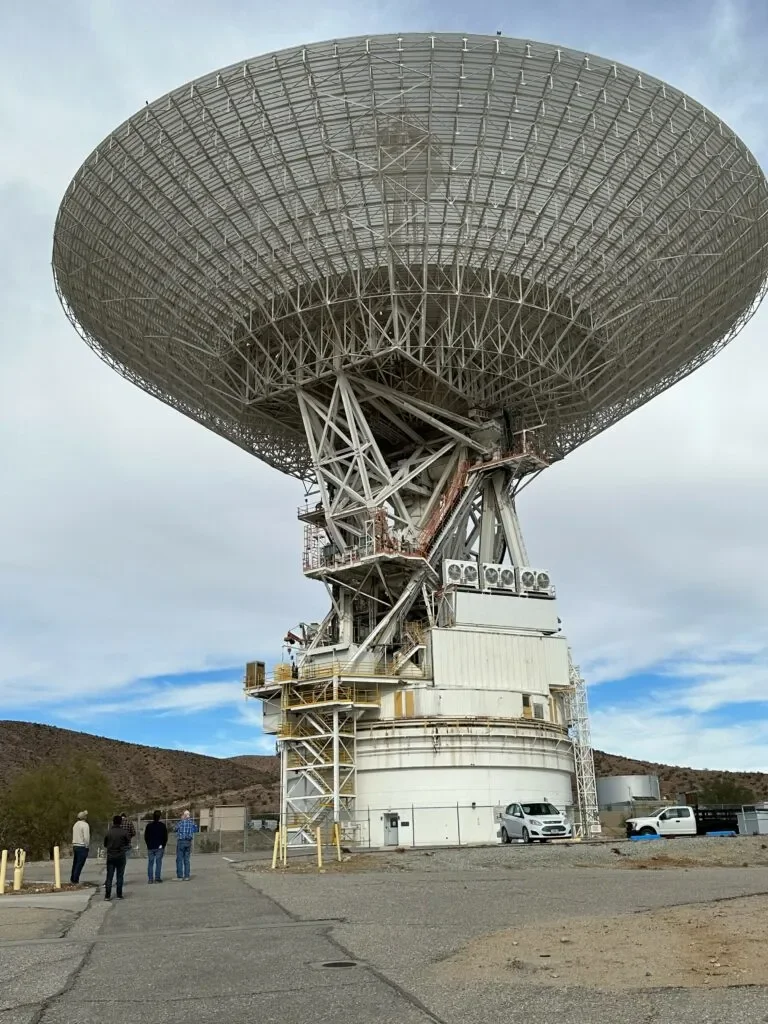
Image credit: science.nasa.gov
DSS-14 is the largest antenna in the Goldstone complex and one of only three 70-meter antennas in the entire DSN. At that size, it can communicate with spacecraft at the edges of the solar system, receive faint signals from Voyager 1 and Voyager 2 more than 15 billion miles away, and support planetary radar observations. Its loss represents a significant reduction in NASA's deep space communications capacity at a particularly demanding time, with active missions including the Juno spacecraft at Jupiter, the Voyager probes, and the ongoing Artemis program.
How it happened
The report identifies a cascade of failures over a 24-hour period preceding the mishap. The day before, maintenance personnel were troubleshooting a problem with the antenna's emergency stop system. During that work, multiple safety systems were inadvertently compromised. By the morning of September 16, operators at the Goldstone control room were repeatedly driving the antenna into its rotation limits and manually recovering it each time, without fully understanding why the limits kept triggering or what state the antenna's safety systems were in.
Critically, the antenna's hydraulic limit system, described in the report as the final failsafe against over-rotation, had been damaged in an earlier undocumented incident and was completely inoperable. The investigation board found no evidence that this system had been functionally tested in more than 20 years. When operators finally sent the antenna to track the Juno spacecraft, it rotated past all limits with nothing to stop it.
Making matters worse, after flooding was discovered, a command was issued to move the antenna to its standard stow position, which rotated it further into the over-wrap condition, causing additional damage.
What the investigation found
The Mishap Investigation Board identified four root causes: inadequate training of Goldstone personnel, insufficient written procedures, control logic that failed to give operators a clear picture of the antenna's state, and an over-reliance on undocumented institutional knowledge. The report is pointed in its assessment of the culture at Goldstone, describing a workplace that "prioritized a rapid return to operations over the health of assets or personnel" and that rewarded personnel for improvising outside their training rather than following established procedures. Operators were described as willing to "do whatever it takes to keep the antenna running," an attitude the board characterized as directly contributing to the mishap.
The board also noted that the antenna's emergency response plan had not been updated in more than 14 years, that safety procedures were routinely bypassed, and that four employees walked through the flooded antenna structure before electrical power was shut off.
Twenty recommendations were issued covering training reform, procedure updates, cultural change, hydraulic system remediation, and restored authority for supervisors over on-site technical staff.
What happens next
DSS-14 remains offline. The report indicates the unwrapping procedure was completed in November 2025, but full repair and return to service will require replacement of all 11 fluid hoses, at least 85 of 114 data and power cables, all 56 structural connecting rods, and extensive inspection and recertification of remaining components. Asbestos abatement is also required in portions of the antenna base damaged by flooding.
The loss of DSS-14 puts additional strain on the remaining two 70-meter antennas in the DSN network at Madrid and Canberra, and on the smaller 34-meter dishes at Goldstone, at a time when the number of active deep space missions requiring DSN support continues to grow.
Source: NASA Mishap Investigation Board Report, DSS-14 Azimuth Over-Rotation Mishap, March 30, 2026