
When the I.S.S. needs 911
Kennedy Space Center, FL. – Prior to the orbiting space stations of today, it was impossible to have the opportunity to call “911” on orbit. Today, after stations like Skylab or that of Mir, astronauts now have even more emergency medical equipment than ever before on hand in the unlikely event a medical situation should arise. However, back in January of 2026, an astronaut did have that 911 event. The call was placed to ground support and the medical training of the astronauts went into action.
We Report Space team member Dr. Eric Moore presents:
The Emergency Room in Orbit: How the International Space Station Practices Medicine 250 Miles Above Earth
Dr. Eric Moore, We Report Space
As a physician who periodically covers rocket launches from Florida’s Space Coast as part of the media corps, I have often found myself staring at a Falcon 9 disappearing into the sky and wondering about something that receives far less attention than engines, trajectories, and docking procedures:
What happens when somebody gets sick up there?
The International Space Station is, after all, a permanently occupied outpost orbiting Earth at 17,500 miles per hour, roughly 250 miles overhead. It is not a hospital. There is no emergency department, no CT scanner, no operating room, and certainly no trauma surgeon waiting behind swinging doors.
Yet astronauts are human beings, and human beings develop sore throats, kidney stones, migraines, arrhythmias, and abdominal pain regardless of altitude.
Space medicine has quietly become one of the most fascinating areas of modern medical planning.
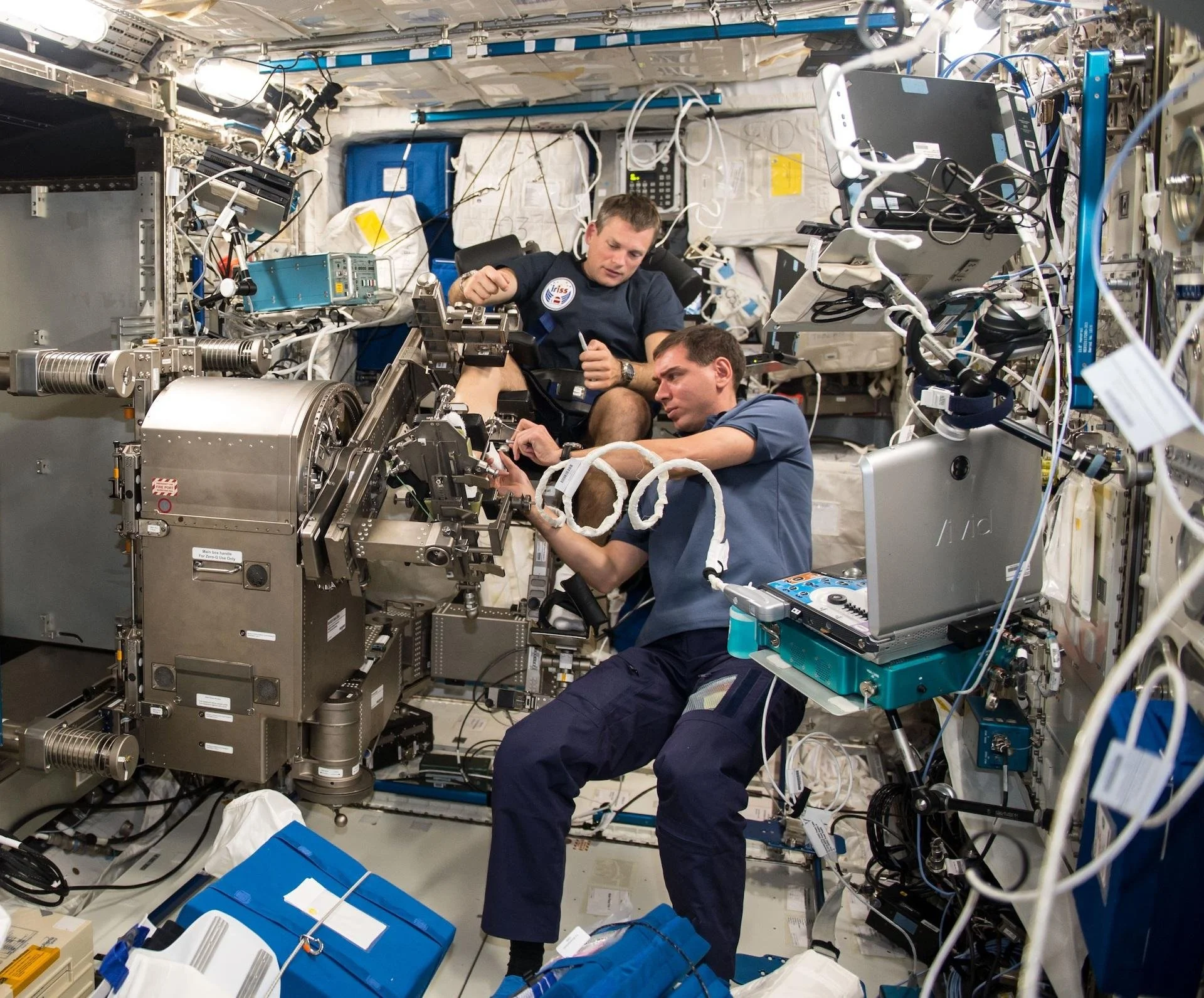
Image Credit: NASA
The ISS Sick Call
Routine medical complaints aboard the ISS are surprisingly mundane.
Astronauts experience headaches, nasal congestion, skin rashes, minor injuries, sleep disturbances, back pain, and gastrointestinal illnesses much as we do on Earth.
The most common early complaint is congestion.
In microgravity, body fluids redistribute toward the head, producing the characteristic “puffy face and bird legs” appearance seen in astronauts during their first days in orbit. The sensation resembles a persistent head cold, and many astronauts report feeling as though they have sinusitis or allergies.
For genuine upper respiratory infections or sore throats, the treatment is familiar to any family physician:
· Acetaminophen and NSAIDs for fever and discomfort
· Decongestants
· Cough suppressants
· Hydration
· Rest
· Antibiotics when clinically indicated
The station maintains a substantial medical inventory that includes analgesics, antiemetics, antibiotics, IV supplies, emergency medications, splints, wound care supplies, and dental equipment.
There is even capability for intravenous fluid administration if needed.

Image Credit: NASA
Every Astronaut Is Part Medic
NASA does not send physicians on every mission.
Instead, one crew member receives extensive medical officer training prior to flight and serves as the Crew Medical Officer. Depending on the mission, that individual may be an engineer, pilot, scientist, or occasionally a physician.
Crew members train extensively in:
· Ultrasound examinations
· Intravenous access
· Airway management
· Cardiac monitoring
· Trauma care
· Medication administration
· Emergency procedures
When necessary, the crew can perform ultrasound studies while specialists on Earth watch in real time and guide probe placement from Mission Control.
In many ways, the model resembles telemedicine practiced in the most remote regions of Earth — except the patient is traveling around the planet every ninety minutes.
What Is Actually on Board?
The ISS carries an impressive amount of medical equipment considering the severe mass and volume constraints of launch.
Available capabilities include:
· Defibrillator and cardiac monitor
· Portable ultrasound
· Pulse oximetry
· Emergency airway equipment
· IV fluids and infusion supplies
· Laboratory sampling capability
· Minor surgical instruments
· Dental emergency kits
There is, however, one conspicuous absence.
There is no operating room.
No anesthesia machine.
No sterile surgical suite.
No capability for abdominal surgery.
This is by design.
The Question Every Physician Eventually Asks
What if an astronaut develops appendicitis?
As physicians, this is often the first hypothetical scenario that comes to mind.
The answer is straightforward:
They come home.
An astronaut developing acute appendicitis aboard the ISS would likely receive antibiotics, intravenous fluids, analgesia, antiemetics, and serial examinations while NASA flight surgeons coordinated an expedited return to Earth.
Modern management of uncomplicated appendicitis increasingly includes antibiotic treatment, which buys valuable time. The objective in orbit would not be definitive treatment but stabilization and evacuation.
Fortunately, unlike future missions to Mars, astronauts aboard the ISS are never truly stranded.
At virtually all times there is a docked spacecraft capable of returning crews to Earth on relatively short notice.
For the ISS, evacuation is the surgical suite. If an Astronaut developed an acute appendicitis this morning, they could be on a surgical table on earth in a few hours.
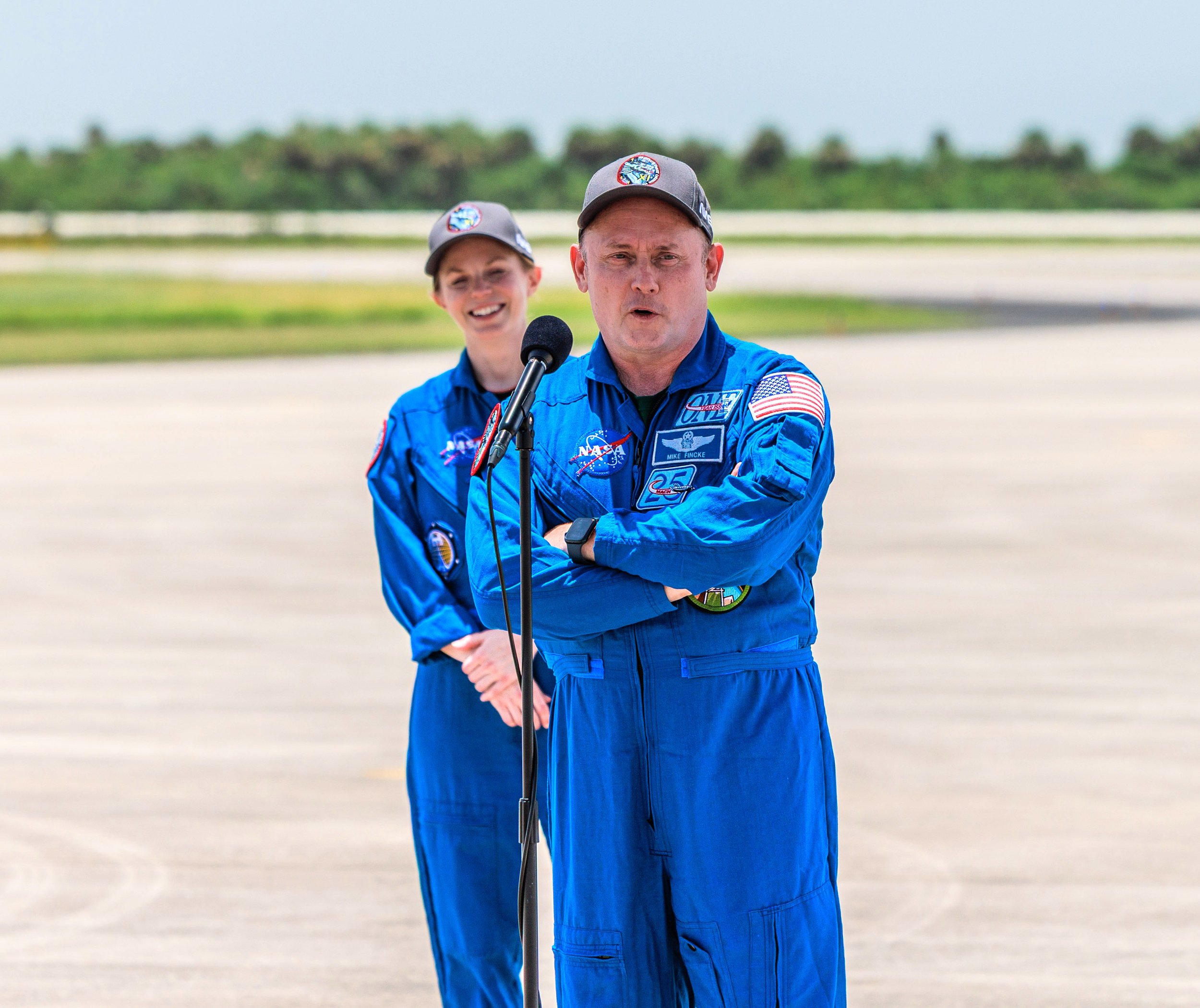
Mike Fincke arrives at KSC for the Crew-11 Launch to the ISS in 2025: PHOTO CREDIT ERIC MOORE
A Recent Reminder
Earlier this year NASA conducted its first medical evacuation from the International Space Station after astronaut Mike Fincke developed a sudden neurological event while in orbit.
According to Fincke, he abruptly lost the ability to speak for approximately twenty minutes while preparing for an upcoming spacewalk. His crewmates immediately initiated emergency protocols while NASA flight surgeons on the ground became involved in real time.
The symptoms resolved, but NASA ultimately ended the mission early and returned him to Earth for evaluation.
Even months later, physicians still do not know exactly what happened.
The episode served as a reminder that despite decades of operational experience, medicine in space remains an exercise in managing uncertainty.
The station has telemetry.
It has telemedicine.
It has highly trained personnel.
What it does not have is a hospital.
Mars Changes Everything
The ISS sits only a few hours from definitive medical care.
Mars is different.
A medical evacuation from Mars would take months.
The physician on a Mars expedition may eventually need to perform surgery in partial gravity using autonomous diagnostic systems and robotic assistance while communicating with Earth under delays approaching twenty minutes each way.
In other words, the medical future of deep-space exploration may look less like Houston Methodist and more like Antarctic expedition medicine crossed with naval submarine medicine and battlefield surgery.
The first appendectomy in deep space may someday become as historic as the first moonwalk.
For now, however, if an astronaut develops acute appendicitis aboard the International Space Station, the treatment plan remains refreshingly terrestrial:
Stabilize the patient.
Light the engines.
Come home.
Story By: Dr. Eric Moore
Image Credits: NASA - Onboard ISS
Image Credit: Astronaut - Mike Fincke: Dr. Eric Moore