A Day After Looking Back, ULA Takes a Step Forward: First Vulcan Stacks for Amazon's Constellation
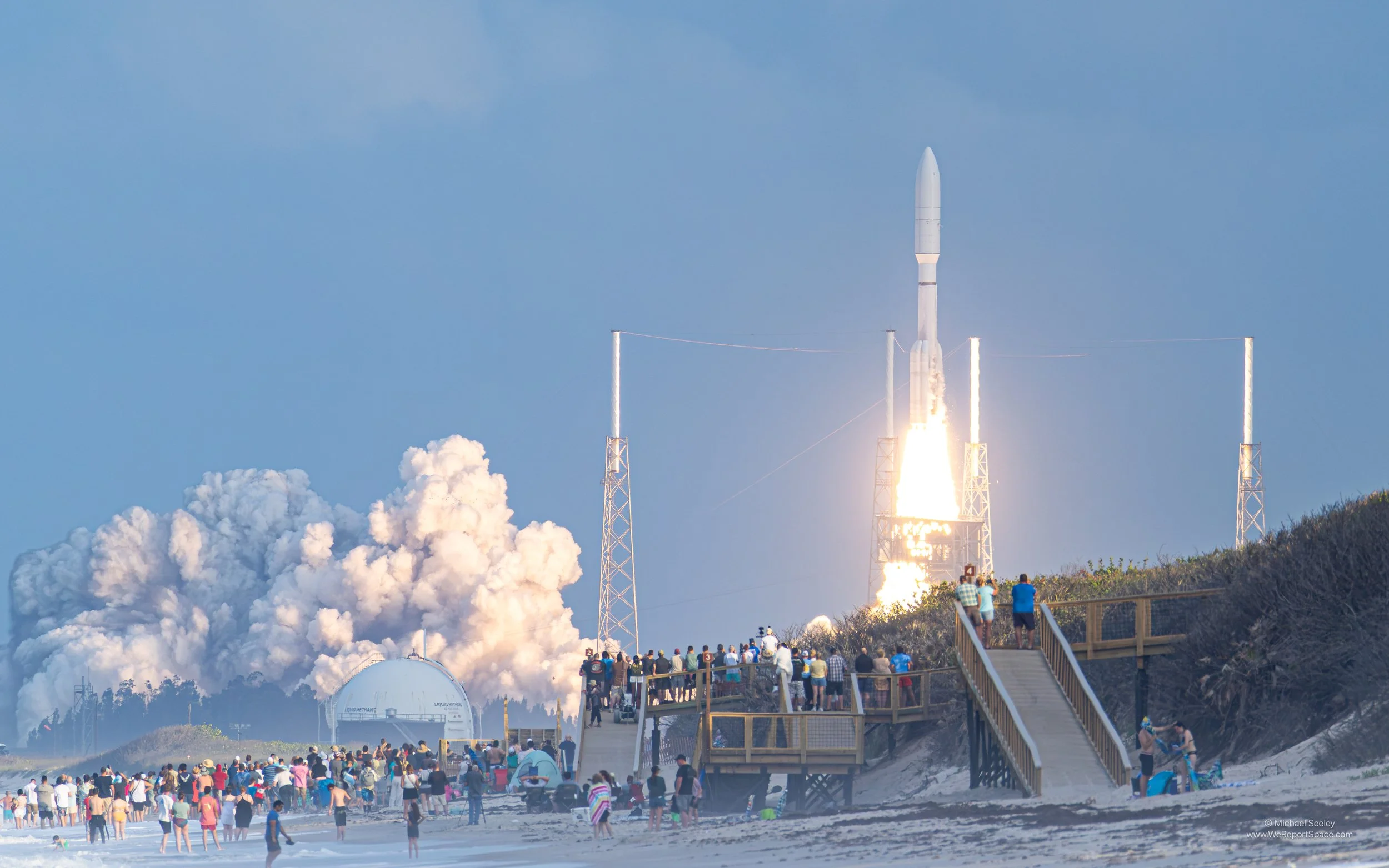
Project Kuiper Atlas V by United Launch Alliance by Michael Seeley
An Atlas V climbs away from Space Launch Complex 41 at Cape Canaveral, carrying the latest batch of Amazon Leo satellites into orbit. It's a scene that's become familiar on the Space Coast, and one that's about to change.
Yesterday we looked back at the Delta IV Heavy and the uncertain road Vulcan Centaur has traveled to take its place. Today, ULA has news that shows exactly where that road is heading next.
According to ULA's latest status report, the team has begun stacking and processing the first Vulcan rocket inside a brand new Vertical Integration Facility built specifically for Amazon's Leo constellation missions. Designated VC6L, this Vulcan will carry the ninth batch of operational broadband satellites for Amazon Leo, the first time an Amazon Leo payload has flown on Vulcan rather than Atlas V.
The vehicle is also debuting new hardware. ULA has integrated a LEO-optimized version of the Centaur upper stage atop this Vulcan, a variant designed specifically for low Earth orbit constellation deployments like Amazon's. Stacking this new stage configuration for the first time lets the team validate ground support equipment and stage interfaces that haven't been used in this combination before.
In the meantime, Atlas V continues carrying the load. ULA's next launch is Atlas V Leo 8, targeting July 3 at 12:03 a.m. Eastern from SLC-41 at Cape Canaveral, carrying the eighth batch of Amazon Leo satellites. The booster has already been hoisted into the Vertical Integration Facility, the five solid rocket boosters are mated, and the Centaur upper stage has been stacked.
Taken together, it's a snapshot of a launch provider in transition. Atlas V keeps a reliable cadence going for Amazon's constellation buildout while Vulcan works through the first-time procedures that will eventually make it the workhorse for these missions. The Leo 7 mission, which flew on Atlas V from SLC-41 on May 29, already pushed the constellation closer to commercial service. Leo 8 keeps that momentum going this summer, and Leo 1 on Vulcan will be the one to watch after that.
Source: ULA Status Report, June 12, 2026