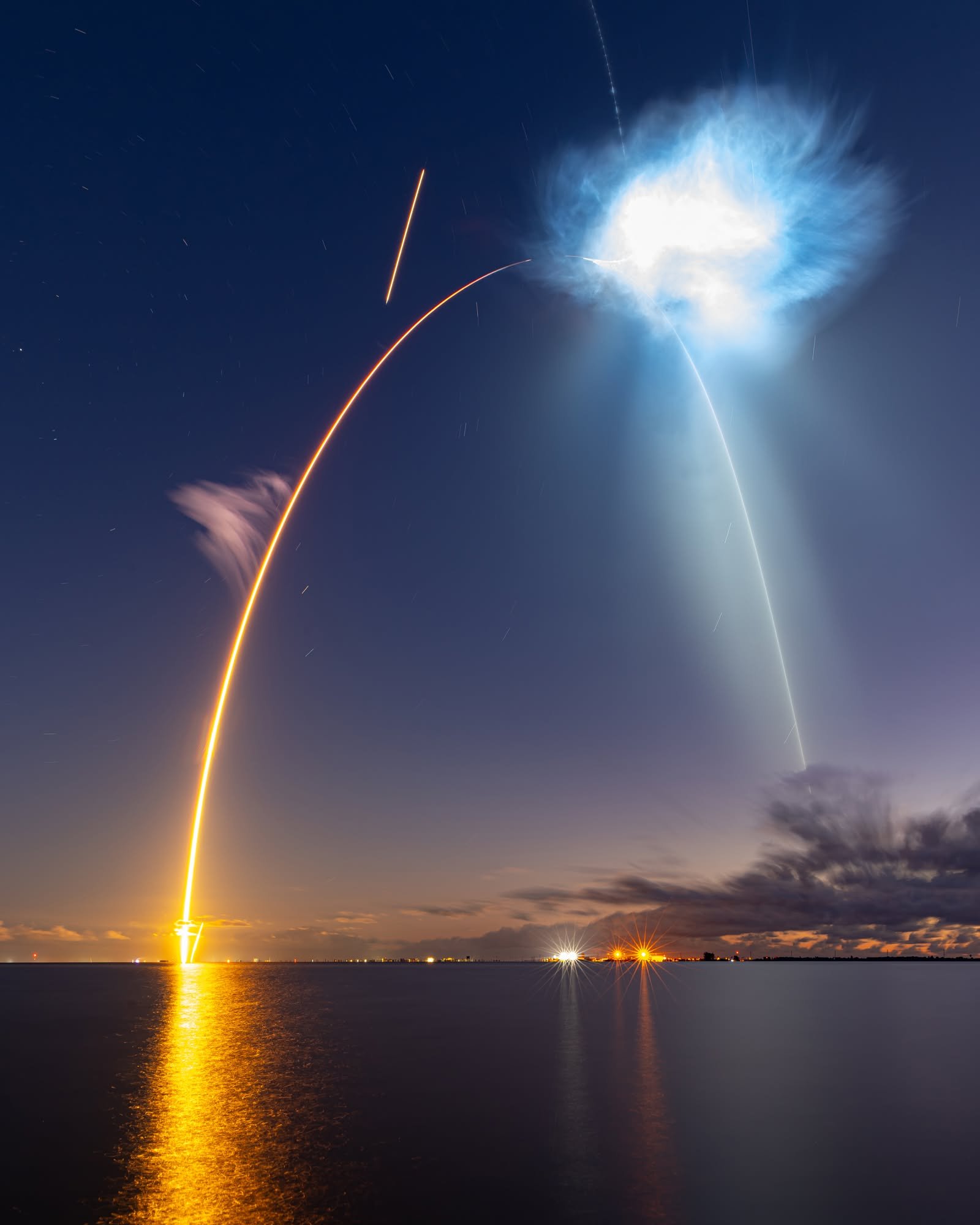
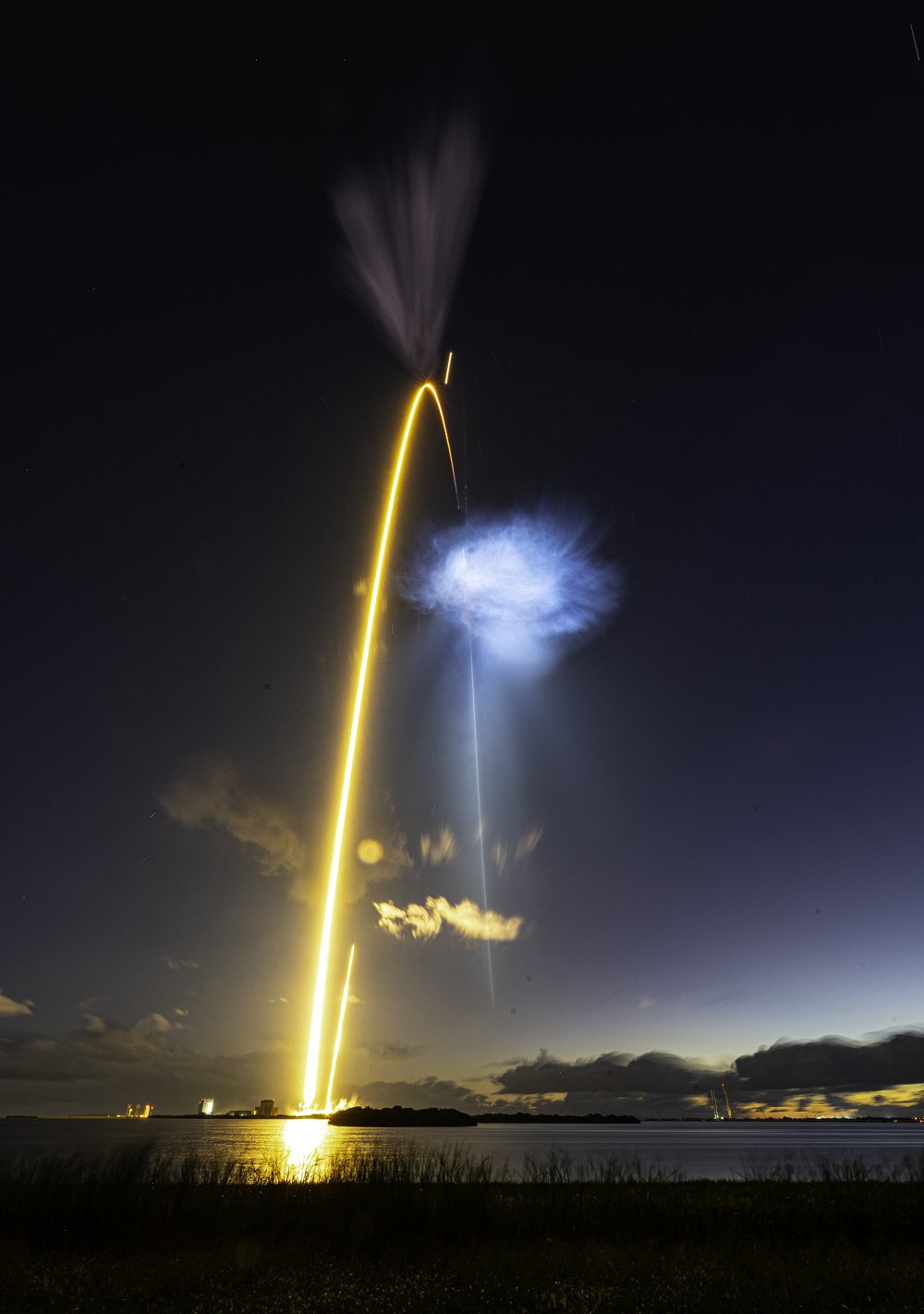
SpaceX CRS-35 Early Morning Launch
CRS SpX-35
While SpaceX launches have become the norm over the past few years with Falcon, Falcon Heavy Dragon CRS & SpaceX Crew missions, this launch of CRS-35 is a routine-but-vital delivery run. Cargo Dragon carries fresh science, crew supplies and station hardware up to the Expedition 75 crew, then comes home with samples and broken equipment that engineers want to examine on the ground. It is one of the few vehicles that can return a meaningful amount of cargo to Earth, which makes it the lifeline for time-sensitive biology experiments.
This flight uses a well-travelled capsule with CRS-35 making its fourth trip. The Falcon 9 first stage, B1096, is on its eighth flight, and completes the 113th mission for 2026 for SpaceX.
The most consequential item in the trunk is the fourth & final pair of ISS Roll-Out Solar Arrays (IROSA). These compact, roll-up solar panels are installed in front of the station's original arrays to boost power generation. NASA says this last pair completes the augmentation of the station's power system, which supports critical operations including its safe and controlled eventual deorbit. Because the arrays are large and unpressurized, they ride in Dragon's external trunk and are later removed robotically for installation during spacewalks.
The four remaining areas of experiments are:
Use of non traditional elements in space to manufacture glass with samples to be returned to earth for study of strength, better optics.
Manufacturing artificial retinas in microgravity which if successful will allow patients with incurable retinal diseases to achieve restored vision.
Neurodegenerative disease with inflammation research. Main goal is to provide new treatment for Multiple Sclerosis, Alzheimer’s & Parkinsons.
How microgravity affects 3D human cardiac tissue models function and growth,
New “beta” Collapsible Contingency Urinal to support the Artemis III mission.
The existing CanadaArm II aboard the ISS failed in late May, 2026 with a “wrist joint” problem and will be stored aboard CRS 35 when it is scheduled to return to earth later this year. A new joint has already been installed.
To round out this important but routine mission, the Falcon 9 first stage core landed back at SLC # 40
#nasa #nasakennedy #nasaadmin #capecanaveralspaceforcestation #sldelta45 ##usspaceforce #ussf_ssc #canadianspaceagency #spacex #falcon9 #launch @emrekelly
Article: Graham Smith/WRS
Images: Graham Smith/WRS, Michael Seeley/WRSCRS SpX-35
While SpaceX launches have become the norm over the past few years with Falcon, Falcon Heavy Dragon CRS & SpaceX Crew missions, this launch of CRS-35 is a routine-but-vital delivery run. Cargo Dragon carries fresh science, crew supplies and station hardware up to the Expedition 75 crew, then comes home with samples and broken equipment that engineers want to examine on the ground. It is one of the few vehicles that can return a meaningful amount of cargo to Earth, which makes it the lifeline for time-sensitive biology experiments.
This flight uses a well-travelled capsule with CRS-35 making its fourth trip. The Falcon 9 first stage, B1096, is on its eighth flight, and completes the 113th mission for 2026 for SpaceX.
The most consequential item in the trunk is the fourth & final pair of ISS Roll-Out Solar Arrays (IROSA). These compact, roll-up solar panels are installed in front of the station's original arrays to boost power generation. NASA says this last pair completes the augmentation of the station's power system, which supports critical operations including its safe and controlled eventual deorbit. Because the arrays are large and unpressurized, they ride in Dragon's external trunk and are later removed robotically for installation during spacewalks.
The four remaining areas of experiments are:
Use of non traditional elements in space to manufacture glass with samples to be returned to earth for study of strength, better optics.
Manufacturing artificial retinas in microgravity which if successful will allow patients with incurable retinal diseases to achieve restored vision.
Neurodegenerative disease with inflammation research. Main goal is to provide new treatment for Multiple Sclerosis, Alzheimer’s & Parkinsons.
How microgravity affects 3D human cardiac tissue models function and growth,
New “beta” Collapsible Contingency Urinal to support the Artemis III mission.
The existing CanadaArm II aboard the ISS failed in late May, 2026 with a “wrist joint” problem and will be stored aboard CRS 35 when it is scheduled to return to earth later this year. A new joint has already been installed.
To round out this important but routine mission, the Falcon 9 first stage core landed back at SLC # 40
#nasa #nasakennedy #nasaadmin #capecanaveralspaceforcestation #sldelta45 ##usspaceforce #ussf_ssc #canadianspaceagency #spacex #falcon9 #launch @emrekelly
Article: Graham Smith/WRS
Images: Graham Smith/WRS, Michael Seeley/WRS